

For a straightforward first mouse, consider the Razer DeathAdder Essential Ergonomic Wired for its simple wired setup and five programmable buttons. If you want wireless, compare the Logitech G305 Lightspeed Gaming Mouse with the Redragon M725, which also offers Bluetooth and wired connections. Shape, connection, and button layout matter more than a maximum DPI figure alone.
This roundup compares documented specifications and features, not measured performance. Check that an ergonomic shape suits your preferred grip, and decide whether you want software customization, extra controls, or a cable-free desk before choosing.
Gaming Mouse Picks for First-Time Buyers

Pros
- Four on-the-fly DPI speed settings up to 3600
- Driver-free plug-and-play operation
- Six-button design with side navigation controls
- Ergonomic contoured shape suited for palm grip
- Integrated multi-color lighting
Cons
- Sensitivity restricted to four predetermined DPI steps
- Lowest available DPI setting starts at 1200 DPI

Pros
- Ergonomic right-handed shape for comfortable handling
- On-the-fly DPI sensitivity adjustment buttons
- Five fully programmable buttons via Razer Synapse
- Ridged rubber scroll wheel provides tactile grip
- Reliable high-precision 6,400 DPI optical tracking
Cons
- Tethered wired cable limits placement flexibility
- Mechanical switch lifespan limited to 10 million clicks
- Button remapping depends on Razer Synapse software

Pros
- Up to 7200 adjustable DPI sensitivity
- Nine programmable buttons for custom macros
- Ergonomic body with dedicated finger rests
- Seven selectable RGB lighting presets
- Broad compatibility with Windows and Mac platforms
Cons
- Full customization requires downloading separate software

Pros
- Ultra-lightweight 49-gram honeycomb chassis
- Versatile 2.4GHz, Bluetooth, and USB-C connections
- Five programmable macro-capable buttons
- Five onboard DPI preset stages
- Comfortable symmetrical grip design
Cons
- Requires dedicated software to unlock full 8000 DPI

Pros
- Up to 7200 adjustable DPI
- Nine programmable buttons with macro editing
- Ergonomic contouring with finger rest design
- Customizable seven-mode RGB backlighting
Cons
- Full macro customization requires separate software download
- Tethered wired connection limits freedom of movement

Pros
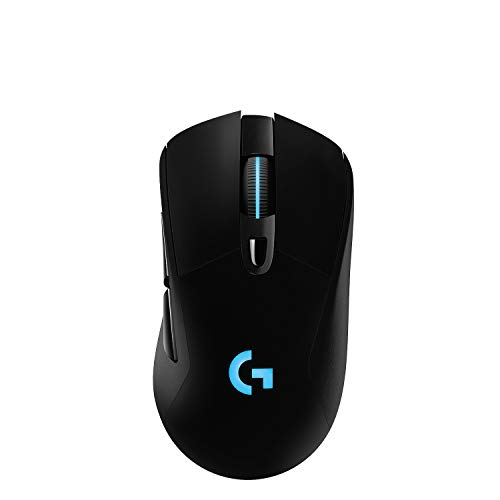
- Fast 1 ms Lightspeed wireless connectivity
- Efficient 12,000 DPI HERO optical sensor
- Up to 250 hours on one AA battery
- Built-in storage slot for the wireless USB receiver
- Lightweight build for rapid mouse movements
Cons
- Requires replaceable AA batteries instead of integrated recharging
- Compact dimensions may not suit users preferring large mice

Pros
- Cable-free 2.4GHz wireless connectivity
- Eight remappable buttons including rapid-fire input
- Adjustable polling rate up to 1000Hz
- Five customizable onboard DPI presets
Cons
- Maximum 45-hour battery life requires eco mode
- Equipped with entry-level PAW3325 optical sensor

Pros
- Adjustable eight-piece weight tuning set
- Nine programmable buttons with macro support
- Five onboard memory profiles
- Durable Omron micro switches and Teflon feet
Cons
- Official operating system support limited to Windows
- Lacks wireless connectivity options

Pros
- Nine programmable buttons for custom keybinds
- Dual 2.4GHz and Bluetooth wireless support
- Textured rubber side grip aids stability
- Five quick-switch DPI presets up to 8000
Cons
- Full button and DPI adjustments require software
- Relatively heavy profile at 0.24 pounds
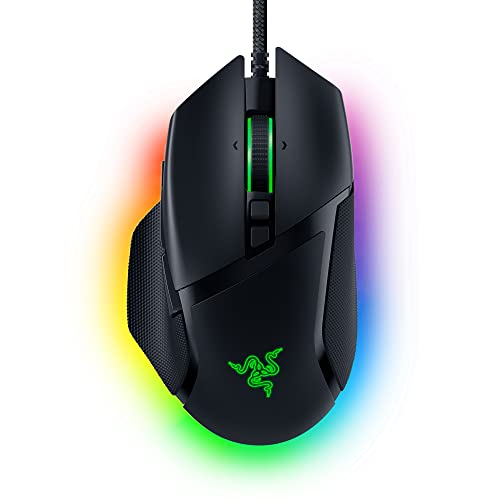
Pros
- 11 programmable buttons for comprehensive macro control
- Dual-mode HyperScroll tilt wheel enhances versatility
- High-resolution 26K DPI optical sensor
- Responsive optical switches rated for 70 million clicks
- 11 independently customizable RGB lighting zones
Cons
- Tethered wired cable restricts cable-free mobility
- Ergonomic thumb rest form factor excludes left-handed users
How to Choose Your First Gaming Mouse
Start with shape and grip
Shape affects how naturally your hand rests on the mouse. The DeathAdder Essential and Basilisk V3 are ergonomic wired designs, while the M725 has a symmetrical shape. The M602 models and several other options are described as ergonomic, but supplied data does not give their dimensions.
Hand size and grip preference vary, so do not treat a general comfort claim as a guarantee of fit. If possible, compare the shape with a mouse you already find comfortable.
Choose wired or wireless deliberately
A wired mouse avoids the need to manage a battery and receiver, while wireless models reduce cable clutter. The Logitech G305 uses a USB receiver and one AA battery, with up to 250 hours of stated battery life. Redragon’s M725 supports Type-C wired, Bluetooth, and 2.4 GHz connections, while the M810 PRO and M612 list wireless modes.
Connection details differ by model. The BENGOO listing names Windows versions and also mentions MacBook, but does not clearly specify all Mac compatibility details. Verify the exact operating system and connection method you need before buying.
Do not choose by maximum DPI alone
DPI describes selectable sensitivity, not a complete measure of tracking quality or gaming performance. These mice offer adjustable settings ranging from 3,600 DPI on the BENGOO to 26,000 DPI on the Basilisk V3. A first-time buyer can prioritize easy sensitivity adjustment and a comfortable setting over the largest number.
Consider buttons and software
Extra programmable buttons can help with game commands or work shortcuts, but they are useful only if you want to configure them. The DeathAdder Essential has five programmable buttons, while the Basilisk V3 lists 11. Redragon’s M602 and M801 also offer software customization, so consider whether you are comfortable installing and configuring companion software.
Recommended Mice by Use Case
Razer DeathAdder Essential Ergonomic Wired: a simple wired starting point
The DeathAdder Essential combines a 6,400 DPI optical sensor, on-the-fly sensitivity buttons, and five programmable buttons. Its wired connection keeps setup simple, and its ridged scroll wheel is intended to provide more controlled scrolling. It suits a buyer who wants a conventional wired mouse with basic customization.
Pros: Adjustable sensitivity, five programmable buttons, and mechanical switches rated for up to 10 million clicks. Cons: It is wired, and the supplied specifications do not provide dimensions or wireless options. Who should skip it: Buyers who want a wireless connection or several additional side controls.
See our guide to gaming keyboard and mouse combinations if you are choosing a complete desktop setup.
Logitech G305 Lightspeed Wireless Gaming Mouse: wireless with a stated battery-life figure
The G305 uses Logitech’s HERO optical sensor, rated up to 12,000 DPI, and LIGHTSPEED wireless with a stated 1 ms response time. It runs on a single AA battery, with up to 250 hours of continuous gaming claimed. Its built-in receiver storage is useful for carrying the compact mouse.
Pros: Wireless operation, receiver storage, and a specified battery-life figure. Cons: It requires an AA battery and USB receiver, and the supplied information does not list Bluetooth connectivity. Who should skip it: Buyers who prefer a rechargeable mouse or need Bluetooth support.
Redragon M725 Honeycomb Shell Gaming Mouse: flexible connections in a lightweight design
The M725 is listed at 49 g and supports Type-C wired, Bluetooth, and 2.4 GHz connections. It offers five programmable buttons and five configurable DPI levels, with 8,000 DPI stated as its sensor maximum. This mix suits someone who wants to use one mouse across devices or switch between wired and wireless modes.
Pros: Three connection modes, a symmetrical design, and a specified lightweight shell. Cons: The listing does not state battery life or provide operating-system details. Who should skip it: Buyers who need a documented battery-life estimate or want a fully solid shell rather than a honeycomb design.
BENGOO Gaming Mouse Wired with RGB Backlit: basic plug-and-play features
The BENGOO is a wired option with four selectable DPI settings up to 3,600 and six listed buttons, including forward and back controls. Its product information says it works without a driver and lists several older Windows versions. It may suit a buyer who wants simple sensitivity changes and extra buttons without software setup.
Pros: Plug-and-play operation is advertised, and DPI can be changed from the mouse. Cons: Its listed DPI ceiling is lower than several alternatives, and the operating-system compatibility details are limited. Who should skip it: Buyers who need clearly documented compatibility with a specific recent operating system or extensive software controls.
Redragon M602 Gaming Mouse: wired customization and extra controls
The M602 is a wired ergonomic mouse with adjustable DPI up to 7,200 and nine programmable buttons. Redragon’s software supports button remapping, macros, and lighting customization. It can suit players who want more commands available on the mouse, provided they are willing to configure the software.
Pros: Nine programmable buttons, adjustable sensitivity, and configurable lighting. Cons: Customization requires software, and the supplied details do not give dimensions or specify a particular grip fit. Who should skip it: Buyers who want a minimal-button mouse or do not want to install companion software.
Razer Basilisk V3 Customizable RGB Wired Ergonomic: many controls and a thumb rest
The Basilisk V3 has an ergonomic shape with a thumb rest, 11 programmable buttons, and a scroll wheel that can switch between tactile and free-spinning modes. Its Focus+ optical sensor is rated up to 26,000 DPI, and customization uses Razer Synapse. It is a feature-rich wired choice for players who want configurable controls and a thumb rest.
Pros: Numerous programmable controls, adjustable scroll behavior, and customizable RGB zones. Cons: It is wired and offers more features than a buyer seeking a basic mouse may need. Who should skip it: Buyers who prioritize wireless use or want a simpler layout with fewer controls.
Redragon M810 PRO Wireless RGB Gaming Mouse 10000: wireless controls and macros
The M810 PRO connects through a 2.4 GHz receiver and includes eight programmable buttons, five DPI levels up to 10,000, and a rechargeable battery. Redragon states up to 45 hours in eco mode. This is a fit for someone who wants multiple programmable controls without a wired connection.
Pros: Wireless use, macro-capable buttons, and adjustable DPI. Cons: The stated battery figure is tied to eco mode, and software is needed for customization. Who should skip it: Buyers who want a wired mouse or a simpler setup with no software configuration.
Redragon M612 Wireless RGB Optical Gaming Mouse: multiple modes and programmable controls
The M612 lists Bluetooth and 2.4 GHz wireless modes, nine programmable buttons, and five DPI levels up to 8,000. Its ergonomic shape and textured grip are intended to support control during extended use. It may suit a buyer who wants wireless connection choices and several remappable controls.
Pros: Two wireless connection options, adjustable sensitivity, and extensive button remapping. Cons: Battery life and wired operation are not specified in the supplied details. Who should skip it: Buyers who need a documented battery estimate or want a clearly listed wired mode.
Redragon M801 Gaming Mouse: wired option with extensive configuration
The M801 is a wired mouse with nine programmable buttons, five memory profiles, adjustable DPI up to 16,000, and a stated 1,000 Hz polling rate. Its listing also includes a weight-tuning set and describes a rapid-fire button. These features suit players who want to customize controls and profiles rather than keep a basic layout.
Pros: Multiple profiles, adjustable weight, and extensive button and lighting customization. Cons: It is wired, and the listing specifies support for Windows versions rather than clearly documenting other operating systems. Who should skip it: Buyers seeking a simple mouse, wireless operation, or clearly confirmed compatibility outside Windows.
Redragon M602 Gaming Mouse in White: the same model features in another color
The white M602 listing describes the same core combination as the black version: a wired ergonomic design, up to 7,200 DPI, nine programmable buttons, and software-controlled macros and lighting. Consider the color as a setup preference, but check the specific listing for the exact variant and compatibility details.
Pros: Programmable buttons and adjustable sensitivity in a wired design. Cons: Software is required for customization, and the supplied information does not provide dimensions. Who should skip it: Buyers who need wireless connectivity or want a mouse with fewer configurable features.
Final Recommendation
Choose the DeathAdder Essential if you want a straightforward wired mouse with adjustable sensitivity and a small set of programmable buttons. Pick the G305 if you prefer wireless operation and a specified battery-life claim, or the M725 if Bluetooth and multiple connection modes matter more. For extra controls, compare the M602, M612, and Basilisk V3, while keeping software needs and connection type in mind.
If you are also selecting a display for your setup, our guide to smart TVs for gaming covers a separate part of the decision.



Write Your Review
No reviews yet. Be the first to share your experience!