

The right gaming mouse depends more on fit, connection type, and button layout than on brand name alone. Logitech G is a strong fit for wireless play, Razer has a simple ergonomic wired option, and SteelSeries offers a lightweight mouse with extra programmable controls.
Redragon has several wired and wireless choices, from a basic programmable mouse to a model with a 12-button side panel. BENGOO and TMKB emphasize straightforward wired designs, while the AULA SC620 offers three connection modes with an important limitation on Bluetooth driver features.
Gaming Mouse Picks by Brand

Pros
- Four on-the-fly DPI speed settings up to 3600
- Driver-free plug-and-play operation
- Six-button design with side navigation controls
- Ergonomic contoured shape suited for palm grip
- Integrated multi-color lighting
Cons
- Sensitivity restricted to four predetermined DPI steps
- Lowest available DPI setting starts at 1200 DPI

Pros
- Ergonomic right-handed shape for comfortable handling
- On-the-fly DPI sensitivity adjustment buttons
- Five fully programmable buttons via Razer Synapse
- Ridged rubber scroll wheel provides tactile grip
- Reliable high-precision 6,400 DPI optical tracking
Cons
- Tethered wired cable limits placement flexibility
- Mechanical switch lifespan limited to 10 million clicks
- Button remapping depends on Razer Synapse software
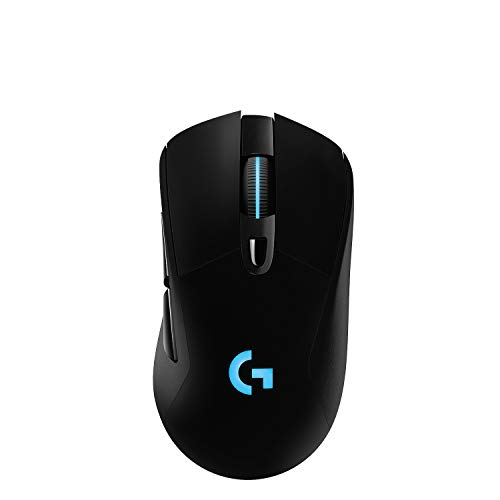
Pros
- High-precision HERO 25K optical sensor
- Low-latency LIGHTSPEED wireless connectivity
- Ergonomic body with rubber side grips
- Includes removable 10g tuning weight
- Crisp metal-spring primary button tensioning
Cons
- POWERPLAY wireless charging system sold separately
- Battery life limited to 35 hours with default lighting

Pros
- TrueMove Air 18,000 CPI optical sensor
- Nine programmable buttons for custom keybinds
- Lightweight 85g ergonomic chassis
- Dust and water resistant IP54 switches
- Customizable PrismSync RGB lighting
Cons
- Wired design restricts cable-free mobility

Pros
- Up to 7200 adjustable DPI
- Nine programmable buttons with macro editing
- Ergonomic contouring with finger rest design
- Customizable seven-mode RGB backlighting
Cons
- Full macro customization requires separate software download
- Tethered wired connection limits freedom of movement

Pros
- Broad XXL surface fits keyboard and mouse
- Micro-woven cloth optimized for various mouse sensors
- Non-slip rubber base stays firmly in place
- Low-profile design minimizes edge elevation
Cons
- Large footprint requires substantial desk space
- Thin 0.08-inch profile provides minimal wrist cushioning

Pros
- Versatile tri-mode wireless and wired connectivity
- Lightweight 67-gram ergonomic build
- Dedicated hardware rapid-fire button
- Multi-device pairing for up to four systems
- Adjustable DPI up to 12,000 with 1000Hz polling
Cons
- Driver software does not support Bluetooth mode
- Configuration software requires a Windows operating system

Pros
- 19 programmable buttons for complex macros
- Modular weight tuning with eight removable weights
- Five onboard memory profiles for custom layouts
- Wide DPI adjustment range up to 12400
Cons
- Software download required for macro and lighting customization

Pros
- Cable-free 2.4GHz wireless connectivity
- Eight remappable buttons including rapid-fire input
- Adjustable polling rate up to 1000Hz
- Five customizable onboard DPI presets
Cons
- Maximum 45-hour battery life requires eco mode
- Equipped with entry-level PAW3325 optical sensor

Pros
- Ultralight 75g honeycomb construction
- Wide DPI range up to 12,800
- Six fully programmable buttons
- Flexible drag-reducing paracord cable
- Customizable software with profile layers
Cons
- Wired design limits portability
- Honeycomb design is susceptible to dust accumulation
How the Brands and Models Differ
Logitech G: wireless performance and charging ecosystem
The Logitech G703 Lightspeed Wireless Gaming Mouse combines LIGHTSPEED wireless with a HERO 25K sensor, a 95 g weight, and six programmable buttons. Its stated battery life is up to 35 hours with default LIGHTSYNC RGB lighting, and it supports POWERPLAY wireless charging with a separately sold system.
Pros: Wireless operation, a broad advertised DPI range, optional added weight, and compatibility with POWERPLAY charging. Cons: POWERPLAY requires a separate purchase, and the mouse has fewer programmable buttons than the multi-button alternatives here. Who should skip it: Players who prefer a wired mouse or need a large number of dedicated game commands.
See the keyboard and mouse options for gaming PCs if you are choosing a complete control setup.
Razer: a straightforward ergonomic wired option
The Razer DeathAdder Essential Ergonomic Wired has a 6,400 DPI optical sensor, five programmable buttons, and a ridged rubberized scroll wheel. Its wired connection avoids battery management, while sensitivity adjustment and button remapping are handled through the mouse controls and Razer Synapse.
Pros: Simple wired connectivity, programmable controls, and a tactile scroll wheel. Cons: The supplied specifications do not state its weight or cable length, and its DPI ceiling is lower than several competing models in this selection. Who should skip it: Wireless users or players who want more than five programmable buttons.
SteelSeries: lightweight shape with extra controls
The SteelSeries Rival 5 has an 85 g weight, a TrueMove Air optical sensor, and nine programmable buttons, including five quick-action side buttons. The advertised 18,000 CPI sensor and broad game-category positioning make its controls worth considering for players switching between genres.
Pros: A documented lightweight design, multiple programmable controls, and a sensor with 1-to-1 tracking according to its specifications. Cons: It is wired, and the five side buttons may be unnecessary for players who prefer a minimalist layout. Who should skip it: Anyone seeking a wireless mouse or a simpler arrangement with fewer controls.
SteelSeries also makes a desk-sized surface for users who need room for both keyboard and mouse: the games suited to mouse-focused play can help you decide which controls matter most.
Redragon: a range of programmable wired and wireless designs
The Redragon M602 is a wired option with up to 7,200 DPI, nine programmable buttons, and software for remapping and macros. Its ergonomic shape and adjustable lighting suit players who want customization without moving to a wireless setup.
Pros: Nine programmable buttons, adjustable sensitivity, and configurable lighting. Cons: It is wired, and customization depends on Redragon software. Who should skip it: Players who want wireless freedom or do not want to install configuration software.
The Redragon M810 PRO adds 2.4 GHz wireless connectivity, eight programmable buttons, a PAW3325 optical sensor, and a stated maximum of 45 hours in eco mode. Its five onboard DPI levels can be customized with software, giving users more flexibility than a basic plug-and-play mouse.
Pros: Wireless operation, programmable controls, and onboard DPI levels. Cons: The battery-life figure is specified for eco mode, and advanced customization requires the Redragon driver. Who should skip it: Players who prefer wired reliability or want to avoid charging and software setup.
For MMO-style command-heavy play, the Redragon Gaming Mouse, MMO Mouse Gaming UP 12400 has 19 programmable buttons, including 12 on the side, plus adjustable weight using eight removable 2.4 g weights. Its DPI range and polling rate are adjustable, and five memory profiles can store different configurations.
Pros: Many remappable controls, stored profiles, and user-adjustable weight. Cons: Its 12-button side panel creates a more complex layout than conventional gaming mice, and its configuration features rely on software. Who should skip it: FPS players who value a sparse button layout or anyone who does not need many macros.
BENGOO: basic wired controls and plug-and-play setup
The BENGOO Gaming Mouse Wired with RGB Backlit offers four selectable DPI settings from 1,200 to 3,600 and six buttons. Its listed plug-and-play setup avoids a required driver for basic use, and the product data lists Windows versions, Linux, and MacBook among supported systems.
Pros: Simple wired setup, adjustable DPI steps, and forward and back buttons. Cons: Its listed maximum DPI is lower than the other featured options, and the compatibility information does not specify operating-system versions for Mac or Linux. Who should skip it: Players seeking a high-DPI specification, wireless use, or extensive software customization.
AULA: three connection modes with a Bluetooth caveat
The AULA SC620 Wireless Gaming Mouse supports 2.4 GHz, Bluetooth 5.3, and wired USB modes, with storage for up to four devices. It weighs 67 g and lists six DPI settings up to 12,000, seven programmable buttons, and a 1,000 Hz polling rate.
Pros: Multiple connection choices, lightweight construction, and a high number of listed DPI steps. Cons: The product information says Windows is required for driver functions in wired and 2.4 GHz modes, while Bluetooth mode does not support those functions; it does not provide a battery-life figure. Who should skip it: Buyers who need programmable features over Bluetooth or want documented battery runtime.
TMKB: lightweight wired construction
The TMKB Falcon M1SE White Gaming Mouse, Wired weighs 75 g and combines a honeycomb shell with an adjustable 200 to 12,800 DPI range. It also lists six programmable buttons, a 125 to 1,000 Hz polling-rate range, and a paracord-style cable.
Pros: A stated lightweight design, configurable buttons, and broad DPI adjustment. Cons: It is wired, and advanced remapping and lighting settings use TMKB software. Who should skip it: Wireless users or players who would rather avoid a perforated shell and configuration software.
How to Choose a Gaming Mouse Brand
Choose wired or wireless first
A wired model avoids battery charging and suits a fixed desktop setup. The Logitech G703 and Redragon M810 PRO use wireless connections, while the AULA SC620 adds Bluetooth and wired USB modes. Check each model’s mode-specific software support before relying on wireless customization.
Match button count to the games you play
Five or six buttons can suit players who mainly need standard clicks and a few shortcuts. Nine-button options add more commands, while the Redragon MMO model’s 12 side buttons target users who want many abilities or macros close at hand. Extra buttons are not automatically useful if they make the layout harder to manage.
Interpret DPI and polling-rate figures carefully
DPI indicates adjustable cursor sensitivity, not a guarantee of better aim or game performance. Consider whether the mouse offers settings you can comfortably use, and treat advertised sensor specifications as manufacturer-provided information rather than independent comparative results.
Check software and operating-system needs
Some products offer basic plug-and-play operation, while macro editing, lighting adjustments, and button remapping may need brand software. Confirm that the relevant driver supports your operating system and connection mode, particularly for the AULA SC620, whose listed Bluetooth mode does not support its driver functions.
Frequently Asked Questions
Which gaming mouse brand is best for wireless use?
Logitech G and Redragon both offer wireless models in this selection. The G703 supports LIGHTSPEED and optional POWERPLAY charging, while the M810 PRO uses 2.4 GHz wireless and lists up to 45 hours in eco mode. AULA offers three connection modes, but its driver features are limited by mode.
Which option suits MMO games with many commands?
The Redragon MMO mouse has the most listed programmable controls here, with 19 total and 12 side buttons. Choose it only if that layout matches your command needs; the Rival 5 is a less button-heavy alternative with nine programmable controls.
Is a higher DPI always better for gaming?
No. A higher maximum DPI provides a wider sensitivity range, but does not by itself establish accuracy or suitability. Choose a mouse with adjustable settings that fit your preferences, and compare its shape, connection, and button layout as well.


Write Your Review
No reviews yet. Be the first to share your experience!