

For a straightforward wired mouse, compare the Logitech G203, Razer DeathAdder Essential, and Redragon M602. If you want wireless freedom, consider a Logitech G305 or Redragon M810 PRO. The Redragon S101 bundles suit shoppers who need a keyboard too, but add a second peripheral to the decision.
These recommendations are based on the supplied specifications, compatibility details, and intended use, not claims of independent performance measurements. Prioritize shape, connection type, and useful button placement before treating a higher DPI number as an advantage.
The G203 offers a wired 8,000 DPI sensor and six buttons, while the G305 models add LIGHTSPEED wireless and a stated 12,000 DPI maximum. The DeathAdder Essential emphasizes an ergonomic wired shape, and the M602 adds more programmable buttons and software options. The S101 packages are keyboard-and-mouse sets, not standalone mouse alternatives.

Pros
- Four on-the-fly DPI speed settings up to 3600
- Driver-free plug-and-play operation
- Six-button design with side navigation controls
- Ergonomic contoured shape suited for palm grip
- Integrated multi-color lighting
Cons
- Sensitivity restricted to four predetermined DPI steps
- Lowest available DPI setting starts at 1200 DPI

Pros
- Ergonomic right-handed shape for comfortable handling
- On-the-fly DPI sensitivity adjustment buttons
- Five fully programmable buttons via Razer Synapse
- Ridged rubber scroll wheel provides tactile grip
- Reliable high-precision 6,400 DPI optical tracking
Cons
- Tethered wired cable limits placement flexibility
- Mechanical switch lifespan limited to 10 million clicks
- Button remapping depends on Razer Synapse software

Pros
- Up to 7200 adjustable DPI
- Nine programmable buttons with macro editing
- Ergonomic contouring with finger rest design
- Customizable seven-mode RGB backlighting
Cons
- Full macro customization requires separate software download
- Tethered wired connection limits freedom of movement

Pros
- Five dedicated macro keys for rapid command input
- Quiet membrane switches suitable for shared workspaces
- Adjustable mouse sensitivity from 800 to 7200 DPI
- Integrated wrist rest helps reduce typing fatigue
- Onboard memory retains lighting and DPI profiles
Cons
- Uses membrane keys rather than mechanical switches
- Wired design restricts flexible cable-free placement
- Full software customization limited to Windows systems

Pros
- Tri-mode connectivity via Bluetooth, 2.4GHz, and USB-C
- Single 2-in-1 USB receiver operates both peripherals
- Ten dedicated multimedia keys for direct playback control
- Mouse supports up to 1000Hz polling rate
- Keyboard battery rated up to 300 hours without RGB
Cons
- Configuration software is limited to Windows systems
- Mouse sensor tops out at 4800 DPI

Pros
- 8,000 DPI sensor with zero smoothing
- Crisp spring-tensioned mechanical primary buttons
- Six fully programmable buttons
- Customizable LIGHTSYNC RGB illumination
- Long 6.89-foot USB cable
Cons
- Tethered cable restricts placement compared to wireless mice
- Full button and lighting customization requires Logitech G HUB

Pros
- Fast 1 ms LIGHTSPEED wireless connectivity
- Efficient 12,000 DPI HERO optical sensor
- Up to 250 hours of continuous gameplay
- Built-in internal storage for USB nano receiver
- Lightweight and compact portable design
Cons
- Requires replaceable AA battery instead of integrated charging

Pros
- Fast 1 ms Lightspeed wireless connectivity
- Efficient 12,000 DPI HERO optical sensor
- Up to 250 hours on one AA battery
- Built-in storage slot for the wireless USB receiver
- Lightweight build for rapid mouse movements
Cons
- Requires replaceable AA batteries instead of integrated recharging
- Compact dimensions may not suit users preferring large mice

Pros
- Fast 1 ms LIGHTSPEED wireless response time
- Accurate 12,000 DPI optical HERO sensor
- Up to 250 hours continuous runtime per AA battery
- Lightweight 3.4 oz chassis for quick handling
- Built-in internal storage for the USB receiver
Cons
- Requires AA batteries instead of USB recharging
- Extending battery life requires Logitech G HUB configuration

Pros
- Cable-free 2.4GHz wireless connectivity
- Eight remappable buttons including rapid-fire input
- Adjustable polling rate up to 1000Hz
- Five customizable onboard DPI presets
Cons
- Maximum 45-hour battery life requires eco mode
- Equipped with entry-level PAW3325 optical sensor
Recommended PC Gaming Mice
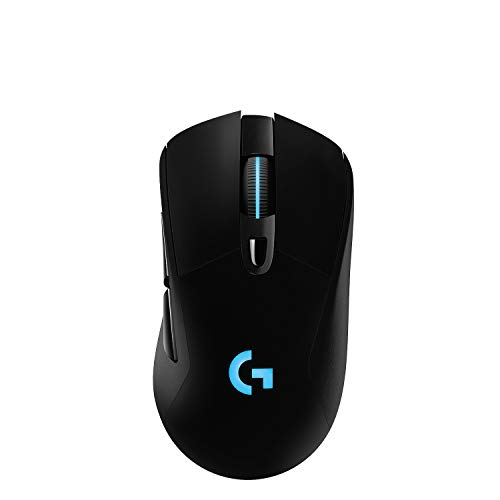
Logitech G203 Wired Gaming Mouse: A Balanced Wired Option
The G203 has an 8,000 DPI optical sensor, six buttons, and a USB Type-A connection with a 6.89-foot cable. Logitech G HUB lets users configure lighting, commands, and up to five DPI settings, making it a practical fit for PC players who want software customization without wireless power management.
Pros: A high stated DPI ceiling, five selectable sensitivity settings, six buttons, and configurable LIGHTSYNC lighting. Cons: It is wired, and the listed connection is USB Type-A. Who should skip it: Players who specifically want a wireless mouse or more than six buttons.
Compare keyboard-and-mouse setups for gaming PCs if you are choosing a complete desktop input arrangement.
Logitech G305 LIGHTSPEED: Wireless With a Replaceable Battery
The G305 uses Logitech’s HERO optical sensor, rated up to 12,000 DPI, and LIGHTSPEED wireless with a stated 1 ms report rate. Logitech specifies up to 250 hours of continuous gameplay from one AA battery; the Mint and Lilac listings also describe an Endurance mode available through G HUB. Its compact body and receiver storage may suit laptop users and cable-free desks.
Pros: Wireless operation, a high stated DPI ceiling, receiver storage, and a specified AA-powered runtime. Cons: It relies on a replaceable AA battery and a USB wireless receiver, rather than a wired connection. Who should skip it: Users who prefer rechargeable built-in power or do not want to keep track of a receiver.
The white, Mint, and Lilac listings describe the same G305 model family, so color is the main documented distinction among these entries. The white listing does not include the Endurance-mode detail provided for the other two color listings.
Redragon M602: Wired Controls and Programmable Buttons
The M602 is a wired ergonomic mouse with an adjustable maximum of 7,200 DPI and nine programmable buttons. Its software supports button remapping, macro editing, speed adjustment, and lighting changes. That control range may appeal to players who want extra bindings for games or everyday applications, though setup customization depends on downloading Redragon software.
Pros: Nine programmable buttons, software-based macros, adjustable DPI, and configurable RGB effects. Cons: It is wired, and the software must be obtained separately from Redragon. Who should skip it: Players who want a simpler mouse with fewer extra controls or who prefer wireless operation.
Razer DeathAdder Essential: Ergonomic Wired Design
The DeathAdder Essential pairs a 6,400 DPI optical sensor with five programmable buttons and a rubberized, ridged scroll wheel. Razer Synapse supports button remapping and macro assignments. Its stated ergonomic design and tactile scroll wheel make it a sensible candidate for players who value a familiar palm-oriented shape and controlled scrolling.
Pros: Programmable controls, on-the-fly DPI adjustment, a textured scroll wheel, and switches specified for up to 10 million clicks. Cons: It is wired, and its 6,400 DPI maximum is lower than the listed maximums of several alternatives here. Who should skip it: Wireless shoppers or users who need more than five programmable buttons.
Redragon M810 PRO: Wireless With Eight Programmable Buttons
The M810 PRO connects wirelessly through a 2.4 GHz nano receiver and offers eight programmable buttons, five DPI levels up to 10,000, and a stated 1,000 Hz polling rate in dual mode. Redragon specifies up to 45 hours of operation in eco mode. Its macro controls may suit games or work that benefit from extra bindings, while the wireless design avoids a mouse cable.
Pros: Wireless connection, eight remappable buttons, configurable DPI levels, and a rechargeable battery. Cons: The stated maximum of 45 hours applies to eco mode, and the connection uses a receiver rather than Bluetooth. Who should skip it: Players who require Bluetooth connectivity or do not want to manage charging.
BENGOO Wired RGB Mouse: Basic Plug-and-Play Features
This wired BENGOO mouse has four DPI settings from 1,200 to 3,600, six buttons, and RGB lighting. The listing describes plug-and-play operation without a driver and names Windows versions, Linux, notebooks, PCs, and MacBook among its compatibility claims. It may suit a basic setup where adjustable sensitivity and forward and back buttons matter more than a high DPI ceiling.
Pros: Four selectable DPI levels, six listed controls, and driver-free setup as described by the manufacturer. Cons: Its stated 3,600 DPI maximum is lower than the other standalone mice in this roundup, and the compatibility description does not specify every operating-system version. Who should skip it: Players seeking a higher DPI range or detailed software customization.
Redragon S101-3 PRO: Wired Keyboard and Mouse Bundle
The S101-3 PRO combines a full-size RGB membrane keyboard with a mouse. Its mouse sensitivity is adjustable from 800 to 7,200 DPI, and the keyboard includes five dedicated macro keys, anti-ghosting, and a wrist rest. The listing says settings can be saved to hardware and describes compatibility with Windows 10 and 11. Consider it when replacing both peripherals, rather than when selecting a mouse alone.
Pros: It supplies both input devices, includes keyboard macro keys, and offers adjustable mouse sensitivity. Cons: It is a bundled setup, and the mouse’s button count and connection details are not specified in the supplied information. Who should skip it: Shoppers who already have a keyboard or want detailed standalone mouse specifications.
Redragon S101M-KS: Tri-Mode Keyboard and Mouse Combo
This wireless keyboard-and-mouse bundle supports wired, Bluetooth, and 2.4 GHz modes, with one shared 2.4 GHz receiver for both devices. The mouse has seven remappable buttons and five DPI levels up to 4,800, while the keyboard includes multimedia controls and a detachable USB-C cable. It may fit someone assembling a coordinated setup who wants multiple connection options.
Pros: Multiple connection modes, a shared receiver option, seven remappable mouse buttons, and adjustable DPI. Cons: It includes a keyboard, and the supplied description does not state mouse battery life. Who should skip it: Buyers seeking only a mouse or those who need a documented battery runtime before choosing a wireless model.
How to Choose a Gaming Mouse for PC
Choose wired or wireless based on your setup
Wired options in this list connect by USB, while the G305 and M810 PRO use wireless receivers. The S101M-KS adds Bluetooth and wired modes, but it is a keyboard-and-mouse bundle. Check your PC’s available ports and decide whether avoiding a cable is worth managing a receiver or battery.
Match shape and button count to your games
Shape affects comfort, but the supplied specifications do not provide dimensions or hand-size recommendations. If possible, consider how you hold a mouse and whether its stated ergonomic design fits your grip. Extra programmable buttons can help with remappable commands, but they are not necessary for every game or player.
Set DPI for control, not for the largest number
DPI describes sensitivity options, not overall mouse quality or measured accuracy. A higher maximum can offer more adjustment range, but the useful setting depends on personal preference, game, and display setup. Look for convenient switching and configurable levels if you expect to change sensitivity between tasks.
Check software and operating-system details
Razer Synapse, Logitech G HUB, and Redragon software are specified for customization on relevant models. Software may be needed for macros, remapping, or additional settings, so confirm the current manufacturer support for your operating system before relying on those features. The BENGOO listing describes plug-and-play use and names several systems, but does not establish compatibility with every current version.
Frequently Asked Questions
Does a higher DPI make a gaming mouse better?
No. DPI indicates available sensitivity, not a complete measure of tracking quality or suitability. Choose a mouse with settings and switching controls that match your preferences rather than selecting solely by its maximum DPI figure.
Are the three Logitech G305 listings different mice?
The supplied listings identify white, Mint, and Lilac versions of the G305. Their core described sensor, wireless technology, and battery details are similar, though the white listing provides less information about Endurance mode. Compare the specific listing details and color before choosing.
Should I buy a keyboard-and-mouse combo?
A combo can make sense if you need both devices and want one coordinated purchase. If you already own a suitable keyboard, a standalone mouse makes it easier to focus on shape, buttons, connection, and mouse-specific software features.


Write Your Review
No reviews yet. Be the first to share your experience!