

The right programmable mouse depends on how many commands you need at your fingertips and whether you prefer wired or wireless use. The Logitech G502 Hero offers a versatile 11-button layout, while MMO-focused models provide more controls for games with extensive ability bars.
For a simpler wired setup, consider the Razer DeathAdder Essential or Redragon M602. Wireless shoppers can compare the Razer Naga models, Logitech G305, and Redragon M814, keeping software compatibility and battery requirements in mind.
Programmable Mouse Picks

Pros
- Ergonomic right-handed shape for comfortable handling
- On-the-fly DPI sensitivity adjustment buttons
- Five fully programmable buttons via Razer Synapse
- Ridged rubber scroll wheel provides tactile grip
- Reliable high-precision 6,400 DPI optical tracking
Cons
- Tethered wired cable limits placement flexibility
- Mechanical switch lifespan limited to 10 million clicks
- Button remapping depends on Razer Synapse software

Pros
- TrueMove Air 18,000 CPI optical sensor
- Nine programmable buttons for custom keybinds
- Lightweight 85g ergonomic chassis
- Dust and water resistant IP54 switches
- Customizable PrismSync RGB lighting
Cons
- Wired design restricts cable-free mobility

Pros
- Up to 7200 adjustable DPI
- Nine programmable buttons with macro editing
- Ergonomic contouring with finger rest design
- Customizable seven-mode RGB backlighting
Cons
- Full macro customization requires separate software download
- Tethered wired connection limits freedom of movement

Pros
- Five dedicated macro keys for rapid command input
- Quiet membrane switches suitable for shared workspaces
- Adjustable mouse sensitivity from 800 to 7200 DPI
- Integrated wrist rest helps reduce typing fatigue
- Onboard memory retains lighting and DPI profiles
Cons
- Uses membrane keys rather than mechanical switches
- Wired design restricts flexible cable-free placement
- Full software customization limited to Windows systems

Pros
- High-precision HERO sensor up to 25,600 DPI
- Eleven fully programmable buttons
- Adjustable balance with five removable weights
- Dual-mode hyper-fast scroll wheel
- Tensioned mechanical switches for crisp clicks
Cons
- Tethered wired design restricts cable-free movement
- Full RGB customization requires Logitech Gaming Software

Pros
- 19 programmable buttons for comprehensive macro control
- Dual 2.4 GHz wireless and Bluetooth connectivity
- Up to 400 hours of battery life
- Focus Pro 30K sensor tracks on glass
- Dual-mode tactile and free-spin scroll wheel
Cons
- Requires replaceable batteries instead of onboard USB recharging
- Advanced tuning requires the Razer Synapse desktop software

Pros
- Interchangeable side plates for multiple game layouts
- Flexible HyperSpeed, Bluetooth, and wired connectivity
- High-resolution 50,000 DPI optical sensor
- Up to 280 hours of battery life over Bluetooth
- Versatile multi-mode tilt scroll wheel
Cons
- Full software customization is not supported on macOS
- Wireless charging docks and accessories sold separately

Pros
- Fast 1 ms Lightspeed wireless connectivity
- Efficient 12,000 DPI HERO optical sensor
- Up to 250 hours on one AA battery
- Built-in storage slot for the wireless USB receiver
- Lightweight build for rapid mouse movements
Cons
- Requires replaceable AA batteries instead of integrated recharging
- Compact dimensions may not suit users preferring large mice

Pros
- Versatile 2.4GHz, Bluetooth, and USB-C connectivity
- Up to 250-hour battery life with RGB disabled
- Responsive 1000Hz polling rate
- Pre-configured hardware rapid fire button
- Ergonomic contour suited for medium to large hands
Cons
- Configuration software is not supported on macOS
- Dedicated rapid fire key cannot be reprogrammed

Pros
- 19 programmable buttons for complex macros
- Modular weight tuning with eight removable weights
- Five onboard memory profiles for custom layouts
- Wide DPI adjustment range up to 12400
Cons
- Software download required for macro and lighting customization
How to Choose a Programmable Mouse
Start with the number and placement of controls you will actually use. A few remappable buttons suit general PC work and varied games, while a thumb grid can make many MMO commands accessible without moving a hand to the keyboard.
Check which operating systems support configuration software, not just basic pointer movement. Several products rely on downloadable Windows software for remapping or macros; the Redragon M814 explicitly says its customization software does not support macOS.
DPI indicates selectable sensor sensitivity, not a measure of overall accuracy or a guarantee of better aim. Consider the adjustment range as a flexibility feature, then prioritize button layout, shape, connection, and software requirements for your setup.
Best Programmable Mice by Use
Logitech G502 Hero: A Versatile Wired Control Layout
The G502 Hero combines 11 programmable buttons with a dual-mode scroll wheel and an advertised HERO sensor sensitivity up to 25,600 DPI. Its adjustable weights let users configure weight and balance, making it a flexible option for players who want many functions without an MMO-style side grid.
Pros: Numerous programmable controls, adjustable weights, and a scroll wheel with free-spinning and ratcheted modes. Cons: It is wired, and its adjustable-weight system may not suit users seeking a simpler, lighter setup. Who should skip it: Choose another model if wireless use or a compact button layout is essential.
Razer Naga V2 HyperSpeed: Wireless MMO Commands
The Naga V2 HyperSpeed has 19 programmable buttons, 2.4 GHz wireless and Bluetooth connectivity, and a Focus Pro 30K optical sensor. Its stated battery life reaches up to 250 hours over 2.4 GHz or 400 hours over Bluetooth, with results depending on connection mode and use.
Pros: Extensive remapping options, two wireless modes, and a scroll wheel offering tactile and free-spin modes. Cons: Its large command count can be unnecessary for simpler games, and it requires a replaceable battery rather than offering a stated rechargeable design. Who should skip it: Avoid this MMO-oriented layout if you want a minimal mouse or prefer charging an integrated battery.
Razer Naga V3 Pro: Swappable Side Controls
The Naga V3 Pro includes three magnetic side plates with 12-, 6-, or 2-button layouts, plus additional edge and ring-finger controls. It supports HyperSpeed wireless, Bluetooth, and USB-C wired mode, and its advertised Focus Pro 50K sensor reaches up to 50,000 DPI.
Pros: Interchangeable side plates make the control layout adaptable across genres, and Synapse supports remapping and macros on Windows. Cons: Full customization is Windows-only; macOS supports core mouse functions and onboard settings. Battery life is specified as up to 155 hours on HyperSpeed or 280 hours on Bluetooth. Who should skip it: It is a poor fit if you want a basic mouse or need full software customization on macOS.
SteelSeries Rival 5: Mixed Game Genres and Quick Actions
The Rival 5 provides nine programmable buttons, including five quick-action side buttons, and an 18,000 CPI TrueMove Air sensor. Its stated 85 g weight and wired connection may appeal to players moving between FPS, MOBA, MMO, and battle royale games.
Pros: A varied button layout supports multiple game genres, and the listed sensor tracks at a one-to-one ratio. Cons: It is wired, and nine controls offer less command capacity than the Naga or 19-button Redragon MMO model. Who should skip it: Look elsewhere if wireless connectivity or a large side-button grid is a priority.
Redragon M602: Budget-Friendly Wired Macro Controls
The M602 has nine programmable buttons, software-based macro editing, and adjustable sensitivity up to 7,200 DPI. Its ergonomic shape and wired connection make it a straightforward option for users who want remapping and lighting controls without a wireless setup.
Pros: Nine remappable buttons, configurable lighting, and stated compatibility with PC, Windows, laptops, and Mac. Cons: Macro and button configuration requires software downloaded from Redragon, and the supplied information does not specify the software’s macOS feature support. Who should skip it: Skip it if you need confirmed full macro configuration on Mac or wireless operation.
Razer DeathAdder Essential: Simple Wired Remapping
The DeathAdder Essential has five programmable buttons and a 6,400 DPI optical sensor, with dedicated DPI buttons that can be reprogrammed. Its smaller control set is suited to users who need a few macros or remapped actions rather than a large bank of game commands.
Pros: A clear five-button layout, on-the-fly sensitivity controls, and mechanical switches rated for up to 10 million clicks. Cons: It is wired and has fewer programmable buttons than the other gaming-focused picks. Configuration uses Razer Synapse. Who should skip it: Choose a different mouse if you need wireless play or many shortcut inputs.
Redragon M901K: Many MMO Buttons and Weight Tuning
This Redragon MMO mouse offers 19 programmable buttons, including 12 side buttons, five memory profiles, and eight removable weights. Its stated sensitivity range reaches 12,400 DPI, and the profiles let users save different configurations for separate use cases.
Pros: Extensive macro remapping, multiple saved profiles, and adjustable weight and balance. Cons: A 12-button thumb grid can feel excessive for general desktop work, and the supplied details do not specify operating-system compatibility. Who should skip it: Pass if you prefer a simple layout or need confirmed software support for a particular operating system.
Redragon M814: Wireless Connectivity for PC and Work
The M814 offers seven programmable buttons, 2.4 GHz wireless, Bluetooth, and USB-C wired mode. Its sensitivity adjusts up to 8,000 DPI, and its listed battery life is up to 250 hours in 2.4 GHz mode with RGB lighting off.
Pros: Three connection modes, remappable buttons, and a stated 1,000 Hz polling rate. Cons: Software customization and lighting controls require Windows, and the battery-life figure is specified with RGB off. The rapid-fire key is preset to register three clicks per press. Who should skip it: It is not suitable if you need macOS software customization or want to remap every key, including the rapid-fire control.
Logitech G305: Wireless Simplicity
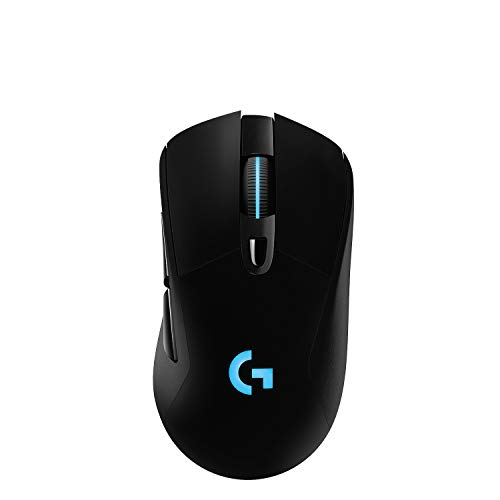
The G305 pairs a 12,000 DPI HERO sensor with LIGHTSPEED wireless and a stated 1 ms response time. It uses one AA battery, with advertised battery life up to 250 hours, and includes storage for its USB wireless receiver.
Pros: Wireless operation, a compact portable design, and long stated battery life from one AA cell. Cons: The supplied specifications do not give a programmable-button count or detail macro capabilities, so it is less clearly suited to complex remapping than the other picks. Who should skip it: Choose a model with documented extra controls if programmable commands are your main requirement.
Redragon S101-3 PRO: Keyboard and Mouse Bundle
The S101-3 PRO is a wired keyboard-and-mouse set, rather than a standalone mouse recommendation. Its mouse sensitivity adjusts from 800 to 7,200 DPI, while the included keyboard provides five dedicated macro keys and software customization.
Pros: Bundles two peripherals, saves lighting and DPI settings to hardware according to the supplied description, and is specified for Windows 10 and 11. Cons: The mouse’s programmable-button count is not stated, so its remapping capacity is difficult to compare with dedicated programmable mice. Who should skip it: Skip the bundle if you only need a mouse or require confirmed support outside Windows 10 and 11.
Wired or Wireless: Which Fits Your Setup?
Wired models such as the DeathAdder Essential, Rival 5, M602, and G502 Hero avoid battery management and connect directly by cable. Wireless models offer more freedom of movement, but check whether the mouse uses a receiver, Bluetooth, a replaceable battery, or a rechargeable connection before choosing.
For more peripheral pairing ideas, see our guide to gaming keyboard and mouse combinations. If the keyboard is part of the upgrade, our gaming keyboard guide offers another way to compare control layouts.



Write Your Review
No reviews yet. Be the first to share your experience!