

For the best gaming mice for Mac, prioritize a mouse that works over Bluetooth or a USB receiver, then check whether its customization software supports macOS. The Logitech G305 offers wireless gaming features, while the Aula SC620 advertises Mac compatibility but has a mode-specific limitation.
This comparison is based on the supplied specifications, not independent performance measurements. Some listed mice are primarily described for Windows, so basic pointer use on a Mac does not guarantee access to macros, lighting controls, or other advanced settings.
The G305 is a straightforward wireless candidate for someone who wants a compact shape and a stated 12,000 DPI sensor. The Aula SC620 adds Bluetooth and wired connection options, but its listing says Bluetooth mode is unavailable for its advertised Mac compatibility, creating a significant caveat.
For a wired setup, the Logitech G502 X and Razer Basilisk V3 offer multiple controls and high-resolution sensors. Their supplied listings do not explicitly confirm macOS software support, so verify configuration requirements before relying on programmable functions.

Pros
- Five dedicated macro keys for rapid command input
- Quiet membrane switches suitable for shared workspaces
- Adjustable mouse sensitivity from 800 to 7200 DPI
- Integrated wrist rest helps reduce typing fatigue
- Onboard memory retains lighting and DPI profiles
Cons
- Uses membrane keys rather than mechanical switches
- Wired design restricts flexible cable-free placement
- Full software customization limited to Windows systems

Pros
- Fast 1 ms Lightspeed wireless connectivity
- Efficient 12,000 DPI HERO optical sensor
- Up to 250 hours on one AA battery
- Built-in storage slot for the wireless USB receiver
- Lightweight build for rapid mouse movements
Cons
- Requires replaceable AA batteries instead of integrated recharging
- Compact dimensions may not suit users preferring large mice

Pros
- Versatile tri-mode wireless and wired connectivity
- Lightweight 67g ergonomic chassis
- Up to 12,000 DPI with 1000Hz polling rate
- Dedicated rapid fire hardware button
- Stores pairing profiles for up to four devices
Cons
- Driver configuration requires Windows via wired or 2.4GHz
- Software customization is not supported over Bluetooth

Pros
- Fast 1 ms LIGHTSPEED wireless response time
- Accurate 12,000 DPI optical HERO sensor
- Up to 250 hours continuous runtime per AA battery
- Lightweight 3.4 oz chassis for quick handling
- Built-in internal storage for the USB receiver
Cons
- Requires AA batteries instead of USB recharging
- Extending battery life requires Logitech G HUB configuration

Pros
- Versatile tri-mode wireless and wired connectivity
- Lightweight 67-gram ergonomic build
- Dedicated hardware rapid-fire button
- Multi-device pairing for up to four systems
- Adjustable DPI up to 12,000 with 1000Hz polling
Cons
- Driver software does not support Bluetooth mode
- Configuration software requires a Windows operating system

Pros
- Versatile 2.4GHz, Bluetooth, and USB-C connectivity
- Up to 250-hour battery life with RGB disabled
- Responsive 1000Hz polling rate
- Pre-configured hardware rapid fire button
- Ergonomic contour suited for medium to large hands
Cons
- Configuration software is not supported on macOS
- Dedicated rapid fire key cannot be reprogrammed

Pros
- Cable-free 2.4GHz wireless connectivity
- Eight remappable buttons including rapid-fire input
- Adjustable polling rate up to 1000Hz
- Five customizable onboard DPI presets
Cons
- Maximum 45-hour battery life requires eco mode
- Equipped with entry-level PAW3325 optical sensor

Pros
- Up to 8 kHz wireless polling rate via LIGHTSPEED
- HERO 2 sensor offering up to 48,000 DPI
- Adjustable actuation and reset points with inductive triggers
- Rated for up to 135 hours of battery life
- Compatible with POWERPLAY wireless charging accessories
Cons
- Advanced features and 8 kHz polling require G HUB software
- POWERPLAY wireless charging pad is sold separately
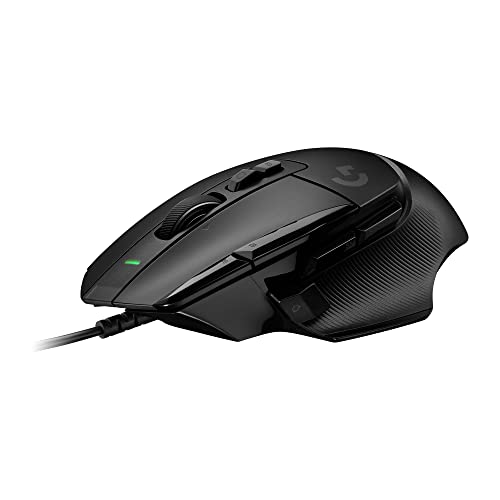
Pros
- High-precision HERO 25K sensor with zero acceleration
- Responsive hybrid optical-mechanical switch actuation
- Lightweight 89-gram build enhances mobility
- Dual-mode scroll wheel with horizontal tilt controls
- Configurable, removable DPI-shift thumb button
Cons
- Tethered cable limits movement range compared to wireless mice
- Wired setup requires dedicated desk cable management
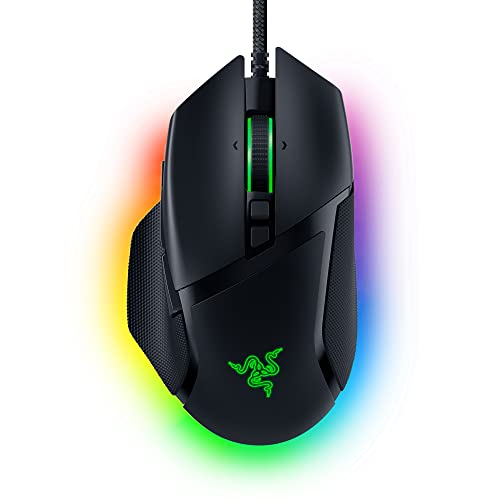
Pros
- 11 programmable buttons for comprehensive macro control
- Dual-mode HyperScroll tilt wheel enhances versatility
- High-resolution 26K DPI optical sensor
- Responsive optical switches rated for 70 million clicks
- 11 independently customizable RGB lighting zones
Cons
- Tethered wired cable restricts cable-free mobility
- Ergonomic thumb rest form factor excludes left-handed users
Recommended Gaming Mice for Mac
Logitech G305 Lightspeed Wireless Gaming Mouse
The G305 pairs a HERO optical sensor rated up to 12,000 DPI with Logitech LIGHTSPEED wireless and a USB receiver. Its single AA battery is advertised for up to 250 hours of continuous gaming, and the receiver stores inside the mouse for travel.
Pros: Wireless receiver connection, onboard receiver storage, and a stated long battery-life figure make it a practical option for a Mac setup with a compatible USB port or adapter.
Cons: The supplied listing does not specify macOS support for Logitech G HUB, which may limit software-based configuration. It uses a replaceable AA battery rather than a rechargeable battery.
Who should skip it: Skip this model if you require confirmed Mac software support or prefer a rechargeable mouse.
See games that can make use of a gaming mouse’s extra controls when choosing features for your setup.
Aula SC620 Wireless Gaming Mouse
The SC620 advertises 2.4 GHz, Bluetooth 5.3, and wired USB connection modes, plus a 12,000 DPI maximum and seven programmable buttons. Its listing names Mac OS compatibility, but also states that Bluetooth mode is unavailable in the Mac-compatible use case, so confirm which connection works with your Mac before buying.
Pros: Multiple connection types, a stated 67 g weight, and several DPI steps provide flexibility for different desks and workloads. The product listing explicitly names Mac OS among supported systems.
Cons: The listing says the AULA driver is required for programming and that Bluetooth mode is unavailable, despite advertising Bluetooth elsewhere. It does not establish that the driver supports macOS.
Who should skip it: Skip it if you need reliable Bluetooth operation on Mac or want confirmed macOS macro configuration.
Redragon Wireless Gaming Mouse
This Redragon model offers 2.4 GHz, Bluetooth, and wired USB-C connection modes, with a stated 8,000 DPI maximum and seven configurable primary buttons. Its product information specifically says the software for remapping and RGB customization requires Windows and does not support Mac OS.
Pros: Bluetooth offers a receiver-free connection option, while 2.4 GHz and wired modes provide alternatives. The listing gives a battery-life claim of up to 250 hours in 2.4 GHz mode with RGB off.
Cons: Mac users cannot use the stated Windows-only software for button remapping or lighting customization. Advanced functions should not be assumed to work as configured on a Mac.
Who should skip it: Skip this mouse if programmable buttons or RGB control on macOS are essential.
Logitech G502 X Wired Gaming Mouse
The G502 X is a wired option with a HERO 25K sensor, LIGHTFORCE switches, a removable DPI-shift button, and a scroll wheel that switches between free-spin and ratcheted modes. Its extra controls may suit gaming and productivity, but the supplied specifications do not confirm macOS support for software customization.
Pros: A wired connection avoids wireless receiver or battery management. The adjustable DPI-shift button and tilt wheel provide additional physical controls without requiring a wireless connection.
Cons: The supplied listing does not state macOS software compatibility or describe Mac-specific setup. This is a wired model, so it may not suit a cable-free desk.
Who should skip it: Skip it if you want wireless freedom or need confirmed Mac support for custom profiles.
Razer Basilisk V3 Customizable RGB Wired Ergonomic
The Basilisk V3 has a thumb rest, 11 programmable buttons, a tilt wheel with free-spin and tactile modes, and a stated 26,000 DPI sensor. Those controls can suit games and shortcut-heavy tasks, but the listing describes Razer Synapse optimization without confirming macOS software support.
Pros: Its wired connection and many onboard controls suit users who want a feature-rich mouse without managing a battery. The thumb rest and scroll-wheel modes support distinct grip and navigation preferences.
Cons: The supplied product information does not confirm Mac compatibility for Synapse or its programmable features. RGB customization and stored profiles should not be assumed to work on macOS.
Who should skip it: Skip it if you require confirmed macOS support for macros, profiles, or lighting control.
Redragon M810 PRO Wireless RGB Gaming Mouse 10000
The M810 PRO uses a 2.4 GHz receiver and lists five DPI levels up to 10,000, eight programmable buttons, and a rechargeable battery advertised for up to 45 hours in eco mode. The supplied information does not specify Mac compatibility or driver support, so treat it as a conditional choice for Mac users.
Pros: Wireless operation, multiple programmable buttons, and a rechargeable battery are useful features for a gaming-oriented setup. The stated DPI levels can be adjusted through the manufacturer’s software.
Cons: The software-dependent customization is not documented as compatible with macOS, and the product data does not explicitly list Mac support. The battery-life figure applies to eco mode.
Who should skip it: Skip it if Mac compatibility and software-based button setup must be confirmed before purchase.
Logitech G PRO X3 SUPERSTRIKE Gaming Mouse
This premium wireless model lists a HERO 2 sensor up to 48,000 DPI, LIGHTSPEED wireless polling up to 8 kHz, and up to 135 hours of battery life. Its haptic inductive trigger system offers configurable actuation and reset points, while the listing says advanced features require Logitech G HUB software.
Pros: The documented sensor and connection specifications target demanding competitive play, and USB-C charging is listed. Its configurable click system may appeal to players who want to adjust actuation behavior.
Cons: The supplied data does not confirm G HUB support on macOS, even though advanced features depend on that software. The feature set may be unnecessary for casual gaming or everyday Mac use.
Who should skip it: Skip it if you want a simple, low-cost mouse or need confirmed Mac access to advanced settings.
Redragon S101-3 PRO Gaming Keyboard and Mouse
This is a wired keyboard-and-mouse bundle rather than a standalone mouse. The mouse lists adjustable sensitivity from 800 to 7,200 DPI, while the bundle’s software and stated plug-and-play compatibility are specifically described for Windows 10 and 11.
Pros: It combines a keyboard and mouse in one wired set, which may appeal to someone replacing both peripherals. The mouse has an on-the-fly DPI adjustment button.
Cons: The product data does not document Mac compatibility, and its software is described for Windows. Mac users should not expect access to its advertised personalization features.
Who should skip it: Skip it if you need a Mac-specific gaming mouse or only want to replace your mouse.
How to Choose a Gaming Mouse for Mac
Check macOS support for software features
A mouse may move and click through a standard connection while its configuration app remains Windows-only. Check the manufacturer’s current macOS software support if you rely on macros, button remapping, lighting effects, or saved profiles.
Choose a connection that fits your Mac
Bluetooth can avoid a USB receiver, while 2.4 GHz models require their receiver and wired mice need a suitable port or adapter. Confirm your Mac’s available connections and verify that the mouse’s specific connection mode works with macOS.
Prioritize useful controls over maximum DPI
A high DPI ceiling is not automatically an advantage for every player. Consider whether you need a DPI-shift control, extra programmable buttons, a thumb rest, or a particular scroll-wheel mode, and confirm those features can be configured on your Mac.
Consider battery and cable preferences
Wireless models trade cable freedom for battery charging or replacement and receiver management. Wired choices avoid battery upkeep, but their cable remains part of the desk setup.
For a broader setup, see our guide to gaming keyboard and mouse combinations. Although written for PC setups, it can help compare peripheral features before checking Mac-specific support.
Frequently Asked Questions
Will a gaming mouse work with a Mac?
Basic pointer functions depend on the mouse’s connection and system compatibility. Advanced controls can require manufacturer software, so check macOS support for the exact model and features you plan to use.
Can I use a gaming mouse without its configuration software?
Often, basic pointing and clicking may work through a supported connection, but that does not guarantee access to macros, remapping, lighting controls, or custom profiles. The supplied product data does not confirm every model’s default behavior on Mac.
Which Gaming Mouse for Mac Should You Choose?
Choose the Logitech G305 if you want a compact wireless option and are comfortable checking Logitech software support separately. Consider the Aula SC620 for connection flexibility only after confirming its Mac-compatible mode and driver limitations; choose a wired Logitech or Razer model if physical controls matter more than wireless use.
The Redragon M814 is a conditional pick for Mac users who can live without its Windows-only customization, while the Redragon bundle and M810 PRO have less documented Mac support. For the best gaming mice for Mac, verify the exact model’s software and connection compatibility before relying on programmable features.



Write Your Review
No reviews yet. Be the first to share your experience!