

The best under $15 dollor gaming mouse should match your connection preference, grip, button needs, and expected workload. These four options cover simple wired control, high-resolution DPI adjustment, wireless convenience, and additional shortcut buttons.
This is a specification-based comparison rather than a hands-on test. The advertised features support different use cases, but sensor performance, comfort, and long-term durability should not be treated as independently verified results.

Pros
- Driver-free plug-and-play setup across multiple operating systems
- Symmetrical ambidextrous profile fits either hand comfortably
- Integrated 7-color ambient LED lighting effect
- Simple 3-button configuration with smooth scroll wheel
Cons
- Fixed 1200 DPI with no dedicated sensitivity toggles
- Lacks programmable side thumb buttons
- No software control for lighting patterns or profiles

Pros
- High sensitivity optical sensor reaching 12,800 DPI
- Tangle-resistant five-foot braided USB-A cable
- Broad plug-and-play compatibility across operating systems
- Dedicated side navigation buttons for browsing
- Multiple customizable RGB lighting profiles
Cons
- Asymmetric shape unsuitable for left-handed users
- Wired design lacks wireless connectivity options

Pros
- Silent switches reduce clicking noise
- Rechargeable battery supports wired use while charging
- Integrated underside switch to disable lighting
- Plug-and-play setup with no drivers required
- Three on-the-fly adjustable DPI presets
Cons
- Maximum sensitivity capped at 2400 DPI
- Requires an available USB-A port for wireless use
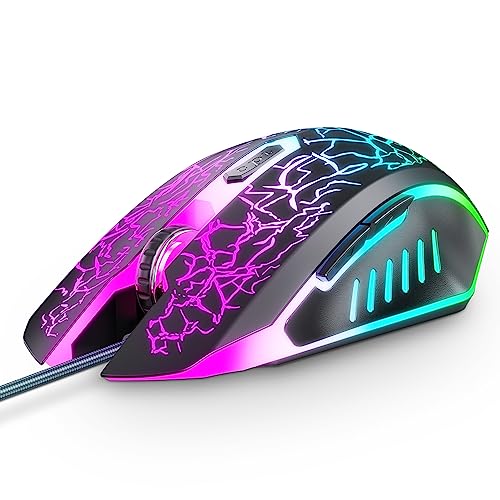
Pros
- Simple plug-and-play USB connectivity without software
- Four quick-switch DPI sensitivity presets
- Dedicated shortcut to disable the LED lighting
- Ergonomic design with rubberized scroll wheel
Cons
- Side navigation buttons do not function on macOS
- DPI settings restricted to four fixed increments
Among these models, the MANHATTAN mouse offers the highest advertised DPI range and five buttons. The LuLabboard model is the only wireless rechargeable option, while the HP mouse has the simplest three-button layout.
How the Best Under $15 Dollor Gaming Mouse Choices Differ
| Mouse | Connection | Advertised DPI | Buttons | Best suited to |
|---|---|---|---|---|
| HP Wired RGB Gaming Mouse High Performance Mouse | Wired USB | 1200 DPI | 3 | Basic PC gaming, schoolwork, and office use |
| MANHATTAN RGB LED Wired USB Gaming Mouse | Wired USB-A | Up to 12,800 DPI | 5 | Users wanting DPI adjustment and browser shortcuts |
| LuLabboard Wireless Gaming Mouse | 2.4 GHz wireless receiver, rechargeable | 1200, 1600, or 2400 DPI | 6 silent-click buttons | Flexible laptop and desk setups |
| VersionTECH. Wired Gaming Mouse | Wired USB | 1200, 1600, 2400, or 3600 DPI | 6 programmed buttons | Casual gaming with extra controls |
HP Wired RGB Gaming Mouse High Performance Mouse
HP Wired RGB Gaming Mouse High Performance Mouse is the straightforward choice for users who want a plug-and-play wired mouse without software requirements. Its optical sensor is rated at 1200 DPI, and the three-button design includes the standard left, right, and scroll-wheel controls.
The ambidextrous shape may suit shared computers or households where different users hold the mouse differently. HP lists compatibility with Windows, Chromebooks, macOS, Linux, and most gaming consoles, although console support can depend on the individual game and system.
The main limitation is its fixed 1200 DPI specification and basic button layout. It is better suited to everyday computing and casual gaming than users who need multiple sensitivity settings or dedicated side controls.
HP Wired RGB Gaming Mouse High Performance Mouse
MANHATTAN RGB LED Wired USB Gaming Mouse
MANHATTAN RGB LED Wired USB Gaming Mouse stands out for its advertised DPI range, which reaches 12,800, along with five buttons and dedicated forward and back thumb controls. Those features can help users switch cursor sensitivity or navigate browsers without relying as heavily on keyboard shortcuts.
It uses a wired USB-A connection and includes a braided cable, so it does not require batteries or wireless pairing. The listed operating system support includes Windows versions through Windows 11, macOS, Linux, and Chrome OS, provided the computer has an available USB-A port.
The full-size shape is specified for right-handed use, which makes it less flexible than the ambidextrous HP option. Its high DPI figure is an advertised setting range, not proof of superior tracking in every game or surface condition.
MANHATTAN RGB LED Wired USB Gaming Mouse
LuLabboard Wireless Gaming Mouse
LuLabboard Wireless Gaming Mouse is the most suitable option here for users who want to avoid a permanent cable across the desk. It connects through a USB receiver, supports three DPI levels from 1200 to 2400, and can also operate in wired mode while charging.
The manufacturer lists up to 20 days of battery life with lighting enabled and up to 25 days with lighting disabled. These are advertised figures rather than independently measured results, and wireless use requires keeping the receiver connected and the mouse charged.
Six silent-click buttons, a rechargeable design, and compatibility claims covering Windows, macOS, Android, and iOS make it useful for quieter shared spaces and mixed-device setups. Verify that your target device supports the receiver and any required adapter before buying.
LuLabboard Wireless Gaming Mouse
VersionTECH. Wired Gaming Mouse
VersionTECH. Wired Gaming Mouse combines a wired USB connection with six programmed buttons and four listed DPI choices: 1200, 1600, 2400, and 3600. That combination gives casual PC gamers more sensitivity flexibility and additional controls than a basic three-button mouse.
The ergonomic shape, rubberized scroll wheel, and skin-friendly surface are intended to support longer sessions, while the seven-color lighting can be switched off. It is listed for Windows, macOS, Linux, Chromebook, PS4, and USB 2.0 or 3.0 ports.
One important limitation is that the forward and backward buttons are not available on operating systems. The mouse is therefore more attractive for Windows users who want extra controls than for Mac or Linux users expecting every button to function.
VersionTECH. Wired Gaming Mouse
What to Check Before Choosing a Budget Gaming Mouse
Choose wired or wireless first
Wired models avoid battery charging and wireless receiver placement, making them practical for fixed desktop setups. The LuLabboard mouse adds freedom from a cable but introduces charging and receiver-related requirements.
Match the DPI range to your controls
DPI changes cursor sensitivity, but a larger advertised number does not automatically mean better gaming performance. Consider whether you need one fixed setting, a few selectable levels, or a broad adjustment range for different games and desktop tasks.
Check hand orientation and button support
The HP model is ambidextrous, while the MANHATTAN model is specified for right-handed use. Extra buttons can help with browsing and gaming, but operating system limitations may prevent every control from working outside Windows.
Confirm your port and operating system
All four products are designed around USB connectivity, with the wireless model using a USB receiver. Check for an available compatible port, especially when using a tablet, console, or laptop that may need an adapter.
For more shape-specific guidance, compare these options with our guides to the best gaming mouse for fingertip grip and ergonomic gaming mice for palm grip. Those factors can matter more than lighting or maximum DPI when comfort is the priority.
Final Recommendation
The best under $15 dollor gaming mouse for a simple, ambidextrous setup is the HP model. Choose the MANHATTAN mouse for the broadest advertised DPI range and browser shortcut buttons, the LuLabboard mouse for rechargeable wireless use, or the VersionTECH. mouse for extra wired controls and several DPI presets.
None of these specifications alone establishes competitive gaming performance. Select according to your operating system, hand orientation, connection preference, and need for adjustable sensitivity rather than choosing solely by lighting or DPI claims.




Write Your Review
No reviews yet. Be the first to share your experience!