

Jumping into Ultra HD gaming used to require a massive investment, but recent panel advancements make high-resolution PC gaming far more accessible. Finding the best budget 4k gaming monitors requires balancing raw resolution against refresh rate, panel responsiveness, and real-world interface bandwidth.
If you primarily play fast-paced shooters, motion clarity and refresh rates above 120Hz matter more than pure pixel density. Players who prefer expansive single-player titles or shared workspace setups can prioritize larger screen dimensions and color coverage over competitive twitch features.
Quick Comparison of Budget 4K Gaming Displays

Pros
- Sharp 4K resolution paired with 160Hz refresh rate
- Fast IPS panel offers a 1ms response time
- HDMI 2.1 enables 4K 120Hz console gaming
- NVIDIA G-SYNC Compatible and AMD FreeSync Premium support
- Wide 95% DCI-P3 color gamut coverage

Pros
- Sharp QHD resolution across a spacious 32-inch display
- Fluid 165Hz refresh rate reduces visual lag
- Immersive 1000R curvature fills peripheral vision
- AMD Radeon FreeSync eliminates screen tearing
- Built-in Eye Saver and flicker-reduction modes

Pros
- Dual-mode support for 4K 72Hz or 1080p 144Hz
- Wide 95% DCI-P3 color gamut coverage
- AMD FreeSync tear-free gaming support
- VESA 100x100mm mounting compatibility
- Slim ZeroFrame bezels for multi-monitor setups
Cons
- 4K resolution capped at 72Hz refresh rate
- Stand only supports tilt adjustments
- HDMI inputs limited to version 2.0

Pros
- High 180Hz refresh rate across all inputs
- Extensive connectivity with four total display ports
- Immersive 1500R curved screen design
- Full 100% sRGB color gamut coverage
- Built-in stereo speakers save desk space
Cons
- Advertised 1ms response relies on blur reduction
- Peak 180Hz refresh rate requires an overclocked setting
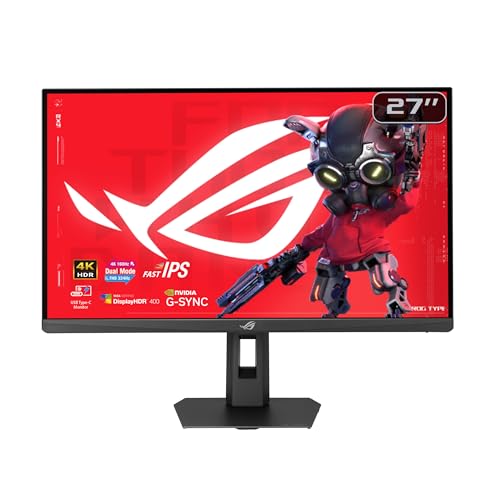
Pros
- Dual display modes supporting up to 324Hz at FHD
- Fast IPS panel with wide 95% DCI-P3 coverage
- ELMB Sync eliminates motion blur alongside variable refresh rates
- USB-C input with DisplayPort Alt Mode support
- Three-year manufacturer warranty with advance replacement

Pros
- Sharp 4K UHD resolution on a large 32-inch canvas
- Smooth 120Hz refresh rate with AMD FreeSync Premium
- Wide 95% DCI-P3 and 99% sRGB color coverage
- Built-in ComfortView Plus low blue light filtering
- Upgraded integrated speakers with expanded audio range
Cons
- Modest 1500:1 contrast ratio for a VA panel
- Basic HDR ready support without high peak brightness ratings
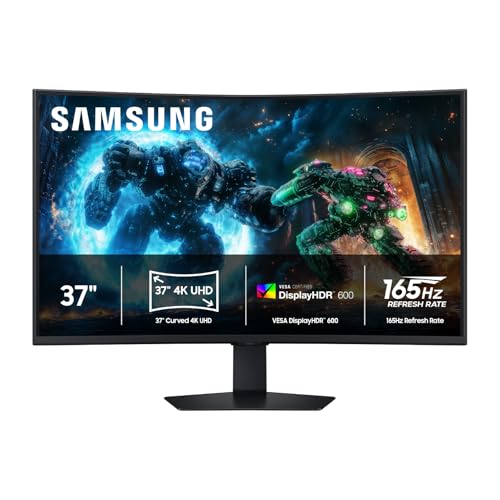
Pros
- Sharp 4K UHD resolution across a large 37-inch screen
- Fluid 165Hz refresh rate for fast-paced gaming
- Rapid 1ms GtG response time reduces motion blur
- Immersive 1000R curved profile
- VESA DisplayHDR 600 delivers enhanced dynamic range
Cons
- Deep 12-inch footprint requires considerable desk space
- Substantial 24.7-pound weight requires a sturdy mounting surface

Pros
- Crisp 4K UHD resolution on an IPS panel
- Smooth 120Hz refresh rate with AMD FreeSync Premium
- Solid 1500:1 contrast ratio with 99% sRGB coverage
- Hardware-level ComfortView Plus low blue light technology
- Integrated upgraded stereo sound

Pros
- Dual-mode refresh rates up to 320Hz at 1080p
- Sharp 4K UHD IPS panel
- AMD FreeSync Premium adaptive sync support
- Modern dual HDMI 2.1 and DisplayPort 1.4 connectivity
- VESA 100 x 100mm wall mount compatibility
Cons
- Stand adjustment is limited to tilt only
- Basic HDR10 support without local dimming specifications

Pros
- Sharp 4K UHD resolution with smooth 160Hz refresh rate
- Deep 3000:1 static contrast ratio
- AMD FreeSync reduces visual stutter and tearing
- Modern HDMI 2.1 and DisplayPort 1.4 connectivity
- Immersive 1500R curvature
Cons
- Modest 320 cd/m² peak brightness rating
- Uses smaller 75x75mm VESA mount instead of standard 100x100mm
- Stand ergonomic adjustments are not documented
Detailed Analysis of the Best Budget 4K Gaming Monitors
ASUS TUF Gaming VG27UQ1A 27 Inch 4K 160Hz G-SYNC
The ASUS TUF Gaming VG27UQ1A pairs a native 3840 x 2160 Fast IPS panel with a 160Hz refresh rate. It delivers sharp image clarity alongside variable refresh rate support across both AMD FreeSync Premium and NVIDIA G-SYNC pipelines. The addition of HDMI 2.1 enables full 4K 120Hz output without chroma subsampling, making it equally capable for PlayStation 5 or Xbox Series X consoles.
With 95% DCI-P3 color gamut coverage and ASUS ELMB Sync, the screen keeps fast motion clear while maintaining color accuracy. The 27-inch frame produces high pixel density, though some desktop users may require OS display scaling to keep text comfortable. It serves as a balanced option for high-end graphics cards capable of sustaining high frame rates at Ultra HD.
Acer Nitro 27in 4K 3840×2160 IPS 160Hz DFR 320Hz
The Acer Nitro VG270K V4 stands out by integrating Dynamic Frequency and Resolution (DFR) technology. This system lets users toggle between native 4K at 160Hz for graphical adventures and 1080p at 320Hz for competitive esports. A rated 0.5ms minimum gray-to-gray response time ensures transitions remain clean across both operating modes.
Equipped with AMD FreeSync Premium and 90% DCI-P3 color coverage, this display handles demanding PC setups with ease. The primary trade-off is the zero-frame chassis stand, which offers limited ergonomic adjustment out of the box. Users seeking a multi-genre panel will find the dual-resolution feature helpful when pairing demanding games with mid-tier graphics hardware.
ASUS ROG XG27UCSR 27 Inch 4K 162Hz USB-C G-SYNC
Designed for enthusiasts seeking premium features within a reasonable price window, the ASUS ROG XG27UCSR provides a 162Hz refresh rate and a dual-mode option reaching 324Hz at Full HD. Fast IPS technology delivers a 0.3ms minimum response time, helping suppress ghosting during chaotic firefights. It also features a USB Type-C port with DisplayPort Alternate Mode for single-cable laptop connections.
Its 95% DCI-P3 gamut and gray-scale tracking ensure strong tonal accuracy for gaming and content creation. The display controls integrate into desktop software via DisplayWidget Center, removing the need to reach behind the bezel. You will need a modern graphics card with DisplayPort 1.4 or USB-C display support to exploit the maximum refresh ceiling.
Dell 27 Monitor S2725QS, 4K UHD IPS, 120Hz, 5ms
The Dell S2725QS bridges daily productivity with casual PC and console gaming by delivering a 4K UHD IPS display operating at 120Hz. AMD FreeSync Premium keeps frames synchronized, while ComfortView Plus hardware reduces blue light emissions to 35% or lower without distorting colors. The 1500:1 contrast ratio provides slightly deeper blacks than conventional IPS panels.
Integrated speakers with expanded acoustic range make it convenient for compact workstation setups. While the 5ms baseline response time is slightly slower than dedicated esports monitors, it remains completely sufficient for RPGs, simulation titles, and casual multiplayer. It is an ideal pick for hybrid home offices that double as recreation hubs.
Dell 32 Monitor S3225QS, 4K UHD VA, 120Hz
Expanding the visual field to 32 inches, the Dell S3225QS swaps to a VA panel to emphasize contrast and deep black reproduction. It supports 120Hz refresh rates and AMD FreeSync Premium, delivering fluid motion across both open-world titles and media playback. Color handling covers 99% sRGB and 95% DCI-P3, rendering movies and games with vivid clarity.
The 32-inch screen provides ample real estate without demanding aggressive operating system scaling. However, VA panels inherently exhibit narrower viewing angles than IPS equivalents, making direct viewing positioning essential. For darkened rooms and cinematic experiences, this model provides high immersion for the cost.
Samsung 37” Odyssey G7 (G75F)
The Samsung Odyssey G7 (G75F) brings an expansive 37-inch 4K UHD curved canvas to desktop stations. Featuring a sharp 1000R curvature, the screen wraps around peripheral vision to reduce eye travel across wide distances. A 165Hz refresh rate and 1ms gray-to-gray response time keep inputs immediate and motion smooth.
With VESA DisplayHDR 600 certification, this monitor achieves punchier highlight peaks than typical entry-level HDR displays. Its significant physical footprint requires a sturdy, deep desk to accommodate the aggressive curve and stand. Gamers seeking an alternative to ultrawide gaming monitors will appreciate the generous vertical height of this 16:9 display.
CRUA 32″ 4K UHD 160Hz Curved Gaming Monitor
Offering a 1500R curve on a 32-inch panel, the CRUA 4K display targets immersive sim gaming and general entertainment. It reaches a 160Hz refresh rate alongside AMD FreeSync support to eliminate tearing during variable framerate drops. Connectivity includes HDMI 2.1 and DisplayPort 1.4, matching current-generation graphics cards and consoles.
A 3000:1 contrast ratio provides solid dark-scene performance, complemented by 120% sRGB area coverage. Integrated stereo speakers and 75mm VESA mount compatibility offer flexible setup choices. The brand uses basic on-screen display menus, but the core panel specifications present reliable value on paper.
Acer Nitro 27in 4K 3840×2160 IPS 72Hz DFR 144Hz
The Acer Nitro VG270K L1 provides an entry-level pathway to Ultra HD with native 4K output up to 72Hz. When higher framerates are required, its dynamic frequency switching drops resolution to 1080p to support 144Hz. This flexibility allows gamers with modest GPUs to enjoy productivity in 4K while gaming smoothly at 1080p.
Equipped with an IPS panel covering 95% DCI-P3 and AMD FreeSync, color rendition remains stable from wide angles. It lacks the ultra-high 4K refresh rates of pricier siblings, capping at 72Hz at full resolution. For budget-conscious players prioritizing crisp visuals over competitive framerates, it remains a practical contender.
Alternative Resolution Choices: Samsung G55C and Sceptre 27-Inch
While exploring budget listings, shoppers often encounter models like the Samsung 32″ Odyssey (G55C) and the New! Sceptre Curved 27-inch Prime Gaming Monitor. It is important to note that the Samsung Odyssey G55C is a 1440p (QHD) monitor, running at 165Hz with a 1000R curve, while the Sceptre unit is a high-refresh 1080p display. If your GPU cannot sustain 4K workloads, reviewing 1440p gaming monitor options may offer better performance-per-dollar.
Key Technical Factors When Choosing a Budget 4K Monitor
Before purchasing, assess your hardware pipeline. Driving 8.3 million pixels at high framerates demands substantial graphical horsepower. Review our guide on how to build an optimized budget battlestation to ensure your graphics card and power delivery match your display expectations.
Panel Technology: IPS panels provide superior viewing angles and color consistency, making them ideal for shared viewing and desk work. VA panels deliver higher native contrast ratios, resulting in deeper black levels that suit dimly lit gaming spaces.
Refresh Rate vs. Dual Mode: Modern 4K displays increasingly feature dual-mode or DFR capabilities. This allows switching to 1080p at 240Hz or higher for fast competitive titles, while preserving native 4K for detail-heavy RPGs.
Port Standards: Ensure the monitor features HDMI 2.1 if you intend to run modern game consoles at 4K 120Hz. PC connections benefit most from DisplayPort 1.4 with Display Stream Compression (DSC) to run full refresh rates with 10-bit color enabled.
Frequently Asked Questions
Can budget 4K gaming monitors display true HDR?
Most budget monitors carry baseline HDR10 or DisplayHDR 400 support, which accepts HDR signals but lacks the full-array local dimming required for dramatic highlight punch. For genuine contrast dynamics, look for displays with DisplayHDR 600 or higher ratings.
Is 27 inches or 32 inches better for 4K gaming?
A 27-inch 4K screen offers exceptional pixel density of roughly 163 pixels per inch, resulting in razor-sharp imagery that usually requires Windows scaling. A 32-inch screen offers greater physical immersion and allows reading UI elements more easily at native scale.
Final Recommendation
For PC and console players who want native 4K at 160Hz with dependable motion handling, the ASUS TUF Gaming VG27UQ1A delivers the most balanced feature set. Competitive gamers who alternate between story-rich worlds and rapid shooters should consider the Acer Nitro VG270K V4 for its dual-mode high refresh capability. If your priority is large-format contrast and immersion, the 32-inch Dell S3225QS or curved CRUA display provide spacious screen real estate without overwhelming your budget.


Write Your Review
No reviews yet. Be the first to share your experience!