

Modern budget displays offer far better visual clarity and motion performance than entry-level screens did in previous hardware cycles. Competitive players no longer need to accept poor viewing angles or smeary response times to keep desk setup expenses down.
Choosing among the best 1080p monitors under $150 requires balancing motion speed against desktop pixel density and physical ergonomics. The 3 options below emphasize fast IPS panels and variable refresh rates suitable for esports titles and daily productivity.

Pros
- Overclockable 146Hz refresh rate with 1ms response time
- IPS panel ensures consistent colors and wide viewing angles
- ASUS ELMB Sync minimizes motion blur and tearing
- Integrated speakers save desk space
- Backed by a three-year manufacturer warranty
Cons
- Full HD resolution provides limited screen real estate
- Modest refresh rate headroom over standard 144Hz displays
Pros
- High 240Hz refresh rate for fluid motion
- Fast IPS panel with wide viewing angles
- AMD FreeSync Premium and HDMI VRR support
- Dual HDMI and DisplayPort connectivity options
Cons
- 1080p resolution provides lower pixel density at 27 inches
- Stand adjustment is limited to tilt only

Pros
- Smooth 144Hz IPS panel with vivid colors
- Supports both G-SYNC Compatible and FreeSync
- Height and tilt adjustable ergonomic stand
- Built-in stereo speakers and headphone port
- Dynamic Action Sync reduces input lag
Cons
- 1ms response rating requires Motion Blur Reduction
- 1080p resolution limits workspace compared to 1440p
Quick Comparison of Budget 1080p Displays
Understanding documented specifications helps identify which display suits your primary games and desk dimensions before you spend any money. Screen size alters pixel density significantly when you run Full HD resolution across different panel dimensions.
| Monitor Model | Screen Size | Refresh Rate | Panel Type | Sync Support |
|---|---|---|---|---|
| ASUS TUF VG249QE5A | 23.8 inches | 144Hz (146Hz OC) | IPS | ELMB Sync / VRR |
| Dell SE2726HG | 27.0 inches | 240Hz | Fast IPS | FreeSync Premium |
| LG 24G414B-B Ultragear | 24.0 inches | 144Hz | IPS | G-Sync Comp. / FreeSync |
The Best 1080p Monitors Under $150 Reviewed
1. ASUS TUF Gaming 24” (23.8” viewable)
ASUS TUF Gaming 24” (23.8” viewable) delivers an agile Full HD gaming canvas paired with ASUS Extreme Low Motion Blur Sync technology. Running ELMB alongside variable refresh rate prevents tearing while simultaneously reducing image strobing artifacts during fast camera rotations.
The 23.8-inch screen size maintains roughly 92 pixels per inch, keeping text readable and in-game details sharp from standard viewing distances. Integrated speakers provide basic audio functionality, while the DisplayWidget Center application lets you tweak profile adjustments directly using your mouse pointer.
As with many sub-$150 displays, the included stand offers limited adjustability, requiring a separate VESA monitor arm for full ergonomic customization. This display fits shooters and fast-paced action titles where backlight strobing clarity matters more than expansive physical screen dimensions.
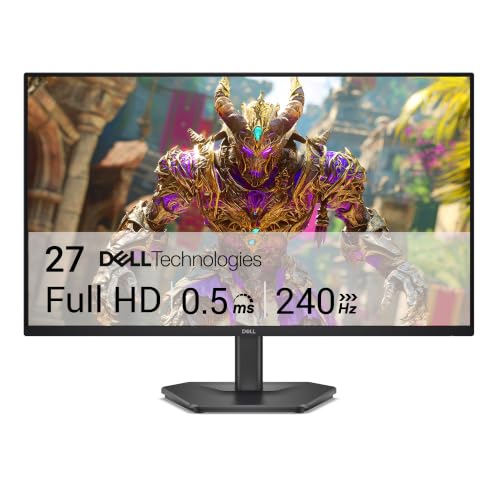
2. Dell 27 240Hz Gaming Monitor – SE2726HG
Dell 27 240Hz Gaming Monitor – SE2726HG is an aggressive entry for players wanting maximum refresh rates on a tighter budget. Its 240Hz Fast IPS panel dramatically cuts frame delivery intervals, providing smoother motion tracking in competitive shooters like Counter-Strike or Valorant.
Dell equips this unit with AMD FreeSync Premium and HDMI VRR support across dual HDMI ports and a DisplayPort 1.4 connection. Color fidelity remains stable through 99 percent sRGB coverage, backed by TÜV Rheinland hardware blue light reduction designed for long evening gaming sessions.
The trade-off rests in stretching 1920×1080 resolution across a 27-inch diagonal, which reduces pixel density to approximately 81 pixels per inch. Gamers who prioritize pure frame delivery over fine pixel clarity will appreciate the fluid refresh rate this monitor offers.
3. LG 24G414B-B 24-inch Ultragear IPS 1080p 144Hz 1ms
LG 24G414B-B 24-inch Ultragear IPS 1080p 144Hz 1ms balances competitive response times with flexible daily usability for general computing setups. Official compatibility with NVIDIA G-Sync and AMD FreeSync ensures tear-free gameplay regardless of which graphics card manufacturer powers your PC system.
LG incorporates Dynamic Action Sync to trim input latency, accompanied by Black Stabilizer options that lift shadow visibility in murky multiplayer maps. The bundled OnScreen Switch app lets you organize split-screen window layouts effortlessly when balancing homework, office tasks, or livestream monitoring duties.
While the panel supports HDR10 decoding, sub-$150 edge-lit panels lack local dimming zones and high peak luminance needed for impactful high dynamic range. Treat this model as an accurate standard dynamic range gaming monitor with dependable motion handling and reliable color presentation.
Key Buying Factors for Budget 1080p Displays
When selecting among the best 1080p monitors under $150, panel size directly influences practical visual sharpness on your desktop. A 24-inch monitor delivers a crisp image for office productivity and gaming because pixels remain packed tightly together on screen.
Stepping up to 27 inches provides larger targets in shooter titles, but individual pixels become more noticeable when sitting close. If visual sharpness and fine desktop detail are your main priorities, consider reviewing the 7 best 1440p gaming monitors before deciding on Full HD displays.
Refresh rate needs to match your system capability rather than existing purely as an advertised number on a retail specification sheet. A 144Hz monitor requires a graphics card capable of maintaining high frame rates to realize its full mechanical responsiveness in modern titles.
Matching monitor capabilities to budget hardware is crucial when following how to build the ultimate battlestation on a budget. For wider multitasking layouts without dual screens, you can also explore the 6 best ultrawide monitors to evaluate alternate desk configurations.
Frequently Asked Questions
Is 1080p resolution still adequate for PC gaming?
Full HD remains the most popular resolution for competitive esports because it allows mid-tier graphics cards to maintain high frame rates reliably. The resolution delivers sharp results on 24-inch screens while keeping rendering workloads manageable for entry-level and budget gaming computers.
Can HDMI cables support 144Hz or 240Hz at 1080p?
Modern HDMI 2.0 connections handle 1080p at both 144Hz and 240Hz refresh rates without bandwidth limitations on compatible graphics cards. DisplayPort remains the preferred PC connection because it guarantees broad variable refresh rate compatibility across both NVIDIA and AMD hardware platforms.
Final Verdict: Which Budget Display Fits Your Setup?
If your primary focus centers on fast motion clarity with simultaneous backlight strobing, pick the ASUS TUF Gaming 24” (23.8” viewable). Its compact footprint and ELMB Sync technology deliver excellent pixel control without sacrificing variable refresh synchronization.
For dedicated esports players targeting maximum fluid motion, the Dell 27 240Hz Gaming Monitor – SE2726HG delivers exceptional speed at an accessible price. Meanwhile, the LG 24G414B-B 24-inch Ultragear IPS 1080p 144Hz 1ms offers an ideal balance of software utility, certified adaptive sync, and balanced 24-inch pixel density.





Write Your Review
No reviews yet. Be the first to share your experience!