

Choosing among the best wireless mechanical keyboards requires balancing wireless latency, switch feel, battery endurance, and overall layout size. Modern wireless boards now offer reliable 2.4 GHz connections that match wired latency for high-speed gaming. Bluetooth connections remain available on most units to support multi-device switching across laptops, tablets, and desktop workstations.
The keyboard market has shifted rapidly toward pre-lubed switches, sound-dampening gasket mounts, and hot-swappable circuit boards. Gamers who prioritize fast actuation often prefer linear switches, while office professionals frequently choose tactile or silent variants. Understanding your primary typing workload helps determine whether a compact 75 percent model or a full-size number-pad board fits your desk best.

Pros
- Large 10,000mAh rechargeable battery capacity
- Flexible Bluetooth, 2.4GHz wireless, and USB-C connectivity
- Hot-swappable PCB compatible with 3-pin and 5-pin switches
- Multi-layered gasket design dampens key clatter effectively
- Dedicated hardware knob for quick volume and lighting control
Cons
- Macro and lighting customization require dedicated driver software
- Condensed 96% layout features tighter key spacing than full-size boards
Pros
- Tri-mode wireless and wired connectivity for multiple devices
- Hot-swappable sockets compatible with 3-pin and 5-pin switches
- Five-layer acoustic dampening with pre-lubricated switches
- Dedicated multi-function knob for volume and lighting
- Large 4000mAh internal rechargeable battery
Cons
- Compact 75% layout lacks a dedicated numpad
- Advanced macro programming requires external driver download
- Weighs over 2.2 pounds, limiting travel convenience

Pros
- Versatile Bluetooth, 2.4GHz, and wired connectivity
- Quiet low-profile linear red mechanical switches
- Full-size 107-key layout with dedicated volume knob
- Rigid aluminum top plate construction
- Rechargeable 2000mAh internal battery
Cons
- Backlighting is limited to single-color white
- Full-size 107-key footprint occupies substantial desk space
Pros
- Versatile tri-mode wireless and wired connectivity
- Hot-swappable PCB with included spare switches
- Wear-resistant double-injection PBT keycaps
- Pairs with up to five devices
- Durable metal top panel construction

Pros
- Gasket mount with five sound-dampening layers
- Hot-swappable PCB compatible with 3-pin and 5-pin switches
- Durable double-shot PBT keycaps in MDA profile
- Dedicated CNC aluminum volume control knob
- Pre-lubed linear cream switches
Cons
- Wired-only design lacks wireless connectivity
- Compact 96% layout clusters keys closer together

Pros
- Tri-mode wireless and USB-C connectivity
- Hot-swappable sockets compatible with 3-pin and 5-pin switches
- Durable brushed aluminum frame construction
- Pre-installed quiet linear switches minimize typing noise
- Companion software supports macro programming and RGB customization

Pros
- Versatile 2.4GHz, Bluetooth, and wired USB-C connectivity
- Hot-swappable sockets support 3-pin and 5-pin switches
- Multi-function knob for volume and lighting control
- High-capacity 4000mAh rechargeable internal battery
- Compact 75% layout retains dedicated arrow keys
Cons
- Lacks a dedicated numeric keypad
- Full macro programming requires optional driver software
- Side-printed legends may reduce visibility from certain angles

Pros
- Tri-mode Lightspeed, Bluetooth, and wired connectivity
- Factory-lubed low-profile linear mechanical switches
- Durable double-shot PBT keycaps resist shine
- Compact tenkeyless footprint saves desk space
- Supports 2:1 mouse pairing on a single USB receiver
Cons
- Battery life rated at up to 36 continuous hours
- Tenkeyless layout lacks a dedicated numeric keypad

Pros
- Versatile Bluetooth, 2.4GHz, and USB-C connectivity
- Convenient built-in smart display and multi-function knob
- Hot-swappable PCB compatible with 3-pin and 5-pin switches
- Extensive multi-layer sound dampening reduces typing noise
- Durable wear-resistant double-shot PBT keycaps
Cons
- Three-pound total weight limits travel portability
- Full-sized footprint requires substantial desktop space
Pros
- Low-profile quiet tactile mechanical switches
- Multi-device pairing across up to three devices
- Smart backlighting with automatic proximity detection
- Includes Logi Bolt receiver and Bluetooth support
- Up to 10 months battery life without backlighting
Cons
- Battery life drops significantly with backlighting enabled
- Full-size footprint takes up substantial desk space
Key Hardware Differences Across Wireless Models
Wireless keyboards vary substantially in their internal mounting styles, switch heights, and battery hardware. Standard high-profile mechanical boards offer deep key travel and customizable keycap profiles. Low-profile models reduce wrist angle strain by using shallow switch housings and thinner keycaps for flat typing ergonomics.
Internal battery capacity directly dictates how often you must plug your board into a charging cable. Boards with small 2,000 mAh cells require frequent recharging when per-key RGB backlighting runs at maximum brightness. Massive 10,000 mAh batteries allow prolonged wireless sessions between charges, though they add noticeable physical weight to the keyboard chassis.
Detailed Analysis of Top Wireless Keyboards
SOLAKAKA KI99 Pro Wireless Mechanical Keyboard
The SOLAKAKA KI99 Pro Wireless Mechanical Keyboard is built for users who want quiet typing and extended battery endurance. It features an integrated 10,000 mAh rechargeable battery, which stands out as one of the largest power capacities in this hardware class. Its 96 percent layout retains standard numeric keypad functionality while trimming unused border space from traditional full-size cases.
The keyboard utilizes a five-layer gasket structure paired with pre-lubricated silent switches to eliminate ping and typing clatter. A multi-function rotary knob handles direct volume adjustments and lighting controls without opening software drivers. The 1.2 mm flex-cut PCB supports hot-swapping both 3-pin and 5-pin switches, though the dense 96 percent layout requires adjustment for touch typists used to spaced navigation clusters.
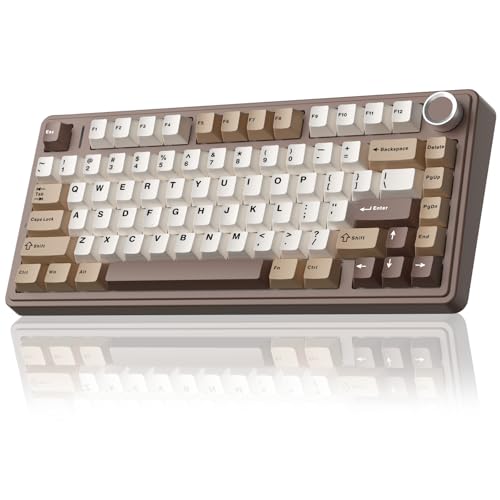
AULA F75 75% Wireless Mechanical Keyboard
The AULA F75 75% Wireless Mechanical Keyboard targets gamers who require maximum mouse clearance without sacrificing dedicated arrow keys. This 81-key board utilizes a gasket mounting design with single-key slotted PCB cutouts that produce a flexible, cushioned typing feel. Its pre-lubed linear switches and silicone dampening sheets reduce hollow acoustic resonance inside the plastic enclosure.
Wireless duties are handled through 2.4 GHz, Bluetooth 5.0, or USB-C wired mode backed by an internal 4,000 mAh battery. A dual-mode rotary control switches quickly between media playback control and gaming backlighting adjustment modes. The compact form factor omits the dedicated numpad, making it less suitable for accounting tasks but ideal when paired alongside responsive wireless gaming mice.
Logitech G515 Lightspeed TKL Wireless
The Logitech G515 Lightspeed TKL Wireless caters to competitive players who need ultra-low latency and slim desk profiles. It incorporates factory-lubricated low-profile GL mechanical switches that provide short actuation travel for rapid inputs during fast matches. Logitech rates the proprietary Lightspeed wireless connection at a 1 ms report rate, matching standard wired competitive latency.
Its tenkeyless chassis measures substantially thinner than traditional mechanical enclosures, reducing wrist extension without requiring an external palm rest. Double-shot PBT keycaps resist skin oil degradation and prevent keytop shine over prolonged gaming sessions. Battery endurance is rated at up to 36 hours of continuous active use, requiring more frequent charging cycles than heavier boards with larger internal cells.
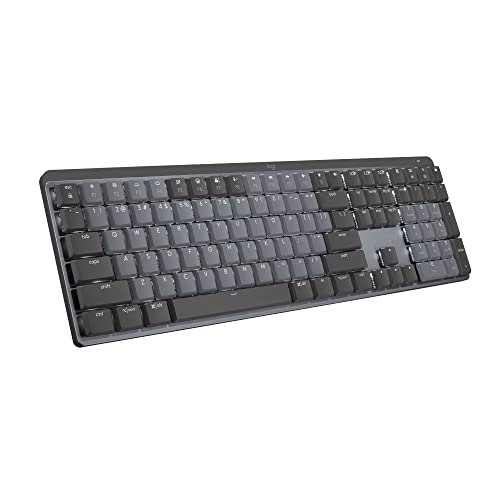
Logitech MX Mechanical Wireless Illuminated
The Logitech MX Mechanical Wireless Illuminated is designed specifically for productivity workflows and multi-device office setups. It features low-profile tactile quiet switches that offer distinct tactile feedback without disturbing coworkers in quiet environments. Connectivity relies on Bluetooth Low Energy or the enterprise-grade Logi Bolt USB receiver for stable multi-OS pairing across up to three distinct devices.
Proximity sensors automatically illuminate key backlighting as hands approach the aluminum top deck, conserving power when the keyboard rests idle. Logitech rates battery life at up to 15 days with active backlighting, or up to 10 months with illumination disabled. Unlike gaming-oriented hardware, it lacks a high-polling 2.4 GHz mode and does not feature hot-swappable switch sockets for hardware modding.
RK ROYAL KLUDGE S98 Wireless Mechanical Keyboard
The RK ROYAL KLUDGE S98 Wireless Mechanical Keyboard integrates a multi-functional color display screen directly onto the keyboard deck. This integrated screen displays active connection modes, battery percentage, OS layout indicators, and custom animated GIFs via software configuration. A companion rotary knob controls screen menus, audio levels, and backlighting presets without disrupting on-screen gaming windows.
The chassis utilizes a top-mount structural plate supported by IXPE switch pads and sound-absorbing silicone layers to deliver consistent tactile bottom-out feedback. Double-shot PBT keycaps and hot-swappable switch sockets ensure long-term physical durability and hardware customization flexibility. The top-mounted construction delivers a firmer key feel than flex-cut gasket setups, which some typists may find rigid over full workdays.
AULA F75 Pro Wireless Mechanical Keyboard,75% Hot
The AULA F75 Pro Wireless Mechanical Keyboard,75% Hot builds on standard compact designs by incorporating side-printed gradient PBT keycaps. The legends are engraved along the front faces of the keycaps, allowing illumination to pass through while keeping top surfaces clean. It comes equipped with pre-lubricated Leobog Reaper linear switches that ensure a smooth travel stroke directly out of the box.
Internally, five sound-dampening layers cushion the PCB and structural positioning plate to reduce acoustic reverberation. Wireless tri-mode functionality connects through 2.4 GHz, Bluetooth 5.0, or USB-C wired cables across mobile devices and PCs. Side-printed legends can be difficult to read in dim environments without active backlighting, making illumination necessary during nighttime typing sessions.
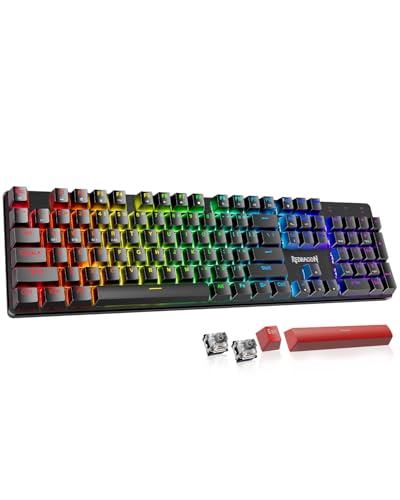
Redragon K556 PRO Wireless RGB Mechanical
The Redragon K556 PRO Wireless RGB Mechanical offers a traditional full-size 104-key configuration encased inside a brushed aluminum top plate. The metallic frame provides substantial structural rigidity that resists chassis flex under aggressive keystrokes during intensive gaming matches. It features universal hot-swap sockets compatible with standard 3-pin and 5-pin mechanical switch replacements.
Tri-mode wireless connectivity supports rapid switching between Bluetooth pairings, dedicated 2.4 GHz operation, and wired USB-C data connections. The board includes 20 preset RGB illumination modes with macro programming supported through desktop configuration software. The full desktop footprint requires substantial desk space, making it less suitable for compact desk spaces or low-sensitivity mouse setups.
X9 Slim Mechanical Keyboard
The X9 Slim Mechanical Keyboard provides a low-profile typing experience in a complete 107-key desktop layout with a numeric pad. It utilizes low-profile red linear switches that offer a shallow laptop-like travel distance combined with mechanical switch consistency. The aluminum top case keeps the physical profile rigid while maintaining an accessible desktop entry price point.
The wireless system connects to four separate devices across two Bluetooth channels, a 2.4 GHz wireless dongle, and wired USB-C mode. An integrated 2,000 mAh battery provides cordless operation, illuminated by clean white backlighting across three manual brightness levels. The low-profile switches are soldered directly to the board, preventing switch replacement or aftermarket hot-swapping down the line.
Redragon K671KS Wireless Mechanical
The Redragon K671KS Wireless Mechanical balances compact dimensions with customizability for PC and tablet setups. It features a metal top panel construction that enhances structural durability during everyday transport and desktop gaming sessions. The retail package includes spare mechanical switches and alternate accent keycaps, giving buyers direct replacement parts inside the box.
Tri-mode connectivity supports up to five simultaneous device pairings using a hardware toggle switch located on the rear panel. Per-key RGB backlighting and key remaps can be customized through downloadable desktop macro editing software. The internal acoustic dampening is less elaborate than multilayer gasket designs, producing a louder bottom-out sound when typing rapidly.
RK ROYAL KLUDGE R98 Pro Wired Mechanical Keyboard
The RK ROYAL KLUDGE R98 Pro Wired Mechanical Keyboard provides an alternative for users who prioritize gasket acoustic tuning over wireless hardware. While included alongside wireless options, this specific 98-key board operates strictly via a wired USB connection without internal batteries. It features pre-lubed linear switches seated inside a five-layer foam acoustic dampening chassis.
A CNC aluminum rotary knob handles instant audio level control, while sculpted MDA profile PBT keycaps cup fingertips comfortably. Dedicated LED indicator lights clearly report Num Lock, Caps Lock, Windows key lock, and active Mac operating modes. For buyers specifically requiring cordless portability, the lack of an internal wireless radio and battery limits this unit to stationary desk setups.
Wireless Mechanical Keyboard Comparison
| Model | Layout | Connectivity | Switch Type | Battery Size |
|---|---|---|---|---|
| SOLAKAKA KI99 Pro | 96% (Compact Numpad) | 2.4 GHz / BT 5.0 / USB-C | Silent Linear (Hot-Swap) | 10,000 mAh |
| AULA F75 | 75% (81 Keys) | 2.4 GHz / BT 5.0 / USB-C | Pre-lubed Linear (Hot-Swap) | 4,000 mAh |
| Logitech G515 Lightspeed TKL | Tenkeyless (80%) | Lightspeed / BT / USB-C | Low-Profile GL Linear | Up to 36 hours |
| Logitech MX Mechanical | Full Size (100%) | Logi Bolt / BT / USB-C | Low-Profile Tactile Quiet | Rechargeable (15 days backlight) |
| RK ROYAL KLUDGE S98 | 98 Keys | 2.4 GHz / BT 5.0 / USB-C | Linear (Hot-Swap) | Rechargeable |
| AULA F75 Pro | 75% (81 Keys) | 2.4 GHz / BT 5.0 / USB-C | Leobog Reaper Linear | 4,000 mAh |
| Redragon K556 PRO | Full Size (104 Keys) | 2.4 GHz / BT / USB-C | Quiet Linear (Hot-Swap) | Rechargeable |
| X9 Slim Mechanical | Full Size (107 Keys) | 2.4 GHz / BT / USB-C | Low-Profile Red Linear | 2,000 mAh |
| Redragon K671KS | Compact | 2.4 GHz / BT / USB-C | Red Linear (Hot-Swap) | Rechargeable |
| RK ROYAL KLUDGE R98 Pro | 96% (98 Keys) | USB Wired Only | Pre-lubed Linear (Hot-Swap) | None (Bus Powered) |
Key Buying Considerations for Wireless Keyboards
Understanding internal hardware features ensures you select a keyboard tailored to your setup. For deeper context on actuation styles and stem mechanisms, read our comprehensive guide to mechanical keyboard switches before finalizing your purchase decision.
Connection Latency: 2.4 GHz vs. Bluetooth
Bluetooth is ideal for pairing tablets, laptops, and smart TVs because it requires no USB dongles and conserves battery life. However, Bluetooth polling rates typically peak around 125 Hz to 133 Hz, introducing slight input delay during fast gaming. Dedicated 2.4 GHz USB receivers poll at 1,000 Hz, matching the 1 ms responsiveness of wired connections.
Form Factors and Desk Ergonomics
Keyboard layouts dramatically affect shoulder posture and available mouse gliding area on your gaming desk mat. Compact 75 percent boards preserve physical navigation keys while keeping hands positioned closer together for improved comfort. Full-size boards remain essential for data entry tasks, but require pushing your mousepad further to the right.
Keycap Materials and Acoustic Dampening
Double-shot PBT keycaps offer greater resistance to finger grease and friction wear compared to standard ABS plastic keycaps. Gasket-mounted boards isolate the typing plate using soft silicone or poron tabs to absorb high-pitched switch impacts. These layered dampening foams create a deeper, muted sound profile preferred by mechanical keyboard hobbyists.
Frequently Asked Questions
Is wireless latency noticeable when playing competitive games?
Dedicated 2.4 GHz connections and proprietary protocols like Logitech Lightspeed transmit keystrokes at a 1,000 Hz polling rate. This eliminates perceptible input delay for first-person shooters and fast action titles. Bluetooth modes do introduce measurable input lag and should be reserved strictly for typing and office productivity.
How long do wireless mechanical keyboard batteries typically last?
Battery longevity depends heavily on internal battery capacity and whether RGB backlighting remains enabled during daily use. A 4,000 mAh battery can last several weeks of moderate typing with backlighting disabled, but only several days with LEDs at full brightness. Boards with massive 10,000 mAh cells provide significantly longer operation before requiring a USB-C recharge cable.
Can I replace switches on a hot-swappable keyboard without soldering?
Hot-swappable mechanical keyboards feature modular socket contacts embedded into the printed circuit board beneath each key. Users can simply pull switches out using an included metal switch-puller tool and snap new compatible switches into place. Always verify whether the PCB accepts 3-pin switches, 5-pin switches, or proprietary low-profile switch designs.


Write Your Review
No reviews yet. Be the first to share your experience!