

Choosing the best vr headsets for vrchat depends primarily on whether you plan to connect to a gaming PC or run the social platform directly on internal headset hardware. VRChat places heavy demands on memory and processing power due to unoptimized user-created avatars and densely populated community worlds.
True 6DOF spatial tracking and dedicated motion controllers are essential for expressive hand gestures and avatar movement in VRChat. The Meta Quest ecosystem currently dominates this space by offering both standalone native applications and wireless streaming to desktop systems. Passive smartphone shells appear in listings under budget labels, but they lack the required tracking hardware for standard social virtual reality.
Top Products

Pros
- Untethered standalone wireless operation
- Snapdragon XR2 Gen 2 with 8GB RAM
- Full-color mixed reality passthrough via RGB cameras
- Spacious 256GB internal storage capacity
- Includes exclusive Gorilla Tag bundle items
Cons
- Advertised runtime limited to roughly two hours per charge

Pros
- High-resolution 1832 x 1920 per-eye display
- Spacious 256GB onboard storage capacity
- Integrated controller-free hand tracking
- Includes textured silicone grips and knuckle straps
Cons
- Renewed condition rather than factory-new hardware

Pros
- Snapdragon XR2 Gen 2 processor for smooth visuals
- High-capacity 512GB storage for standalone libraries
- Full-color mixed reality passthrough cameras
- Cordless design allows untethered movement
- Upgraded 8GB RAM ensures responsive performance
Cons
- Advertised battery life limited to around two hours
Pros
- Broad compatibility with 5.5 to 7.2 inch phones
- Wide 110-degree field of view
- Lightweight build at approximately 0.3 pounds
- Built-in physical touch buttons on the visor
- Includes bundled wireless controller
Cons
- Controller interactivity is heavily limited on iOS
- Requires a separate smartphone to function

Pros
- Fits smartphones from 4.7 to 7.0 inches
- Adjustable interpupillary distance for optical clarity
- Integrated optical support for myopia users
- Anti-blue light lenses to reduce eye strain
- Lightweight design with adjustable T-shaped strap
Cons
- Requires a separate compatible smartphone to function
- Lacks dedicated motion controllers and standalone tracking hardware
Pros
- Lightweight 268g chassis with breathable foam padding
- Includes wireless Bluetooth controller for navigation
- Supports phones from 4.7 up to 7.2 inches
- Adjustable focus supports myopia up to 600 degrees
- Lenses feature integrated blue-light protection
Cons
- Does not automatically convert standard 2D content to 3D
- Requires dedicated VR apps or split-screen content
- Warranty benefits require user registration

Pros
- Snapdragon XR2 Gen 2 processor
- Full-color mixed reality Passthrough cameras
- Untethered wire-free gaming experience
- 8GB of RAM for smooth multitasking
- Spacious 256GB internal storage
Cons
- Battery runtime limited to roughly two hours

Pros
- Fits 5.0 to 7.0-inch smartphones
- Includes bundled handheld controller
- Independent focal and pupil distance controls
- Adjustable head strap and padded nose rest
Cons
- Requires a compatible smartphone to display content
- Controller is restricted to basic media navigation

Pros
- Lightweight 268g build with breathable foam padding
- Broad compatibility with 4.7 to 7.2-inch phones
- Adjustable focal and pupil distance dials
- Supports naked-eye use for myopia up to 600 degrees
- Anti-blue light lenses to reduce eye fatigue
Cons
- Cannot automatically convert standard 2D video to 3D
- Requires external 3D apps or split-screen content
Comparing Standalone and Mobile VR Hardware for Social Worlds
VRChat is unique among VR titles because its performance is largely dictated by player-created assets rather than professionally optimized game files. Avatars packed with dynamic bones, high polygon counts, and custom audio can quickly exhaust system resources. Choosing hardware with ample system RAM and strong graphical processing prevents crashes in packed instances.
Standalone 6DOF Headsets: Meta Quest Series
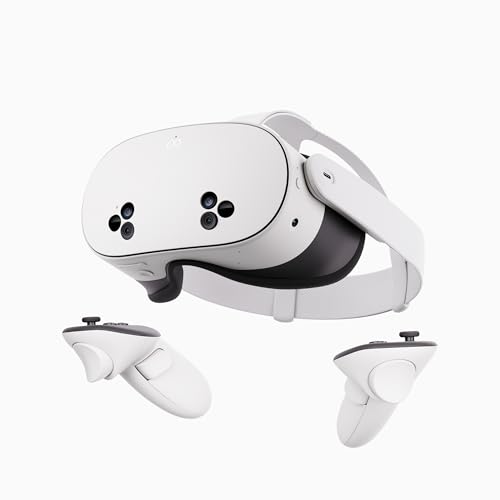
Meta Quest 3 512GB | Virtual Reality represents the performance benchmark for untethered VRChat users. Its 4K+ Infinite Display utilizes pancake optics to eliminate Fresnel glare, ensuring readable text in user menus and crisp details across avatar textures. With 8GB of RAM and the Snapdragon XR2 Gen 2 processor, it handles heavy standalone room loads far better than previous generations, while the 512GB capacity accommodates large asset caches.
For users seeking the same internal processing speed at a more accessible entry point, the Meta Quest 3S 256GB | Virtual Reality and Meta Quest 3S 256GB | VR Headset — Get Batman provide the identical Snapdragon XR2 Gen 2 chip and 8GB of system memory. These models maintain 2+ hours of operating battery life and full wireless PCVR streaming capabilities, though they utilize standard Fresnel optical lenses rather than the premium pancake optics found on the flagship unit.
The Meta Quest 2 — Advanced All-In-One Virtual Reality remains an option for entry-level access with its 1832 x 1920 per-eye display resolution. However, its older processor and lower system memory pool make standalone VRChat worlds prone to avatar culling and frame rate drops. It performs best when tethered via Link cable to an external gaming rig, functioning strictly as a PCVR display rather than a self-contained console.
Passive Smartphone VR Shells
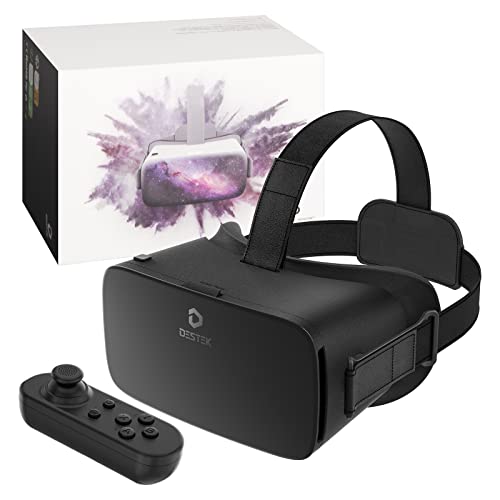
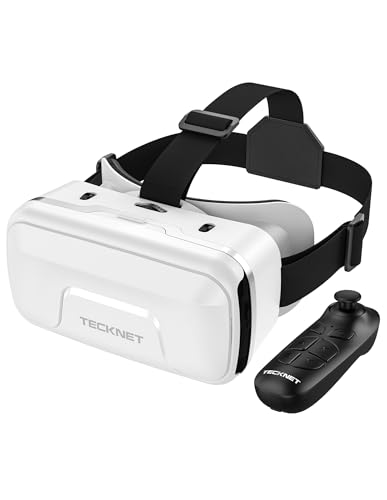
The market also contains passive mobile goggles such as the DESTEK V5 VR Headset with 50000+ VR Movies, TECKNET VR Headset for Phone with Controller, TECKNET VR Headset for Phone, 3D VR Headset, Virtual Reality Glasses Headset, and VR Headset 3D VR Glasses Universal Virtual Reality. These units act as optical holders for 4.7 to 7.2 inch smartphones, utilizing anti-blue light lenses and simple 3DOF Bluetooth remotes.
Prospective buyers must note that passive smartphone shells cannot run standard VRChat natively. They lack positional room-scale sensors and tracked motion controllers. While useful for static 360-degree video playback or viewing panoramic content, they are not practical solutions for engaging with interactive social VR environments.
Key Hardware Specifications for VRChat
System memory is the primary bottleneck when loading populated public rooms in VRChat. The 8GB RAM configuration on the Quest 3 and Quest 3S provides critical headroom against out-of-memory crashes when multiple unoptimized avatars enter your field of view. Older headsets with 6GB or less frequently force users to disable avatar display to maintain stable frame rates.
Optical clarity determines your comfort during long social sessions. Pancake lenses offer wide sweet spots, keeping text in social menus sharp across the entire field of view without needing precise headset realignment. Fresnel lenses require exact mechanical IPD adjustment to minimize peripheral blur and chromatic aberration.
Audio latency and microphone quality are equally vital in social platforms. Built-in directional speaker arrays provide convenient spatial positioning for conversations, but crowded environments benefit from connecting dedicated gear through standard 3.5mm jacks. Pairing your headset with one of the best gaming headsets ensures clear vocal capture without picking up background room noise.
Standalone Mode vs. PC Tethering
Running VRChat directly on standalone hardware provides complete physical freedom without wires or external computing hardware. The trade-off is visual fidelity, as standalone users can only visit Quest-optimized worlds and view platform-compatible avatars. Many elaborate worlds featuring complex shaders and physics scripts remain restricted to PCVR platforms.
Connecting a Quest headset to a dedicated gaming desktop via USB-C or high-speed Wi-Fi 6 removes these world restrictions entirely. The headset functions as a display while your desktop graphics card renders intricate lighting and physics. If you are preparing a dedicated PCVR configuration, review our guide on how to build the ultimate battlestation on a budget to balance graphics processing requirements.
Hardware Selection Advice
For dedicated VRChat enthusiasts seeking maximum optical clarity and large storage reserves for world data, the Meta Quest 3 512GB stands out as the most capable all-around hardware option. Its pancake lenses and expanded capacity handle intense community events with minimal visual distortion.
For budget-conscious players wanting current-generation processing power and 8GB of operational RAM, the Meta Quest 3S 256GB offers the ideal balance of performance and value. It delivers the same processing pipeline as the flagship model, ensuring full compatibility with both standalone VRChat updates and wireless PCVR streaming setups.




Write Your Review
No reviews yet. Be the first to share your experience!