

Choosing the best pc streaming headsets comes down to balancing input vocal capture with clean output monitoring. A broadcast setup demands low-latency connectivity, clear microphone articulation, and acoustic isolation so game sound never bleeds into your live stream.
While standalone broadcast microphones remain popular among desktop creators, an integrated headset simplifies multi-hour streaming sessions. Many creators also reference our broader breakdown of the best gaming headsets to evaluate general console and desktop performance.
Top PC Headsets for Streaming at a Glance

Pros
- Flexible LIGHTSPEED wireless, Bluetooth, and USB connections
- Up to 60 hours of battery runtime
- Lightweight 280 g build with suspension headband
- Synchronized 48 kHz/24-bit PRO-G drivers
- Blue VO!CE microphone tuning support
Cons
- Full 60-hour battery runtime requires disabling RGB lighting

Pros
- Up to 100 hours of low-latency wireless battery life
- Dual 2.4GHz and Bluetooth wireless options
- Includes both detachable boom and built-in internal mics
- Broad connectivity with USB-C and USB-A adapters included
- Durable steel sliders and memory foam ear pads
Cons
- RGB lighting reduces battery life to 23 hours
- Onboard memory holds only one custom profile
- Instant Pair feature limited to select OMEN laptops

Pros
- Driver-free plug-and-play 7.1 surround sound
- Large 50mm neodymium audio drivers
- Adjustable microphone with noise reduction
- Comfortable memory-protein ear cushions
- Generous 2.2-meter durable cable
Cons
- Not compatible with game controller audio jacks
- Limited exclusively to devices with USB ports
Pros
- Angled 53mm drivers tuned for gaming audio
- Noise-cancelling microphone with LED mute indicator
- Durable, flexible aluminum frame construction
- Versatile USB-C, USB-A, and 3.5mm connectivity
- Comfortable memory foam ear cushioning
Cons
- Lacks wireless connectivity options

Pros
- Lightweight 240-gram build for long sessions
- Broad compatibility across major gaming platforms via 3.5mm
- Tuned 50mm drivers provide distinct audio separation
- Closed-back earcups offer effective passive isolation
Cons
- 7.1 surround sound requires 64-bit Windows 10
- Older Xbox One controllers require a separate stereo adapter

Pros
- Broad multi-platform console and PC compatibility
- Convenient inline volume and mute controls
- Flexible omnidirectional microphone
- Lightweight build with cushioned ear pads
Cons
- Requires separate adapter for older Xbox One controllers
- Short 49-inch integrated cable length

Pros
- Broad multi-platform compatibility via standard 3.5mm jack
- Large 50mm drivers for clear positional game audio
- Memory foam ear cushions support long-session comfort
- Durable 2.4-meter tangle-resistant braided cable
- Convenient inline controls and flip-to-mute microphone
Cons
- Separate USB connection required to power RGB lighting
- Virtual 7.1 surround depends on platform support
Pros
- Lossless DisplayPort PC VR streaming connection
- High 2448 x 2448 per-eye resolution
- Integrated eye tracking and auto-IPD adjustment
- Hot-swappable battery design maintains continuous operation
- Base-station-free inside-out tracking system
Cons
- Display refresh rate is limited to 90 Hz
- Full face and body tracking requires optional accessories

Pros
- Universal 3.5mm cross-platform compatibility
- Detachable directional microphone with mute switch
- Lightweight build with memory foam padding
- Compatible with Windows Sonic spatial sound
Cons
- Restricted to a wired analog 3.5mm connection
- Lacks dedicated USB audio or wireless support

Pros
- Lightweight 240g frame for extended comfort
- Broad compatibility via standard 3.5mm audio jack
- TriForce 50mm drivers for distinct frequency tuning
- Cardioid microphone with targeted voice pickup
Cons
- Surround sound requires Windows 10 64-bit
- Xbox One may require a separate stereo adapter
Key Specifications for Streaming Audio
Microphone bandwidth is the primary differentiator when you evaluate headsets for live broadcasting on PC platforms. Standard gaming headsets often limit mic capture to 16 kHz, which can make your voice sound thin or muffled during commentary.
Modern streaming options provide full 48 kHz sampling rates that preserve natural vocal timbre over Discord, OBS, or Twitch streams. Pairing high-resolution capture with software EQ integration lets you tailor bass warmth and treble presence directly through your operating system.
Physical isolation also plays a critical role in broadcast fidelity. Closed-back earcups prevent loud action sequences or party chat from bleeding into nearby studio mics, while comfortable memory foam padding prevents fatigue during marathon charity streams.
Headset Analysis and Technical Comparisons
Logitech G522 Lightspeed Wireless
The Logitech G522 Lightspeed Wireless Gaming Headset is designed specifically for vocal fidelity, utilizing a 48 kHz/16-bit microphone pipeline. It connects via 2.4 GHz Lightspeed wireless, Bluetooth, or standard wired USB, giving PC streamers multiple routing paths across dual-PC streaming setups.
At 280 grams, the chassis remains lightweight, aided by a washable elastic suspension headband and contoured earcups. The PRO-G audio drivers deliver 48 kHz/24-bit sound resolution, though turning on the integrated RGB lighting decreases the advertised 60-hour runtime substantially.
HyperX Cloud Flight 2 Wireless
For creators who stream daily without recharging, the HyperX Cloud Flight 2 – Wireless Gaming Headset delivers up to 100 hours of 2.4 GHz runtime with RGB disabled. It includes both a detachable 10mm boom microphone for broadcasting and an internal backup mic for casual listening.
The angled 50mm drivers focus directional cues for competitive titles, supported by memory foam ear cushions and steel headband sliders. However, managing custom profiles requires the HyperX NGENUITY utility, which supports saving only a single onboard lighting profile.
HyperX Cloud III Wired
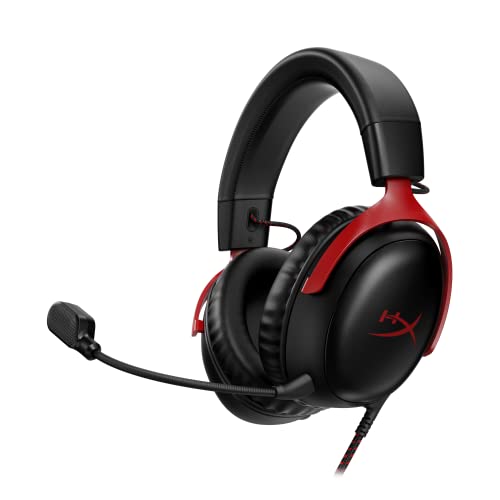
Streamers who prefer an analog or direct USB connection without battery constraints often look toward the HyperX Cloud III – Wired Gaming Headset, PC, PS5. It features 53mm angled drivers and an upgraded 10mm noise-cancelling microphone with a built-in internal mesh pop filter.
The package includes 3.5mm, USB-C, and USB-A adapters, making it versatile across sound cards and external audio capture cards. The aluminum frame ensures long-term physical resilience, although the wired cable adds some desk clutter compared to wireless options.
Razer BlackShark V2 X (Black and White Editions)
Available in alternate colorways, the Razer BlackShark V2 X Gaming Headset and Razer BlackShark V2 X Gaming Headset for PC use 50mm TriForce drivers to isolate bass, mid, and treble frequencies. The HyperClear cardioid microphone rejects ambient room noise from mechanical keyboard switches.
Weighing only 240 grams, these headsets offer passive noise cancellation via thick leatherette earcups that seal tightly around the ears. Note that the 7.1 surround sound feature requires 64-bit Windows 10, and the microphone boom cannot be detached.
Budget USB and Multi-Platform Headsets
Entry-level creators have several low-cost options such as the EKSA E1000 USB PC Gaming Headset with Mic, which provides integrated 7.1 virtual surround over a long 2.2-meter USB connection. It eliminates the need for an analog splitter, though it does not connect to standard 3.5mm audio jacks.
Similarly, the JBL Quantum 100M2 Wired Gaming Headset offers a detachable directional boom microphone and lightweight memory foam padding over a 3.5mm interface. The BENGOO G9000 Stereo Gaming Headset for PS4 PC Xbox and Gaming Headset for Xbox Series X|S Xbox One PS5 provide 40mm to 50mm drivers with inline volume toggles and USB-powered LED accents.
HTC Vive Focus Vision Wired Bundle
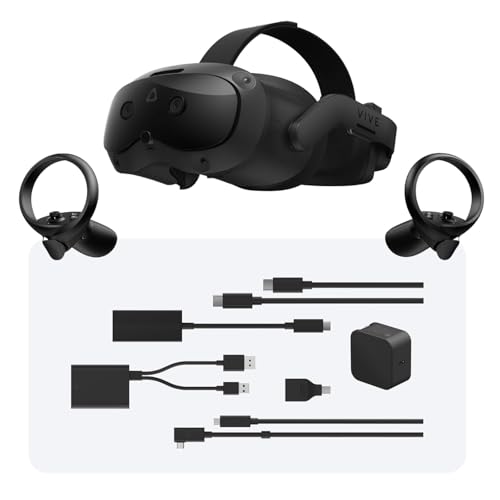
While standard headsets focus purely on sound, the HTC Vive Focus Vision Wired Bundle represents a dedicated PC VR streaming system with integrated dual-driver open-back spatial speakers. It features dual 2448 x 2448 displays, eye tracking, and DisplayPort PC tethering for VRChat or immersive VR streaming.
Because it is a full virtual reality rig rather than a traditional audio headset, it demands substantial PC hardware resources and an Ethernet-linked network environment. Its integrated echo-cancelling array serves VR voice chat, but it addresses a fundamentally different streaming category.
How to Select the Right Streaming Headset
If clear vocal delivery without an external desktop microphone is your main goal, models with high-bandwidth mic capsules like the Logitech G522 provide the best speech clarity. Creators managing busy broadcast schedules will value the multi-week battery longevity of the HyperX Cloud Flight 2.
For budget-conscious streamers looking for dependable plug-and-play operation, the HyperX Cloud III or Razer BlackShark V2 X provide aluminum build quality and focused cardioid pickup patterns without latency or charging concerns.


Write Your Review
No reviews yet. Be the first to share your experience!