

Connecting a virtual reality headset to a gaming rig demands careful attention to display interfaces, tracking methods, and GPU overhead. Hardware like dedicated DisplayPort connections delivers uncompressed video signals, while standalone headsets rely on USB or wireless encoding streams to function with your computer.
Whether you prioritize lossless visual fidelity for flight simulators or room-scale freedom for active titles, matching the display resolution to your graphics card is critical. If you are already refining your desktop space with our guide on how to build an ultimate budget battlestation, these headset options cover a range of performance demands.
Top PC VR Headsets Compared

Pros
- Sharp 1832 x 1920 per-eye resolution
- Standalone functionality with 128GB onboard storage
- Integrated hand-tracking technology
- Includes silicone grip covers and knuckle straps
- Glasses spacer included in the box
Cons
- Touch controllers rely on replaceable AA batteries
Pros
- Snapdragon XR2 Gen 2 processing power
- Completely wireless standalone design
- Full-color passthrough with dual RGB cameras
- Upgraded 8GB memory capacity
- Lightweight build at approximately 1.14 pounds
Cons
- Battery life limited to around two hours per charge
- Base 128GB storage space may fill quickly
- Renewed condition rather than factory-new hardware

Pros
- Snapdragon XR2 Gen 2 processor for smooth visuals
- High-capacity 512GB storage for standalone libraries
- Full-color mixed reality passthrough cameras
- Cordless design allows untethered movement
- Upgraded 8GB RAM ensures responsive performance
Cons
- Advertised battery life limited to around two hours
Pros
- Broad compatibility with 5.5 to 7.2 inch phones
- Wide 110-degree field of view
- Lightweight build at approximately 0.3 pounds
- Built-in physical touch buttons on the visor
- Includes bundled wireless controller
Cons
- Controller interactivity is heavily limited on iOS
- Requires a separate smartphone to function
Pros
- Lossless DisplayPort PC VR streaming connection
- High 2448 x 2448 per-eye resolution
- Integrated eye tracking and auto-IPD adjustment
- Hot-swappable battery design maintains continuous operation
- Base-station-free inside-out tracking system
Cons
- Display refresh rate is limited to 90 Hz
- Full face and body tracking requires optional accessories

Pros
- 5K per-eye resolution with 120-degree FOV
- Lossless PC VR visual fidelity over DisplayPort
- Built-in eye and low-light hand tracking
- Automated IPD adjustment for clear viewing
- Reserve battery allows hot-swapping without shutdowns
Cons
- Display refresh rate is limited to 90 Hz
- Lossless visual mode requires a wired PC connection
Key Hardware Specifications Breakdown
| Headset Model | Display Resolution | Tracking Type | PC Connection Method |
|---|---|---|---|
| Meta Quest 3 512GB | Virtual Reality | 4K+ Infinite Display | Inside-Out (Cameras) | USB-C Link / Wi-Fi Streaming |
| HTC Vive Focus Vision Wired Bundle | 2448 x 2448 per eye (5K) | Inside-Out + Eye Tracking | Lossless DisplayPort / Wi-Fi |
| HTC Vive Focus Vision — Mixed Reality and PC VR | 2448 x 2448 per eye (5K) | Inside-Out + Eye Tracking | USB-C Streaming / Wi-Fi / DP Ready |
| Oculus Quest 2 Advanced All-in-One Virtual Reality | 1832 x 1920 per eye | Inside-Out (Cameras) | USB-C Link / Wi-Fi Streaming |
| Meta Quest 3S 128GB | Virtual Reality | Not specified | Inside-Out (Cameras) | USB-C Link / Wi-Fi Streaming |
| DESTEK V5 VR Headset with 50000+ VR Movies | Phone dependent | Phone sensors only | Not a native PC VR headset |
Detailed Reviews of PC-Compatible Headsets
Meta Quest 3 512GB | Virtual Reality
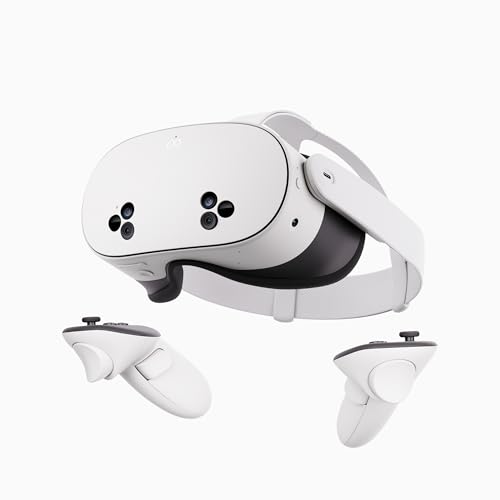
The Meta Quest 3 serves as a balanced option for desktop gamers who split time between wireless play and tethered PC VR. It utilizes a Snapdragon XR2 Gen 2 processor alongside 8GB of system RAM, driving a sharp 4K-plus display setup.
When tethered through a high-bandwidth USB-C cable or an optimized Wi-Fi 6E network, it streams SteamVR content with minimal latency. Users should note that video encoding introduces small compression artifacts compared to pure display cables, requiring a relatively modern GPU to encode frames smoothly.
HTC Vive Focus Vision Wired Bundle
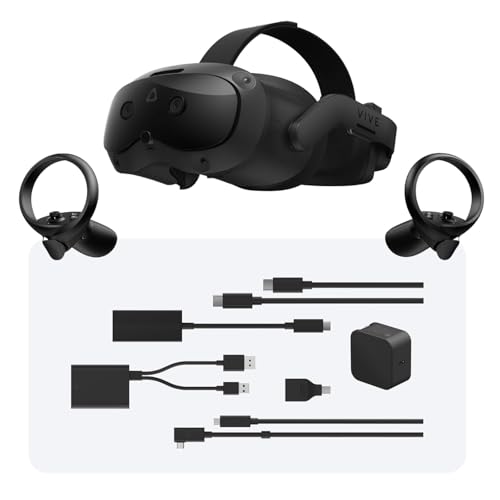
Engineered for high-end simulators and demanding PC titles, this package includes the dedicated DisplayPort PC VR streaming kit. The hardware yields a combined 5K resolution at 2448 by 2448 pixels per eye, paired with a 120-degree field of view.
Because the physical cable feeds raw DisplayPort video signals directly from your graphics card, you avoid streaming compression entirely. Built-in eye tracking and motorized auto-IPD adjustment deliver accurate optical alignment, though the overall investment targets enthusiasts with powerful desktop rigs.
HTC Vive Focus Vision — Mixed Reality and PC VR
This standalone edition shares the same 5K display panel, 90 Hz refresh rate, and hot-swappable battery architecture found in the wired bundle. It excels at wireless streaming over direct router connections while keeping base-station-free inside-out tracking intact.
Integrated spatial audio speakers and noise-canceling microphones eliminate the immediate need for an external audio solution. However, unlocking lossless DisplayPort fidelity requires buying the separate converter kit, making this base version better suited to mixed wireless and wired workflows.
Meta Quest 3S 128GB | Virtual Reality
The Quest 3S provides an accessible entry point into the modern Meta ecosystem, sharing the XR2 Gen 2 chip and 8GB RAM of the standard Quest 3. It fully supports Oculus Link and Air Link streaming, granting complete access to desktop SteamVR libraries.
To reduce production costs, this unit adopts a simpler optical stack than its flagship sibling. It remains a capable streaming endpoint for entry-level gaming rigs, though gamers seeking the widest sweet spot may notice the optical trade-offs during long sessions.
Oculus Quest 2 Advanced All-in-One Virtual Reality
Offering 1832 by 1920 pixels per eye, the legacy Quest 2 remains an established device for basic tethered and wireless PC streaming. This bundle features silicone grips and adjustable knuckle straps that help secure the touch controllers during fast-paced play.
While software support across major PC platforms remains broad, its older onboard processor limits decoding speed compared to newer generations. If your PC hardware is modest, this resolution profile avoids overburdening mid-range graphics cards while running demanding virtual reality titles.
DESTEK V5 VR Headset with 50000+ VR Movies
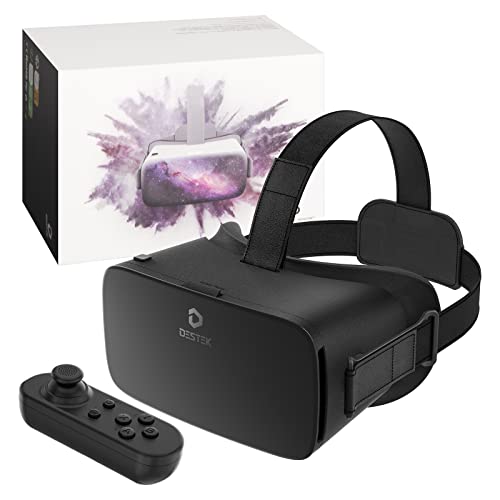
The DESTEK V5 is an optical shell designed to hold mobile smartphones rather than connect directly to a gaming desktop. It features 110-degree field of view lenses with blue-light filtering, relying entirely on a inserted phone for display and processing duties.
While third-party streaming utilities can mirror desktop video to a mobile screen, it lacks native 6DoF positional tracking and dedicated PC display inputs. Buyers seeking interactive SteamVR gaming should bypass phone enclosures and choose dedicated hardware instead.
PC VR Buying Guide: What to Look For
Evaluating hardware for desktop gaming requires weighing visual clarity against cable management. Lossless DisplayPort connections prevent video compression artifacts, which proves vital when reading cockpit dials in racing or flight simulations. Encoded USB and wireless streaming options allow freedom of movement, but they add decoding latency and place extra encoding work on your GPU.
Audio integration also shapes long-term comfort. While built-in open-ear speakers keep setups tidy, competitive immersion often calls for a dedicated headset like those highlighted in our comparison of the best gaming headsets. Ensure your chosen headset includes a 3.5 mm auxiliary jack if you plan to use personal headphones.
Frequently Asked Questions
What PC specifications are required for modern VR gaming?
Most current VR titles require a dedicated graphics card with at least 6GB to 8GB of VRAM, alongside an Intel Core i5 or AMD Ryzen 5 processor. High-resolution headsets such as the 5K HTC Vive Focus Vision demand significantly more graphical power, often requiring upper-tier desktop graphics cards to sustain 90 frames per second.
Can standalone VR headsets run SteamVR games?
Yes, standalone headsets from Meta and HTC connect to SteamVR via wired USB cables or wireless local network streaming. The desktop computer renders the software and streams the resulting video feed to the headset, while the headset returns tracking data back to the PC.


Write Your Review
No reviews yet. Be the first to share your experience!