

Choosing among the best wireless vr headsets requires understanding how untethered VR actually handles graphical rendering. True standalone devices process games onboard or stream uncompressed feeds from a gaming computer over local Wi-Fi, while passive shells rely entirely on a mounted smartphone.
For PC VR streaming, network throughput and display resolution dictate clarity more than raw onboard processing. If your setup already includes one of the 7 best gaming headsets for traditional audio, your primary focus here will be tracking latency, optical adjustment, and visual fidelity.
Quick Comparison of Wireless VR Options
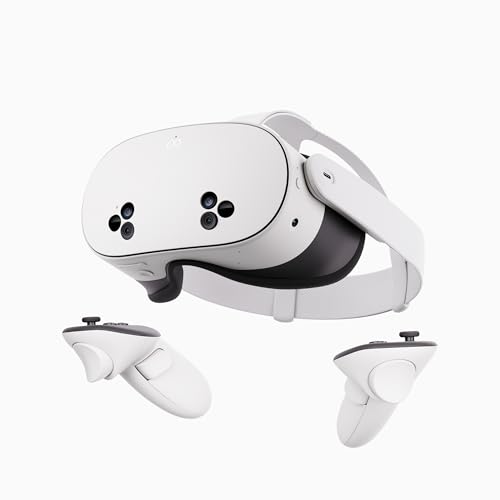
Pros
- Snapdragon XR2 Gen 2 processing power
- Completely wireless standalone design
- Full-color passthrough with dual RGB cameras
- Upgraded 8GB memory capacity
- Lightweight build at approximately 1.14 pounds
Cons
- Battery life limited to around two hours per charge
- Base 128GB storage space may fill quickly
- Renewed condition rather than factory-new hardware
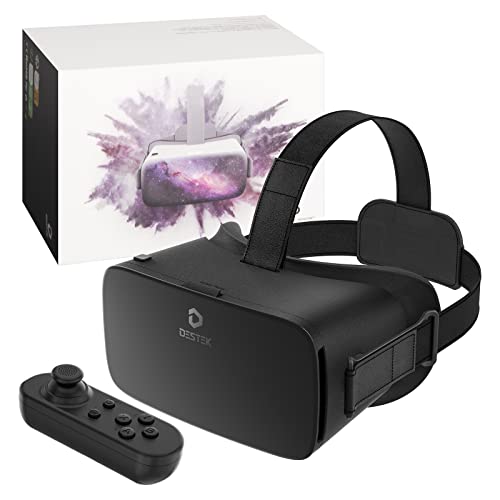
Pros
- Broad compatibility with 5.5 to 7.2 inch phones
- Wide 110-degree field of view
- Lightweight build at approximately 0.3 pounds
- Built-in physical touch buttons on the visor
- Includes bundled wireless controller
Cons
- Controller interactivity is heavily limited on iOS
- Requires a separate smartphone to function
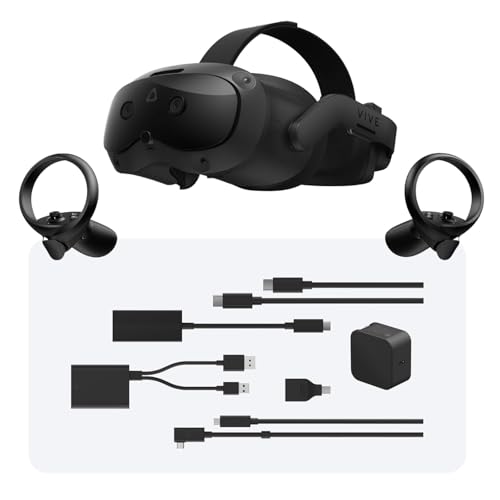
Pros
- Lossless DisplayPort PC VR streaming connection
- High 2448 x 2448 per-eye resolution
- Integrated eye tracking and auto-IPD adjustment
- Hot-swappable battery design maintains continuous operation
- Base-station-free inside-out tracking system
Cons
- Display refresh rate is limited to 90 Hz
- Full face and body tracking requires optional accessories
Wireless VR Headset Reviews
Meta Quest 3S 128GB | Virtual Reality
The Meta Quest 3S 128GB | Virtual Reality serves as an accessible standalone VR headset capable of untethered PC VR streaming over Air Link or Virtual Desktop. Powered by the Snapdragon XR2 Gen 2 platform paired with 8GB of system RAM, it handles onboard gaming smoothly without requiring an external machine.
For mixed reality applications, the headset incorporates dual RGB color passthrough cameras to show your physical environment in full color. The internal battery is rated for around two hours of runtime, which suits typical gaming sessions but requires external battery banks or link cables for extended marathons.
Because this model uses traditional Fresnel lenses rather than the pancake optics found on higher-tier alternatives, edge-to-edge optical clarity is narrower. It remains a dependable choice for budget-conscious users who want both wireless PC streaming and complete standalone mobility.
HTC Vive Focus Vision Wired Bundle
The HTC Vive Focus Vision Wired Bundle is an enterprise-grade hybrid headset designed for enthusiasts seeking premium visual specifications. It features a combined 5K display delivering 2448 by 2448 pixels per eye, a 90 Hz refresh rate, and an expansive field of view measuring up to 120 degrees.
While this package includes a DisplayPort PC VR streaming kit for lossless tethered video, it functions untethered over Wi-Fi networks connected to your host PC via Ethernet. Built-in eye tracking, automatic motorized IPD adjustment, and scene-depth sensors give it advanced interaction capabilities in titles like VRChat.
To address battery limitations during intense use, HTC integrates a hot-swappable primary battery supported by a secondary reserve cell. The main compromise is substantial cost and bulk, making it sensible primarily for power users and professional simulation environments.
DESTEK V5 VR Headset with 50000+ VR Movies
The DESTEK V5 VR Headset with 50000+ VR Movies represents a different category entirely, functioning as a passive optical holder for your mobile phone rather than an active computing headset. It provides a 110-degree field of view through blue-light-filtering acrylic lenses, relying on your phone screen to generate the 3D imagery.
This headset includes a basic Bluetooth controller designed for media playback and simplified interactions. However, full interactive controller navigation requires an Android device, as iOS restricts third-party Bluetooth controllers primarily to YouTube and media volume control.
Because it lacks dedicated six-degree-of-freedom positional tracking, you cannot walk around or play complex PC VR simulations with this unit. It serves purely as an entry-level viewer for 360-degree videos and simple educational applications on a strict budget.
How to Choose a Wireless VR Headset
Evaluating wireless VR hardware comes down to distinguishing standalone computer architecture from passive phone shells. Active headsets like the Quest 3S and Vive Focus Vision contain dedicated displays, motion sensors, and processing chips that track head and hand positions in 3D space.
When planning to stream games wirelessly from a computer, your local network setup is critical. Both Meta and HTC recommend hardwiring your gaming PC to a dedicated Wi-Fi 6 router via Gigabit Ethernet to minimize visual stutter and input delay.
Optical adjustments also influence visual comfort. The Vive Focus Vision features automatic physical IPD alignment, whereas entry-level options rely on manual slider steps. If you are also assembling a complete gaming desk, pairing your headset with proper ergonomic gear from our guide to the 7 best gaming chairs ensures comfortable long-term sessions.
Frequently Asked Questions
Can I play SteamVR games wirelessly on these headsets?
Yes, standalone headsets such as the Meta Quest 3S and HTC Vive Focus Vision can stream SteamVR titles wirelessly across a local 5 GHz or Wi-Fi 6 network. Passive mobile phone shells like the DESTEK V5 cannot run SteamVR hardware tracking.
How long do wireless VR headset batteries last during active gameplay?
Most standalone VR headsets deliver roughly two to two-and-a-half hours of battery life on a full charge. Headsets like the Vive Focus Vision mitigate this constraint with hot-swappable battery designs, while others require external USB power packs.
Which Headset Should You Pick?
For most PC and standalone gamers, the Meta Quest 3S 128GB | Virtual Reality represents the most balanced entry point for wireless gaming without spending enthusiast-tier money. If you require maximum 5K visual resolution, eye tracking, and hot-swappable batteries for professional simulation or VRChat, the HTC Vive Focus Vision Wired Bundle justifies its higher investment. Readers looking strictly for hands-free 360-degree phone media consumption can consider the DESTEK V5 VR Headset with 50000+ VR Movies as a basic mobile viewer.


Write Your Review
No reviews yet. Be the first to share your experience!