

Finding the best razer gaming mouse requires balancing grip geometry, switch durability, and connectivity against your primary game library. Razer organizes its lineup into distinct product families, ranging from feature-packed ergonomic cruisers like the Basilisk series to lightweight competitive platforms such as the Viper and portable Orochi.
Your choice also involves distinct trade-offs between optical switches that prevent double-clicking and mechanical switches powered by replaceable AA batteries. Players pairing their mouse with broader desk updates can also consult our wider guide to the best gaming mice for market-wide context.
Top 7 Razer Gaming Mice Overview
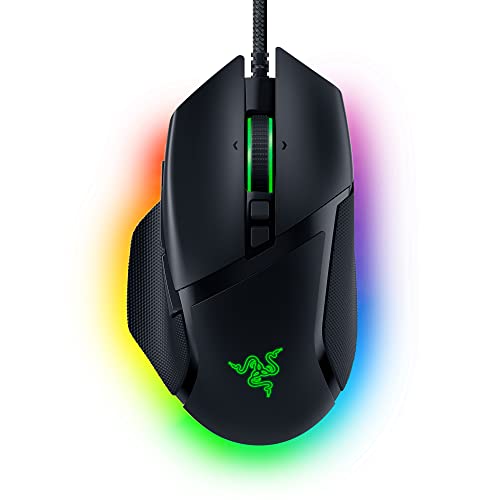
Pros
- 11 programmable buttons for comprehensive macro control
- Dual-mode HyperScroll tilt wheel enhances versatility
- High-resolution 26K DPI optical sensor
- Responsive optical switches rated for 70 million clicks
- 11 independently customizable RGB lighting zones
Cons
- Tethered wired cable restricts cable-free mobility
- Ergonomic thumb rest form factor excludes left-handed users

Pros
- High-precision 35,000 DPI optical sensor with glass tracking
- Dual-mode tilt wheel with automatic Smart-Reel switching
- 13 customizable inputs including multi-function thumb trigger
- Durable optical switches rated for 90 million clicks
- Flexible Speedflex cable minimizes surface resistance
Cons
- Tethered wired design limits freeform desk movement
- Advanced profile and wheel configuration requires Razer Synapse

Pros
- Dual HyperSpeed wireless and Bluetooth connectivity options
- Up to 535 hours of extended battery life
- Nine programmable buttons for custom macro setups
- Durable mechanical switches rated for 60M clicks
- High-precision 18,000 DPI optical sensor
Cons
- Configuration and optimization require Razer Synapse software
- Battery life varies depending on usage conditions

Pros
- Ergonomic right-handed shape for comfortable handling
- On-the-fly DPI sensitivity adjustment buttons
- Five fully programmable buttons via Razer Synapse
- Ridged rubber scroll wheel provides tactile grip
- Reliable high-precision 6,400 DPI optical tracking
Cons
- Tethered wired cable limits placement flexibility
- Mechanical switch lifespan limited to 10 million clicks
- Button remapping depends on Razer Synapse software

Pros
- Dual-mode HyperSpeed Wireless and Bluetooth support
- Up to 950 hours of wireless battery life
- Sub-60g chassis weight before battery installation
- Flexible hybrid AA and AAA battery slot
- Switches rated for up to 60 million clicks
Cons
- Lacks internal USB-rechargeable battery design
- Total weight increases once battery is inserted

Pros
- Tracks smoothly on glass and varied surfaces
- Up to 140 hours of wireless battery life
- Versatile free-spin and tactile scroll wheel modes
- Durable optical switches eliminate mechanical double-click faults
- 13 assignable inputs for complex macro bindings
Cons
- 8000 Hz polling requires accessories sold separately
- Advanced settings depend on Razer Synapse configuration

Pros
- Up to 280 hours of AA battery life
- Accurate Focus Pro 30K sensor tracks on glass
- Fast, stable HyperSpeed Wireless connectivity
- Durable mechanical switches rated for 60M clicks
- Dedicated on-mouse five-stage DPI switch
Cons
- Relies on replaceable AA batteries instead of USB charging
- Heavier than many modern ultralight alternatives at 82g
Detailed Product Breakdown
1. Razer Basilisk V3 Customizable RGB Wired Ergonomic
The Razer Basilisk V3 Customizable RGB Wired Ergonomic serves as a benchmark for right-handed palm and claw grip players. It features the Focus+ 26K DPI optical sensor alongside second-generation optical mouse switches rated for 70 million clicks. Its primary mechanical asset is the HyperScroll tilt wheel, which toggles between tactile notched scrolling and smooth free-spinning movement.
With 11 programmable buttons and an integrated thumb rest, this mouse excels in titles requiring extensive keybinds like MMOs and tactical shooters. The 11 Chroma RGB lighting zones provide comprehensive desk illumination through Razer Synapse. However, its heavier wired profile makes it less optimal for fast-paced flick aiming than dedicated lightweight alternatives.
2. Razer Basilisk V3 35K Wired Ergonomic
The Razer Basilisk V3 35K Wired Ergonomic updates the classic wired chassis with top-tier modern internal components. It incorporates the Razer Focus Pro 35K Gen-2 optical sensor, supporting glass tracking and granular 1-DPI incremental adjustments. Third-generation optical switches boost durability to 90 million clicks while maintaining a rapid 0.2ms actuation speed without debounce delay.
This revision expands total inputs to 13 customizable controls and includes an intelligent Smart-Reel scroll wheel mode configured via Synapse. The lightweight Speedflex cable minimizes drag during aggressive hand sweeps. It remains a wired model, which may clutter minimal desk layouts despite its top-level tracking specifications.
3. Razer Basilisk V3 X HyperSpeed Customizable
The Razer Basilisk V3 X HyperSpeed Customizable delivers ergonomic palm support without the tether of a cable. It offers dual wireless connectivity through low-latency 2.4GHz HyperSpeed and power-saving Bluetooth modes. Tracking relies on the Razer 5G Advanced 18K optical sensor, paired with gold-plated Gen-2 mechanical switches rated for 60 million clicks.
Battery endurance reaches up to 285 hours on HyperSpeed wireless and 535 hours on Bluetooth using a single AA battery. It features 9 customizable controls, omitting the multi-function thumb paddle found on premium Basilisk models. The rely-on-battery architecture also increases total hand weight compared to internal lithium setups.
4. Razer DeathAdder Essential Ergonomic Wired
The Razer DeathAdder Essential Ergonomic Wired represents the entry point into ergonomic PC gaming hardware. It utilizes the time-tested DeathAdder shell design with 5 independently programmable Hyperesponse buttons. Internally, a 6,400 DPI optical sensor handles tracking alongside mechanical switches rated for 10 million clicks.
This peripheral suits general gaming workloads and buyers assembling setups via our budget battlestation guide. The trade-offs involve older hardware standards, including a non-braided cable, basic sensor resolution, and mechanical switches with lower lifecycle ratings than modern optical equivalents.
5. Razer Basilisk V3 Pro 35K Wireless Gaming Mouse
The Razer Basilisk V3 Pro 35K Wireless Gaming Mouse combines the company’s most advanced sensor package with wireless freedom. It deploys the Focus Pro 35K Gen-2 optical sensor, Gen-3 optical switches, and 13-zone Chroma lighting with underglow. Up to 140 hours of continuous play is supported over HyperSpeed wireless before recharging.
Competitive users can upgrade performance up to a true 8000 Hz polling rate using optional accessories like the Mouse Dock Pro. The 13 programmable inputs and configurable Smart-Reel wheel satisfy both productivity and complex gaming macros. However, this model carries a premium price and noticeable overall mass.
6. Razer Orochi V2 Wireless Gaming Mouse
The Razer Orochi V2 Wireless Gaming Mouse targets mobile gamers, fingertip grippers, and laptop setups. Weighing under 60 grams before battery insertion, its compact symmetrical chassis enables swift, low-effort movements. It utilizes an 18K DPI 5G optical sensor alongside 60-million-click second-generation mechanical switches.
A hybrid battery compartment accepts either a single AA or AAA battery to customize total balance and weight. Battery life reaches an impressive 950 hours on Bluetooth and 425 hours over 2.4GHz HyperSpeed. The smaller profile will prove uncomfortable for players with large hands using traditional palm grips.
7. Razer Viper V3 HyperSpeed Wireless PC
The Razer Viper V3 HyperSpeed Wireless PC is designed specifically for competitive first-person shooter enthusiasts. It features an 82-gram mass-centralized layout that balances a single AA battery without awkward rear-heavy weight distribution. It houses the flagship Focus Pro 30K optical sensor, positioned forward for more natural hand articulation.
Players get up to 280 hours of low-latency wireless play alongside Gen-2 mechanical switches rated for 60 million actuations. An on-mouse top button handles instant DPI switching across five preset tiers. It lacks RGB lighting and tilt-wheel functionality, stripping out secondary features to prioritize pure tracking accuracy.
Technical Specifications Comparison
| Model | Sensor | Max DPI | Switch Type | Weight / Battery | Controls |
|---|---|---|---|---|---|
| Basilisk V3 Wired | Focus+ Optical | 26,000 | Optical Gen-2 | Wired (Speedflex) | 11 |
| Basilisk V3 35K | Focus Pro 35K Gen-2 | 35,000 | Optical Gen-3 | Wired (Speedflex) | 13 |
| Basilisk V3 X HyperSpeed | Razer 5G Advanced | 18,000 | Mechanical Gen-2 | 1x AA (Up to 285h 2.4GHz) | 9 |
| DeathAdder Essential | Optical Sensor | 6,400 | Mechanical | Wired Standard | 5 |
| Basilisk V3 Pro 35K | Focus Pro 35K Gen-2 | 35,000 | Optical Gen-3 | Rechargeable (Up to 140h) | 13 |
| Orochi V2 Wireless | Razer 5G Advanced | 18,000 | Mechanical Gen-2 | 1x AA or AAA (<60g dry) | 6 |
| Viper V3 HyperSpeed | Focus Pro 30K | 30,000 | Mechanical Gen-2 | 82g with 1x AA (280h) | 6 |
Key Factors When Choosing a Razer Mouse
Optical Versus Mechanical Switches
Razer utilizes both mechanical and optical switches across its lineup to balance price and longevity. Optical Gen-2 and Gen-3 switches use light beams to register actuations, eliminating debounce delay and physically preventing double-click failures. Mechanical Gen-2 switches use gold-plated contacts rated for 60 million clicks, providing a more tactile snap at a lower manufacturing cost.
Power Architecture and Battery Longevity
Wireless models diverge between internal rechargeable lithium batteries and replaceable alkaline cells. The Basilisk V3 Pro uses an internal battery chargeable via USB-C or optional wireless docks, requiring regular recharging every 140 hours. In contrast, the Viper V3 HyperSpeed and Orochi V2 utilize standard AA or AAA batteries, lasting hundreds of hours without dock accessories.
Sensor Precision and Tracking Surfaces
Sensor capability determines consistency on varied desk pads and glass mousemats. The newer Focus Pro 30K and 35K sensors maintain flawless tracking on transparent glass surfaces over 4mm thick. The 5G 18K and 6,400 DPI sensors perform reliably on standard cloth and hard plastic pads, making premium sensors unnecessary for basic fabric mousepads.
Frequently Asked Questions
Can Razer mice work without Razer Synapse software running?
Yes, all listed Razer mice operate as plug-and-play input devices using standard Windows drivers. However, configuring custom DPI steps, lighting zones, and complex macros requires Synapse, which saves settings directly to supported onboard profiles.
What is the benefit of the HyperScroll tilt wheel?
The HyperScroll wheel on Basilisk models allows tactile cycling for weapon selection or free-spin mode for navigating long web documents. Smart-Reel functionality automatically disengages the tactile brake when flicking the wheel quickly.
Final Recommendation
For competitive shooter players prioritizing low latency, central weight balance, and clean sensor response, the Razer Viper V3 HyperSpeed Wireless PC is the clear tactical choice. If you prefer deep ergonomic comfort, abundant macro keys, and versatile scroll wheel modes, the Razer Basilisk V3 Customizable RGB Wired Ergonomic remains the best balance of features and value.
Gamers requiring untethered freedom with maximum utility should look toward the Razer Basilisk V3 Pro 35K Wireless Gaming Mouse, while ultra-portable or small-handed setups will be best served by the lightweight Razer Orochi V2 Wireless Gaming Mouse.



Write Your Review
No reviews yet. Be the first to share your experience!