

Choosing the best laptops for graphic design requires balancing processing power, memory capacity, and display quality. Creative applications like Photoshop, Illustrator, and Figma place sustained demands on system hardware, making memory capacity and fast internal storage essential for lag-free canvas navigation.
Essential Hardware Requirements for Visual Design
Graphic design workloads rely primarily on single-core CPU speeds for active canvas manipulation and multi-core output for rasterizing complex files. A minimum of 16GB of system RAM is recommended to avoid caching bottlenecks when toggling between heavy layered projects and web assets.
Storage drive speed directly influences file access times and scratch disk performance. Modern NVMe solid-state drives load gigabyte-scale asset folders quickly, ensuring your workflow remains smooth during tight production deadlines.
Top Budget Recommendation for Design Workloads
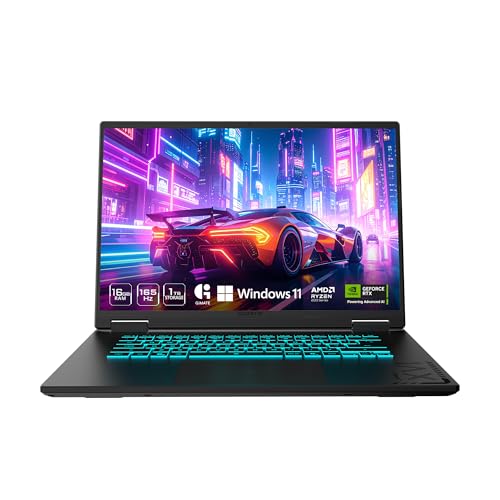
For designers working primarily on vector assets, web graphics, and light photo composition, the Light Gaming Laptop, ΑΜD Ryzen 7430U serves as an accessible entry point.

KAIGERR Laptop 16GB RAM 512GB SSD




As an Amazon Associate we earn from qualifying purchases. Product prices and availability are accurate as of the date/time indicated.
Equipped with an AMD mobile processor and 16GB of DDR4 RAM, this configuration handles standard productivity tasks and multi-app visual editing smoothly. The included 512GB NVMe solid-state drive keeps system boot times quick and provides adequate local room for working project archives.
Peripheral connectivity is another practical advantage for design workflows. The unit provides dedicated HDMI, Type-C, USB 3.2 ports, and an integrated memory card slot, making it simple to transfer raw camera files or dock to color-accurate desktop displays. Designers seeking larger workspaces can review our guide to the best ultrawide monitors for gaming and work for productive dual-window setups.
Trade-offs and Important Limitations
Integrated graphics chips handle standard 2D layout software effectively, but they share system memory with the central processor. For heavy 3D rendering in Blender or accelerated ray tracing in Premiere, a dedicated GPU is usually required to maintain real-time viewport responsiveness.
Entry-level notebook panels also rarely document full DCI-P3 or AdobeRGB color accuracy ranges. Professional print designers should pair affordable mobile laptops with an externally calibrated studio monitor over HDMI for print-grade color matching.
Buying Advice and Final Verdict
If your daily workflow centers around vector design, social media assets, and digital photo retouching, a machine offering 16GB RAM and NVMe storage provides excellent daily value. Those planning to construct a dedicated desk setup can also consult our walkthrough on how to build the ultimate battlestation on a budget to optimize their workstation peripherals.



Write Your Review
No reviews yet. Be the first to share your experience!