

Finding the best 4k monitors for ps5 requires matching display specifications directly with console video output standards. The PlayStation 5 targets 4K resolution up to 120Hz, which depends on HDMI 2.1 connectivity for uncompressed visuals alongside Variable Refresh Rate support.
While standard PC gaming screens often prioritize DisplayPort connections, console setups rely strictly on HDMI bandwidth. Displays lacking modern HDMI ports limit 4K signals to 60Hz or compress color data, diminishing image quality during fast console action.
Top Monitors and Hardware for PlayStation 5

Pros
- Dual-mode 4K 160Hz and 1080p 320Hz functionality
- Two HDMI 2.1 and two DisplayPort 1.4 inputs
- FreeSync and G-Sync compatibility over DisplayPort
- Picture-in-Picture and Picture-by-Picture multitasking support
- IPS panel with 1.07 billion colors
Cons
- Stand limited to basic tilt adjustment
- Modest 300 cd/m brightness rating
- Uses smaller 75x75mm rather than standard 100x100mm VESA pattern

Pros
- Sharp 4K resolution paired with 160Hz refresh rate
- Fast IPS panel offers a 1ms response time
- HDMI 2.1 enables 4K 120Hz console gaming
- NVIDIA G-SYNC Compatible and AMD FreeSync Premium support
- Wide 95% DCI-P3 color gamut coverage

Pros
- Sharp QHD resolution across a spacious 32-inch display
- Fluid 165Hz refresh rate reduces visual lag
- Immersive 1000R curvature fills peripheral vision
- AMD Radeon FreeSync eliminates screen tearing
- Built-in Eye Saver and flicker-reduction modes

Pros
- Official 48Gbps Ultra High Speed HDMI certification
- Supports up to 4K at 240Hz and 8K at 60Hz
- Enables key console gaming features like VRR and ALLM
- Full eARC support for high-bitrate surround sound audio
Cons
- Fixed 6.6-foot length limits placement options in larger rooms
- Higher resolutions such as 10K require DSC 1.2a compression

Pros
- Sharp 4K UHD resolution with 120Hz refresh rate
- USB-C connectivity with 65W power delivery
- AMD FreeSync Premium support for tear-free gaming
- Higher 1500:1 static contrast ratio
- Hardware-level ComfortView Plus low blue light
Cons
- USB-C power delivery capped at 65W

Pros
- Sharp 4K UHD resolution on a large 32-inch canvas
- Smooth 120Hz refresh rate with AMD FreeSync Premium
- Wide 95% DCI-P3 and 99% sRGB color coverage
- Built-in ComfortView Plus low blue light filtering
- Upgraded integrated speakers with expanded audio range
Cons
- Modest 1500:1 contrast ratio for a VA panel
- Basic HDR ready support without high peak brightness ratings
Pros
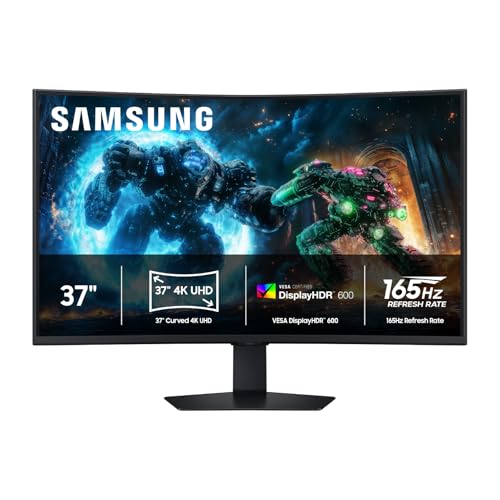
- Sharp 4K UHD resolution across a large 37-inch screen
- Fluid 165Hz refresh rate for fast-paced gaming
- Rapid 1ms GtG response time reduces motion blur
- Immersive 1000R curved profile
- VESA DisplayHDR 600 delivers enhanced dynamic range
Cons
- Deep 12-inch footprint requires considerable desk space
- Substantial 24.7-pound weight requires a sturdy mounting surface

Pros
- Crisp 4K UHD resolution on an IPS panel
- Smooth 120Hz refresh rate with AMD FreeSync Premium
- Solid 1500:1 contrast ratio with 99% sRGB coverage
- Hardware-level ComfortView Plus low blue light technology
- Integrated upgraded stereo sound

Pros
- One-click switching between 4K 160Hz and FHD 320Hz
- Dual HDMI 2.1 and dual DisplayPort 1.4 inputs
- Fully ergonomic stand with height and pivot support
- Wide color reproduction with 93% DCI-P3 coverage
Cons
- Entry-level HDR400 offers modest high dynamic range performance
- Motion clarity rating specified in MPRT rather than GtG
Pros
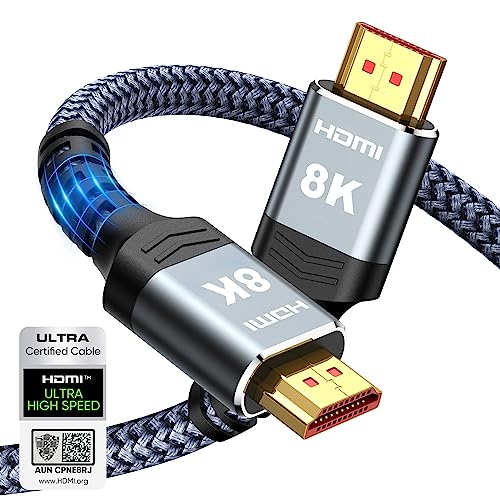
- Up to 48Gbps high-speed bandwidth
- Supports 4K 120Hz and 8K 60Hz displays
- Variable Refresh Rate support for gaming
- Durable braided nylon exterior
- Backward compatible with legacy HDMI versions
Cons
- Fixed 6.6-foot length restricts distant component placement
Key Hardware Comparisons for PS5 Setups
The table below summarizes verified manufacturer specifications across selected gaming displays. Pay close attention to panel architecture, refresh ceiling, and stated connectivity standards before finalizing your hardware choices.
| Model | Screen Size | Panel Type | Native Resolution | Max Refresh Rate |
|---|---|---|---|---|
| ASUS TUF VG27UQ1A | 27 inches | Fast IPS | 3840 x 2160 | 160Hz (Console 120Hz) |
| Gawfolk Dual Mode | 27 inches | IPS | 3840 x 2160 | 160Hz (4K) / 320Hz (FHD) |
| Samsung Odyssey G7 (G75F) | 37 inches | Curved VA (1000R) | 3840 x 2160 | 165Hz |
| Dell S2725QC | 27 inches | IPS | 3840 x 2160 | 120Hz |
| Dell S3225QS | 32 inches | VA | 3840 x 2160 | 120Hz |
| Amzfast Dual Mode | 27 inches | Fast IPS | 3840 x 2160 | 160Hz (4K) / 320Hz (FHD) |
| Samsung Odyssey G55C | 32 inches | Curved VA (1000R) | 2560 x 1440 | 165Hz |
Detailed Model Analysis and Console Compatibility
ASUS TUF Gaming VG27UQ1A 27 Inch 4K 160Hz G-SYNC
The ASUS TUF Gaming VG27UQ1A 27 Inch 4K 160Hz G-SYNC is designed specifically to bridge PC and console requirements. Its HDMI 2.1 integration supports 4K at 120Hz without chroma subsampling, providing clean text and crisp image quality on the PlayStation 5.
Built with a Fast IPS panel and 95 percent DCI-P3 color coverage, it delivers wide viewing angles alongside quick pixel transitions. While it features ELMB Sync for reduced motion blur, HDR dynamic range remains modest compared to dedicated full-array backlight televisions.
Samsung 37” Odyssey G7 (G75F)
The Samsung 37” Odyssey G7 (G75F) offers an expansive format that sits between a desktop screen and a small television. Its aggressive 1000R curve wraps around your field of view, creating deep peripheral engagement during open-world campaigns.
VESA DisplayHDR 600 certification provides higher peak highlights and superior contrast compared to entry-level HDR400 panels. However, the deep physical curvature requires substantial desk depth, making it less suitable for compact work areas.
Gawfolk 27 Inch 4K Gaming Monitor UHD 160Hz/ FHD
The Gawfolk 27 Inch 4K Gaming Monitor UHD 160Hz/ FHD introduces dual-mode capability for flexible gaming preferences. Players can render cinematic titles in native 4K or toggle the panel to 1080p at 320Hz for high-velocity competitive shooters.
Dual HDMI 2.1 inputs allow simultaneous connection of a console alongside a primary gaming PC without cord swapping. The 300 cd/m brightness level is sufficient for standard rooms, though bright environments with direct sunlight may wash out dark scenes.
Dell 27 Monitor S2725QC, 4K UHD IPS, 120Hz
The Dell 27 Monitor S2725QC, 4K UHD IPS, 120Hz combines console gaming compatibility with productive workstation features. Its native 120Hz refresh rate matches the maximum output of PS5 performance modes without wasted PC-only overhead.
A single USB-C port supplies 65W power delivery, simplifying laptop docking on shared desks. The IPS panel offers a 1500:1 contrast ratio, but competitive players focused solely on esports may prefer faster dedicated overdrive tunings found on pure gaming units.
Amzfast 27″ 4K Gaming Monitor
The Amzfast 27″ 4K Gaming Monitor also uses dual-mode switching to alternate between 4K 160Hz and 1080p 320Hz operation. It features DisplayHDR 400 support, 400 nits brightness, and a fully ergonomic stand with height, swivel, and tilt adjustments.
Equipped with dual HDMI 2.1 interfaces, it accepts full uncompressed console signals easily. If your battlestation includes audio peripherals, pair this screen with recommendations from our guide to the best gaming headsets in 2026 to bypass modest built-in speakers.
Dell 32 Monitor S3225QS, 4K UHD VA, 120Hz
The Dell 32 Monitor S3225QS, 4K UHD VA, 120Hz scales 4K resolution up to a 32-inch diagonal screen size. Its VA panel delivers 95 percent DCI-P3 color reproduction alongside deep baseline black levels suitable for atmospheric gaming.
ComfortView Plus hardware tuning keeps low blue light emissions under 35 percent without shifting overall color warmth. Because VA panels possess narrower viewing angles than IPS alternatives, positioning yourself dead center provides the most consistent contrast.
Dell 27 Monitor S2725QS, 4K UHD IPS, 120Hz, 5ms
The Dell 27 Monitor S2725QS, 4K UHD IPS, 120Hz, 5ms delivers an accessible 4K 120Hz configuration with high color fidelity. Its IPS panel covers 99 percent sRGB, maintaining stable picture quality across wide viewing angles.
The chassis features ultra-thin bezels and integrated speakers for a clean desktop aesthetic. With a 5ms standard response time, motion clarity is solid for casual gaming, though serious first-person shooter competitors may notice slight trailing during rapid turns.
Samsung 32″ Odyssey (G55C)
The Samsung 32″ Odyssey (G55C) is a QHD (2560 x 1440) monitor rather than a native 4K display. The PS5 supports native 1440p output over HDMI, making this 1000R curved screen an option for buyers who prefer higher frame rates over absolute pixel density.
It provides a 165Hz refresh rate and AMD FreeSync support for responsive motion rendering. Readers weighing pixel density against graphical fluidity should also inspect our breakdown of the best 1440p gaming monitors in 2026 before choosing between resolutions.
Essential HDMI 2.1 Cabling Considerations
Unlocking 4K at 120Hz with HDR on PlayStation 5 mandates 48Gbps Ultra High Speed certified cables. The Ubluker 10K 8K 4K HDMI Cable 6.6FT Certified delivers official compliance certification, ensuring full support for Variable Refresh Rate, Auto Low Latency Mode, and high-bandwidth audio pass-through.
Similarly, the Highwings 8K 10K 4K HDMI Cable 48Gbps 6.6FT/2M utilizes reinforced nylon shielding to prevent signal dropout under high data loads. When organizing cabling across an elaborate desk, our guide on how to build the ultimate battlestation on a budget offers helpful wire management principles.
Console Display Buying Guide: HDMI 2.1, VRR, and Panels
Choosing a gaming monitor for a console differs fundamentally from selecting a PC display. Consoles do not provide DisplayPort outputs, making the monitor interface version the primary bottleneck for visual bandwidth.
HDMI 2.0 ports cap 4K resolution at 60Hz. If a game supports a 120Hz performance mode, an HDMI 2.0 display forces the console down to 1080p or 1440p to reach high refresh speeds. Only HDMI 2.1 delivers sufficient data throughput to sustain native 4K at 120Hz simultaneously.
Variable Refresh Rate (VRR) is another crucial specification. The PS5 supports HDMI Forum VRR over HDMI 2.1 connections. This feature synchronizes panel refresh cycles directly with GPU output, smoothing out frame drops during intense combat scenarios without introducing perceptible control lag.
Panel selection represents a balance between speed, contrast, and color stability. IPS panels offer rapid pixel responses and wide viewing angles, while VA panels provide deeper contrast ratios at the expense of slight off-axis color shifts.
Frequently Asked Questions
Can the PS5 run games at 4K and 120Hz simultaneously?
The console supports 4K at 120Hz output when connected to an HDMI 2.1 display. However, whether a title renders natively at 4K at that refresh rate depends on internal game engine optimization and dynamic resolution scaling.
Does the PS5 require a curved monitor?
Curved panels are optional and do not alter console compatibility. Screens with a 1000R curve can enhance immersion on displays 32 inches or larger, while flat panels remain preferable for multi-use desks and collaborative viewing.
Can I use a monitor with a refresh rate higher than 120Hz?
Yes, but the PlayStation 5 outputs a maximum refresh rate of 120Hz. A 160Hz or 165Hz monitor will simply synchronize to the console 120Hz signal, with excess headroom remaining unused unless connected to a high-end PC.
Final Recommendation
For dedicated console gaming that fully utilizes HDMI 2.1 bandwidth and rapid IPS response, the ASUS TUF Gaming VG27UQ1A offers the most complete specification profile. If you desire a larger curved presentation with DisplayHDR 600 contrast, the Samsung Odyssey G7 37-inch display stands as a compelling desk centerpiece.




Write Your Review
No reviews yet. Be the first to share your experience!