

Finding the best usb microphones for streaming comes down to picking the capsule type and physical mount that fit your recording space. Condenser capsules deliver wide vocal frequency response but capture room echo, whereas dynamic capsules isolate speech directly in front of the grille.
Mounting options also dictate real-world audio clarity during intense gaming. A desk stand takes up workspace and transfers keyboard vibrations, while a dedicated boom arm keeps the capsule close to your mouth and off resonant surfaces.

Pros
- Driver-free USB plug and play installation
- Integrated one-tap mute button for fast silence
- Detachable mount fits standard 5/8-inch threaded arms
- Flexible 360-degree rotating desktop stand included
- Cardioid pattern isolates primary audio from surroundings

Pros
- Dual USB and XLR connection flexibility
- Cardioid dynamic pickup reduces background noise
- Convenient tap-to-mute with LED indicator
- Direct headphone monitoring with onboard gain control
- Dual 3/8-inch and 5/8-inch mounting threads
Cons
- RGB and onboard controls do not work over XLR
- XLR cable is not included

Pros
- Plug-and-play USB setup without drivers
- Dedicated mute switch with LED indicator
- Flexible 360-degree adjustable gooseneck
- Compact desktop footprint
- Compatible with Windows, Mac, and PS4
Cons
- Incompatible with Linux, Android, and Raspberry Pi
- Omnidirectional pattern captures sound from all directions

Pros
- Tap-to-mute sensor with visual RGB status indicator
- Integrated 3.5mm port for direct voice monitoring
- Includes detachable metal pop filter and shock mount
- Sturdy weighted carbon steel desk stand
- Driverless setup for PC and PlayStation consoles
Cons
- Fixed cardioid pattern offers no alternative pickup modes
- No dedicated software for EQ or custom lighting controls

Pros
- Includes adjustable metal boom arm and desk clamp
- Convenient top tap-to-mute sensor
- Dedicated rotary gain control dial
- Multiple RGB lighting modes with brightness adjustment
- Straightforward USB plug-and-play connectivity
Cons
- Desk clamp restricted to 2.36 inches maximum thickness
- Requires full Type-C cable insertion to prevent connection issues

Pros
- Tap-to-mute sensor with reactive RGB status indicator
- Bundled with shock mount, pop filter, and tripod
- Driverless plug-and-play setup for PC and PlayStation
- Onboard gain knob for quick volume adjustments
- High 192kHz sampling rate audio capture
Cons
- RGB lighting cycles automatically without dedicated software customization
- Single cardioid polar pattern with no multi-pattern switching

Pros
- Plug-and-play setup without requiring software or drivers
- Dedicated onboard dials for gain and monitoring volume
- Zero-latency 3.5mm headphone output
- Supplied with USB-C and Lightning device adapters
- One-touch mute button with clear status LED
Cons
- Top-addressed design requires strict speaking orientation
- Features a non-standard 46kHz maximum sampling rate
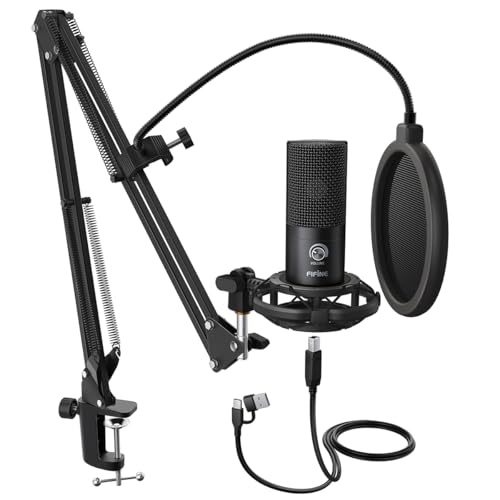
Pros
- Simple plug-and-play USB setup
- Cardioid capsule reduces background noise pickup
- Comprehensive boom arm and shock mount bundle
- Dual-layer pop filter included
- Generous 8.2-foot cable length
Cons
- Incompatible with Xbox consoles

Pros
- Dual USB and XLR connection options
- Includes adjustable metal boom arm and clamp
- Onboard gain dials and real-time monitoring jack
- Customizable RGB lighting without extra software
- External windscreen helps reduce vocal plosives
Cons
- XLR cable is not included in the package
- Desk clamp limited to surfaces under 2 inches

Pros
- Full HD 1080p resolution at 30 fps
- Integrated physical privacy lens cover
- Driver-free plug-and-play USB connection
- Built-in noise-reducing microphone
- Automatic low-light exposure adjustment
Cons
- Maximum frame rate capped at 30 fps
Key Hardware Specifications Compared
Choosing an audio input requires weighing capsule types against mounting flexibility and built-in connection interfaces. The table below details documented specifications for the top streaming microphones across different desk configurations.
| Microphone | Transducer Type | Polar Pattern | Connectivity | Mounting Included |
|---|---|---|---|---|
| FIFINE AmpliGame AM8 | Dynamic | Cardioid | USB-C & XLR | Desktop Base (3/8″ & 5/8″ threads) |
| FIFINE AmpliGame AM8T | Dynamic | Cardioid | USB-C & XLR | Suspension Boom Arm |
| FIFINE T669 Kit | Condenser | Cardioid | USB-A | Scissor Boom Arm & Shock Mount |
| TONOR TC310+ Kit | Condenser | Cardioid | USB-C | Suspension Boom Arm |
| FIFINE AmpliGame A6V | Condenser | Cardioid | USB-C | Tripod & Shock Mount |
| Amazon Basics Condenser | Condenser (14mm) | Cardioid | USB | Adjustable Desktop Stand |
| COCONISE Gaming Mic | Condenser (25mm) | Cardioid | USB | Carbon Steel Desktop Base |
| ZealSound K66 | Condenser | Cardioid | USB-C & Lightning | Metal Desktop Stand |
| CMTECK G009 | Condenser | Omnidirectional | USB | Weighted Gooseneck Base |
| TRAUSI 1080P Webcam | Webcam Integrated Mic | Noise-Canceling | USB 2.0/3.0 | Monitor Clip / Tripod Mount |
Individual Microphone Analysis
1. FIFINE AmpliGame AM8: Best Hybrid USB/XLR Dynamic Mic
The FIFINE AmpliGame AM8 USB/XLR Dynamic Microphone is built for streamers who want straightforward plug-and-play USB operation now with a clear upgrade path to analog audio mixers later. Its dynamic capsule provides native off-axis rejection, which prevents clack from mechanical keyboards from overpowering your broadcast.
Physical controls include a top tap-to-mute sensor, independent headphone monitoring volume, and microphone gain knobs when connected over USB. Note that all onboard RGB illumination, touch controls, and volume adjustments are completely inactive whenever you connect through the analog XLR port.
2. FIFINE AmpliGame AM8T: Best Dynamic Mic with Included Boom Arm
The FIFINE AmpliGame AM8T XLR/USB Gaming Microphone bundles the AM8 dynamic capsule with a heavy-duty spring-assisted suspension arm. Suspending the end-address capsule directly in front of the speaker eliminates desk-bound rumble and keeps desk space clear for wide mouse swipes.
The included C-clamp mounts securely to tabletops up to 2 inches thick, providing smooth positioning without needing aftermarket mounting rings. As an end-address dynamic unit, it requires close vocal proximity between two to six inches to maintain consistent signal strength and vocal presence.
3. TONOR TC310+ Kit: Complete Condenser Mic and Arm Setup
Content creators seeking an all-in-one broadcast package will appreciate the TONOR Gaming Microphone Set with Boom Arm. It features an adjustable suspension arm that clamps to desks up to 2.36 inches thick, paired with an integrated pop filter to deflect harsh vocal plosives.
The microphone head houses a dedicated rotary gain control and a quick-tap mute sensor that lets you silence the stream instantly. Because it uses a sensitive condenser capsule, you will need to position it away from noisy PC exhaust fans to avoid capturing unwanted room ambient noise.
4. FIFINE T669: Proven Studio Condenser with Scissor Arm
The FIFINE T669 Studio Condenser USB Microphone is a staple for voiceover work, podcasting, and PC gaming. It includes a dual-layer pop filter, an elastic spider shock mount, and an all-steel broadcast scissor arm extending up to 30 inches horizontally.
Its cardioid condenser element provides broad dynamic pickup, making vocals sound open and bright without heavy equalizer adjustment. It relies on a detachable USB-B to USB-A cable, and while it connects directly to PC and Mac systems, it does not support Microsoft Xbox consoles.
5. FIFINE AmpliGame A6V: Compact Budget Condenser for Gamers
The FIFINE AmpliGame A6V USB Gaming Microphone offers a 192kHz sampling rate in a lightweight, compact footprint. It comes out of the box with an elastic band shock mount and a clip-on mesh pop filter, sitting atop a foldable desktop tripod.
A tap-to-mute pad on top shuts off the internal gradient RGB lighting, giving you an unambiguous visual cue whenever the channel is silenced. The tripod footprint is small, but aggressive typing on mechanical keyboard switches can still transmit low-frequency desk vibrations directly into your stream audio.
6. COCONISE Gaming Mic: Large-Diaphragm USB Option
Featuring a 25mm condenser diaphragm capsule, the Gaming Microphone for PC captures vocal nuances across a 192kHz sampling rate. It comes paired with a weighted carbon steel base and an elastic shock mount that isolates light desk nudges during gaming sessions.
The unit features zero-latency direct 3.5mm headphone monitoring and an integrated rotary volume dial on its lower housing. However, the wide condenser capsule is exceptionally sensitive, requiring careful gain management inside streaming software like OBS Studio to prevent distortion during shouting.
7. ZealSound K66: Multi-Device Mic with Echo Control
The ZealSound Podcast Microphone for PC stands out for multi-platform streaming thanks to bundled USB-C and Lightning adapters. It communicates seamlessly with Windows PCs, Macs, iPads, and smartphones, making it handy for creators producing mobile live content alongside desktop streams.
The metal chassis holds tactile dials for microphone gain, headphone volume, and an adjustable hardware echo effect. While the integrated digital noise reduction mode filters low hums, it can slightly compress vocal warmth, so running default mode with physical room treatment is recommended for pure voice work.
8. Amazon Basics Condenser: Utilitarian Voice Solution
For minimalist setups, the Amazon Basics Condenser Microphone for PC delivers essential voice capture with zero unnecessary bulk. It houses a 14mm cardioid capsule resting inside an adjustable 360-degree rotating stand equipped with an internal silicone shock ring.
The front housing provides a clean tap-to-mute sensor for quick privacy checks during Discord voice chats or broadcast breaks. It lacks onboard analog headphone monitoring, meaning you must monitor your stream audio through PC system sound cards or dedicated gaming headsets.
9. CMTECK G009: Compact Gooseneck Voice Input
The CMTECK USB Computer Microphone G009 uses a flexible 360-degree gooseneck pipe that fits easily into cramped desks beneath monitor bezels. A tactile base button toggles voice mute with a distinct green-to-red LED status indicator.
Because it utilizes an omnidirectional polar pattern, it captures sounds evenly from all directions around the head. While suitable for voice calls and Discord communication alongside quiet keyboards, it lacks the directional background suppression needed for studio-grade podcasting.
10. TRAUSI 1080P FHD: All-In-One Camera and Mic Alternative
The TRAUSI 1080P FHD Webcam with Noise-Canceling Mic integrates dual noise-reducing microphones directly beneath a 1080p 30fps optical sensor. It clips directly onto display bezels, saving precious desk surface area in budget gaming configurations.
The setup functions without additional drivers on PC, Mac, and streaming utilities like Zoom or OBS. However, because the mic capsule sits atop your monitor two to three feet away, it lacks the body, low-end vocal depth, and gain authority provided by dedicated standalone USB microphones.
How to Choose the Best USB Microphone for Streaming
Selecting audio hardware requires matching technical specs to your room environment. Consider these four critical elements before finalizing your equipment.
Dynamic vs. Condenser Capsules
Condenser microphones feature thin, highly sensitive diaphragms that capture high-frequency detail and subtle vocal inflection. They sound open and realistic, but they easily pick up air conditioner hums, computer case fans, and room reflections in untreated rooms.
Dynamic microphones utilize a heavier moving coil design that requires sound waves to hit the capsule with force. This creates natural acoustic isolation that ignores background noises, making dynamic units like the FIFINE AM8 ideal for untreated bedroom streaming spaces.
Mounting: Boom Arms vs. Desktop Stands
Desktop stands place the microphone right next to your keyboard and mouse pad. When you strike keys or reposition your mouse, mechanical thumps travel straight through the desk into the microphone capsule unless dampened by heavy rubber mounts.
A suspension boom arm clamps to the edge of your desk, suspending the capsule in free air right in front of your mouth. This orientation maximizes your vocal signal level while allowing you to lower the hardware gain, which minimizes background noise pick up.
Onboard Controls and Hardware Monitoring
Software volume sliders inside Windows can be clumsy to adjust mid-match. Hardware gain dials and quick tap-to-mute sensors let you adapt to sudden volume changes instantly without pulling focus away from your game.
Zero-latency headphone monitoring via a built-in 3.5mm jack is another crucial feature. It pipes your microphone signal directly to your headphones before computer processing occurs, preventing the disorienting audio delay that happens with software-based loopback.
Frequently Asked Questions
Do I need an audio interface to use a USB microphone?
No, USB microphones house an internal analog-to-digital converter that translates sound waves into digital data directly over your USB connection. You simply plug the cable into your computer and select the microphone as your default recording device.
Can I use a USB microphone on a PlayStation 5?
Most standard class-compliant USB microphones operate seamlessly with the PS4 and PS5. However, manufacturers suggest plugging the USB-A cable directly into the rear ports of the PS5 console to maintain stable power delivery and prevent sudden audio drops.
Why does my condenser microphone pick up so much keyboard clicking?
Condenser microphones have high sensitivity across a broad frequency spectrum. To minimize keyboard click interference, lower the microphone hardware gain, pull the capsule closer to your mouth, and orient the rear dead zone of the cardioid pattern toward your keyboard.
Final Recommendation
If you stream in an untreated bedroom with keyboard clatter or case fan noise, pick the FIFINE AmpliGame AM8T XLR/USB Gaming Microphone for its noise-rejecting dynamic capsule and versatile boom arm. For creators building an entry-level studio who want broad acoustic warmth on a budget, the TONOR Gaming Microphone Set with Boom Arm provides a complete turnkey condenser kit ready for broadcast.


Write Your Review
No reviews yet. Be the first to share your experience!