

Upgrading to a 3840 x 2160 display brings unmatched visual sharpness to modern titles. The best 4k gaming monitors combine this dense pixel count with fluid refresh rates of 120Hz or higher. Choosing the right display depends heavily on your GPU horsepower, desired panel type, and whether you need console compatibility.
While high-end graphics cards can push 4K visuals, players who prioritize competitive frame rates often cross-shop 1440p gaming monitors or look into newer dual-mode displays. Below is our breakdown of the top models currently available, ranked by performance, feature sets, and panel characteristics.
Quick Picks: Top 4K Gaming Displays

Pros
- Sharp 4K resolution paired with 160Hz refresh rate
- Fast IPS panel offers a 1ms response time
- HDMI 2.1 enables 4K 120Hz console gaming
- NVIDIA G-SYNC Compatible and AMD FreeSync Premium support
- Wide 95% DCI-P3 color gamut coverage

Pros
- Sharp QHD resolution across a spacious 32-inch display
- Fluid 165Hz refresh rate reduces visual lag
- Immersive 1000R curvature fills peripheral vision
- AMD Radeon FreeSync eliminates screen tearing
- Built-in Eye Saver and flicker-reduction modes

Pros
- Dual-mode support for 4K 72Hz or 1080p 144Hz
- Wide 95% DCI-P3 color gamut coverage
- AMD FreeSync tear-free gaming support
- VESA 100x100mm mounting compatibility
- Slim ZeroFrame bezels for multi-monitor setups
Cons
- 4K resolution capped at 72Hz refresh rate
- Stand only supports tilt adjustments
- HDMI inputs limited to version 2.0

Pros
- Sharp 4K UHD resolution with 120Hz refresh rate
- USB-C connectivity with 65W power delivery
- AMD FreeSync Premium support for tear-free gaming
- Higher 1500:1 static contrast ratio
- Hardware-level ComfortView Plus low blue light
Cons
- USB-C power delivery capped at 65W
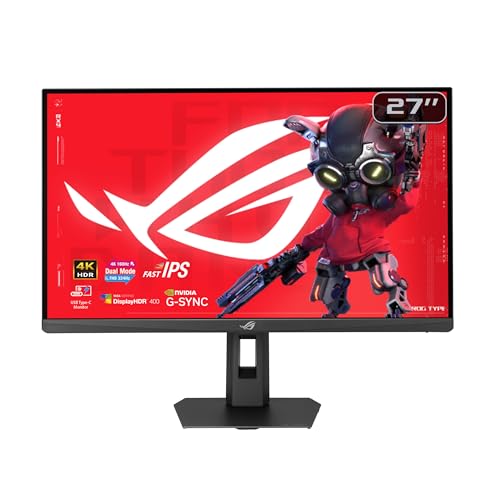
Pros
- Dual display modes supporting up to 324Hz at FHD
- Fast IPS panel with wide 95% DCI-P3 coverage
- ELMB Sync eliminates motion blur alongside variable refresh rates
- USB-C input with DisplayPort Alt Mode support
- Three-year manufacturer warranty with advance replacement

Pros
- Sharp 4K UHD resolution on a large 32-inch canvas
- Smooth 120Hz refresh rate with AMD FreeSync Premium
- Wide 95% DCI-P3 and 99% sRGB color coverage
- Built-in ComfortView Plus low blue light filtering
- Upgraded integrated speakers with expanded audio range
Cons
- Modest 1500:1 contrast ratio for a VA panel
- Basic HDR ready support without high peak brightness ratings
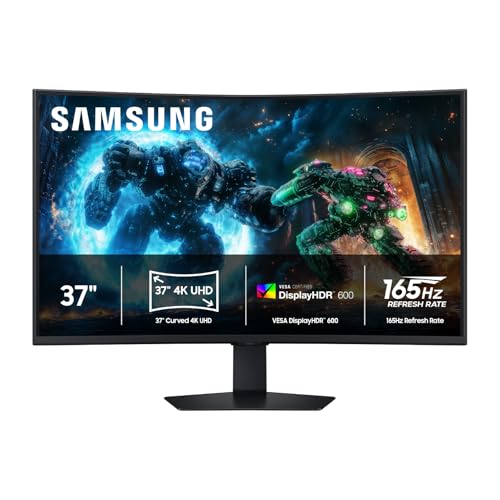
Pros
- Sharp 4K UHD resolution across a large 37-inch screen
- Fluid 165Hz refresh rate for fast-paced gaming
- Rapid 1ms GtG response time reduces motion blur
- Immersive 1000R curved profile
- VESA DisplayHDR 600 delivers enhanced dynamic range
Cons
- Deep 12-inch footprint requires considerable desk space
- Substantial 24.7-pound weight requires a sturdy mounting surface

Pros
- Crisp 4K UHD resolution on an IPS panel
- Smooth 120Hz refresh rate with AMD FreeSync Premium
- Solid 1500:1 contrast ratio with 99% sRGB coverage
- Hardware-level ComfortView Plus low blue light technology
- Integrated upgraded stereo sound

Pros
- Dual-mode refresh rates up to 320Hz at 1080p
- Sharp 4K UHD IPS panel
- AMD FreeSync Premium adaptive sync support
- Modern dual HDMI 2.1 and DisplayPort 1.4 connectivity
- VESA 100 x 100mm wall mount compatibility
Cons
- Stand adjustment is limited to tilt only
- Basic HDR10 support without local dimming specifications

Pros
- One-click switching between 4K 160Hz and FHD 320Hz
- Dual HDMI 2.1 and dual DisplayPort 1.4 inputs
- Fully ergonomic stand with height and pivot support
- Wide color reproduction with 93% DCI-P3 coverage
Cons
- Entry-level HDR400 offers modest high dynamic range performance
- Motion clarity rating specified in MPRT rather than GtG
Specification Comparison
Comparing panel technology, maximum refresh rate, and adaptive sync support makes identifying the right screen easier. The table below outlines the core hardware specifications across each model.
| Model | Screen Size | Resolution | Max Refresh Rate | Panel Type |
|---|---|---|---|---|
| ASUS TUF VG27UQ1A | 27 inches | 3840 x 2160 | 160Hz | Fast IPS |
| ASUS ROG XG27UCSR | 27 inches | 3840 x 2160 | 160Hz (324Hz at 1080p) | Fast IPS |
| Samsung 37” Odyssey G7 | 37 inches | 3840 x 2160 | 165Hz | Curved VA |
| Acer Nitro VG270K V4 | 27 inches | 3840 x 2160 | 160Hz (320Hz at 1080p) | Fast IPS |
| Dell S2725QC | 27 inches | 3840 x 2160 | 120Hz | IPS |
| Dell S3225QS | 32 inches | 3840 x 2160 | 120Hz | VA |
| Dell S2725QS | 27 inches | 3840 x 2160 | 120Hz | IPS |
| Amzfast 27″ | 27 inches | 3840 x 2160 | 160Hz (320Hz at 1080p) | Fast IPS |
| Acer Nitro VG270K L1 | 27 inches | 3840 x 2160 | 72Hz (144Hz at 1080p) | IPS |
| Samsung 32″ Odyssey G55C | 32 inches | 2560 x 1440 | 165Hz | Curved VA |
Individual Product Analysis
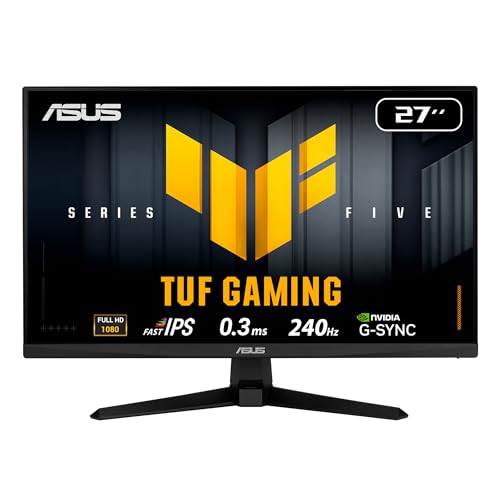
1. ASUS TUF Gaming VG27UQ1A 27 Inch 4K 160Hz G-SYNC
The ASUS TUF Gaming VG27UQ1A 27 Inch 4K 160Hz G-SYNC is designed for gamers seeking responsive esports motion alongside Ultra HD clarity. Its Fast IPS panel achieves a 1ms response time and runs natively at 160Hz. It also features ELMB Sync, which allows back-light strobing to function concurrently with variable refresh rates.
For console owners, the inclusion of HDMI 2.1 delivers uncompressed 4K at 120Hz, making it an excellent dual-purpose desktop screen. Color coverage reaches 95% DCI-P3, which serves both visual realism and content creation. The primary trade-off is the standard HDR performance typical of edge-lit IPS panels, which lacks the deep contrast found on OLED or Mini-LED monitors.
2. ASUS ROG XG27UCSR 27 Inch 4K 162Hz USB-C G-SYNC
The ASUS ROG XG27UCSR 27 Inch 4K 162Hz USB-C G-SYNC is tailored for hybrid players who transition between AAA exploration and twitch-heavy esports. Its standout feature is dual-mode capability, allowing native 4K at 160Hz or FHD at a blistering 324Hz. This provides two distinct monitor profiles inside a single 27-inch frame.
Display connectivity is well rounded with USB Type-C featuring DisplayPort Alt mode, allowing streamlined single-cable video input. The panel boasts a 0.3ms minimum response time and factory color tracking for accurate reproduction. The higher cost reflects these premium features, and running at lower resolutions in dual mode reduces visual sharpness compared to native rendering.
3. Samsung 37” Odyssey G7 (G75F)
The Samsung 37” Odyssey G7 (G75F) targets players who want massive immersion without moving to an ultra-wide format. Its 37-inch panel features a tight 1000R curvature that matches human peripheral vision. Backed by VESA DisplayHDR 600, it produces noticeably higher peak brightness and superior contrast compared to baseline HDR10 models.
A native 165Hz refresh rate and 1ms gray-to-gray response make it remarkably responsive for a panel of this size. Keep in mind that a 37-inch display requires a deep desk surface to view comfortably. Users with tight spaces may want to inspect a budget battlestation guide to plan their layout before committing to such a large chassis.
4. Acer Nitro 27in 4K 3840×2160 IPS 160Hz DFR 320Hz
The Acer Nitro 27in 4K 3840×2160 IPS 160Hz DFR 320Hz introduces Acer Dynamic Frequency and Resolution (DFR) technology to competitive setups. Users can lock into detailed 3840 x 2160 at 160Hz or switch down to 1080p at 320Hz for fast-paced shooters. This dual-purpose design appeals to players who play both sim racers and competitive FPS games.
The IPS panel features AMD FreeSync Premium support, 90% DCI-P3 color gamut, and response times scaling down to 0.5ms. The ZeroFrame bezel minimizes borders for clean multi-monitor configurations. As with most dual-resolution displays, switching modes requires adjusting your game settings to match the interpolated 1080p feed.
5. Dell 27 Monitor S2725QC, 4K UHD IPS, 120Hz
The Dell 27 Monitor S2725QC, 4K UHD IPS, 120Hz is designed for users who split their time evenly between productivity tasks and gaming. It features an IPS panel running at 120Hz with AMD FreeSync Premium for tear-free gaming. Its USB-C port delivers up to 65W of power delivery, creating a clutter-free single-cable connection for laptops.
The display covers 99% of the sRGB color spectrum with an enhanced 1500:1 contrast ratio that tops typical IPS specifications. Built-in speakers offer re-engineered acoustic output with greater power and clarity than standard monitor speakers. Its 120Hz cap is lower than dedicated 160Hz esports models, but it provides a balanced mix of office utility and gaming smoothness.
6. Dell 32 Monitor S3225QS, 4K UHD VA, 120Hz
The Dell 32 Monitor S3225QS, 4K UHD VA, 120Hz enlarges the screen size to 32 inches using a VA panel. This configuration provides deep darks and a 1500:1 contrast ratio suited for atmospheric story-driven adventures. It supports 120Hz refresh rates, AMD FreeSync Premium, and 95% DCI-P3 color gamut.
Dell includes improved ComfortView Plus to keep blue light emissions at or below 35% without degrading on-screen color accuracy. While VA panels produce deeper black levels than IPS screens, they exhibit slightly narrower viewing angles. It is best suited for centered desk setups where the player sits directly in front of the screen.
7. Dell 27 Monitor S2725QS, 4K UHD IPS, 120Hz, 5ms
The Dell 27 Monitor S2725QS, 4K UHD IPS, 120Hz, 5ms is an approachable alternative to the USB-C-equipped S2725QC. It keeps the same 4K UHD IPS panel running at 120Hz with AMD FreeSync Premium. The 1500:1 contrast ratio and 99% sRGB color coverage ensure clean images for general entertainment.
The enclosure sports an ash white rear finish and an ultra-thin bezel profile that fits modern desk aesthetics. Because it lacks high-wattage USB-C laptop charging, it relies strictly on standard display inputs. It remains a dependable option for desktop PC towers and gaming consoles.
8. Amzfast 27″ 4K Gaming Monitor
The Amzfast 27″ 4K Gaming Monitor brings dual-mode flexibility to a competitive entry tier. Gamers can toggle between 4K at 160Hz for cinematic campaigns and 1080p at 320Hz for fast-paced shooters. The screen reaches 400 nits of peak brightness with 93% DCI-P3 and 126% sRGB coverage.
Connectivity includes two HDMI 2.1 ports and two DisplayPort 1.4 inputs, allowing simultaneous connections for PC and console hardware. The fully ergonomic stand supports tilt, swivel, height, and pivot adjustments right out of the box. Brand recognition and firmware polish may lag behind established names like ASUS or Dell, but the on-paper feature list is comprehensive.
9. Acer Nitro 27in 4K 3840×2160 IPS 72Hz DFR 144Hz
The Acer Nitro 27in 4K 3840×2160 IPS 72Hz DFR 144Hz offers a budget-conscious entry into high-resolution displays. At native 4K, the refresh rate peaks at 72Hz, making it ideal for slower-paced RPGs, strategy games, and general workstation productivity. When competitive speed is needed, its DFR technology shifts to 1080p at 144Hz.
The monitor provides solid color fidelity with 95% DCI-P3 coverage and HDR10 support. Its response time drops as low as 0.5ms GTG to help mitigate visual ghosting during motion. The 72Hz cap at 4K means high-end GPU owners looking for high-frame-rate 4K output will outgrow this panel quickly.
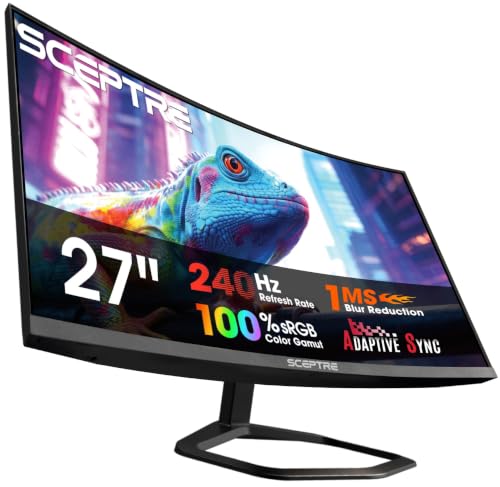
10. Samsung 32″ Odyssey (G55C) Series
The Samsung 32″ Odyssey (G55C) is worth highlighting as a performance alternative for setups where 4K driving demands are too high. It features a QHD (2560 x 1440) resolution rather than native 4K, running at 165Hz with a 1ms MPRT response time. Its dramatic 1000R curved VA panel wraps around your field of view to boost contrast and immersion.
AMD FreeSync prevents screen tearing, while Eye Saver Mode curbs flicker and blue light during marathon sessions. Buyers should remember this is strictly a 1440p panel, not Ultra HD. Those curious about wider screen options can also check out ultrawide monitors to weigh resolution against field-of-view width.
Key Factors When Choosing a 4K Gaming Monitor
Hardware demands at 4K are steep, rendering four times the pixel count of standard 1080p displays. Before purchasing, verify your graphics card can push stable frame rates at 3840 x 2160 in your favorite titles. Modern upscaling technologies like DLSS and FSR help bridge the gap, but native 4K rendering still requires a capable GPU.
HDMI 2.1 is critical if you plan to connect a PlayStation 5 or Xbox Series X. Standard HDMI 2.0 ports cap 4K output at 60Hz, while HDMI 2.1 unlocks 4K at 120Hz with variable refresh rate support. DisplayPort 1.4 remains the standard connection for PC gaming setups using adaptive sync.
Frequently Asked Questions
What is dual-mode display technology?
Dual-mode displays allow users to switch between two native operating modes on the same hardware. For example, a screen can render native 4K at 160Hz for story games, or lower its internal resolution to 1080p at over 300Hz for competitive multiplayer shooters.
Is a 27-inch or 32-inch screen better for 4K gaming?
A 27-inch 4K screen provides extreme pixel density, resulting in razor-sharp text and images without visible pixel structure. A 32-inch screen provides greater immersion and makes fine details easier to read at typical desk sitting distances without requiring high desktop scaling.
Final Recommendation
For dedicated PC and console gaming, the ASUS TUF VG27UQ1A delivers the best balance of 160Hz speed, Fast IPS clarity, and HDMI 2.1 connectivity. If you want versatility across esports and AAA titles, the ASUS ROG XG27UCSR or Acer Nitro VG270K V4 offer exceptional dual-mode flexibility. For hybrid workstations that prioritize single-cable laptop convenience alongside 120Hz gaming, the Dell S2725QC is the most practical desktop solution.




Write Your Review
No reviews yet. Be the first to share your experience!