

Choosing the best 1080p gaming monitors comes down to balancing panel speed, pixel density, and color consistency. While stepping up to higher resolutions is popular, Full HD remains ideal for competitive multiplayer titles where maximum frame rates take priority over sheer pixel count.
For most competitive players, a 24-inch screen delivers the sharpest image at this resolution due to high pixel density. However, larger 27-inch and 32-inch displays provide greater visual immersion, provided you sit far enough back to compensate for the lower density. If you plan to upgrade your entire desk setup, our guide on how to build the ultimate battlestation on a budget offers helpful hardware pairing advice.
Top 1080p Gaming Displays at a Glance

Pros
- Fast 240Hz refresh rate for fluid gameplay
- High 4000:1 static contrast ratio
- Immersive 1500R curved display
- FreeSync adaptive sync support
- Wide 130% sRGB color gamut
Cons
- 1080p resolution yields lower pixel density at 27 inches
- Stand provides tilt adjustment only
- No built-in audio speakers

Pros
- Smooth 240Hz refresh rate via DisplayPort and HDMI
- Immersive 1500R curved 32-inch screen
- High 3500:1 contrast ratio
- Built-in FreeSync support
- DisplayPort cable included in the box
Cons
- Low pixel density with 1080p at 32 inches
- No integrated speakers
- Stand adjustment limited strictly to tilt

Pros
- 144Hz overclocked refresh rate
- NVIDIA G-SYNC and AMD FreeSync support
- IPS panel with 99% sRGB coverage
- 1ms Motion Blur Reduction mode
- DisplayPort and HDMI connectivity
Cons
- Stand provides tilt adjustment only
- 144Hz refresh rate requires overclocking
Pros
- Smooth 144Hz refresh rate with AMD FreeSync
- Color-accurate IPS panel with wide viewing angles
- Dual HDMI ports for multi-device setups
- TÜV Rheinland certified blue light reduction
- Slim bezels suitable for multi-monitor arrangements
Cons
- Ergonomic adjustments limited to tilt only
Pros
- High 240Hz refresh rate for fluid motion
- Fast IPS panel with wide viewing angles
- AMD FreeSync Premium and HDMI VRR support
- Dual HDMI and DisplayPort connectivity options
Cons
- 1080p resolution provides lower pixel density at 27 inches
- Stand adjustment is limited to tilt only

Pros
- Fast refresh rate reaching up to 144Hz
- Includes DisplayPort and HDMI connection options
- Thin bezels ideal for dual-display setups
- Built-in speakers preserve physical desk space
- Blue-Light Shift feature for eye comfort
Cons
- Compact 22-inch screen limits total viewing real estate

Pros
- Smooth 144Hz IPS panel with vivid colors
- Supports both G-SYNC Compatible and FreeSync
- Height and tilt adjustable ergonomic stand
- Built-in stereo speakers and headphone port
- Dynamic Action Sync reduces input lag
Cons
- 1ms response rating requires Motion Blur Reduction
- 1080p resolution limits workspace compared to 1440p
Pros
- Smooth 144Hz refresh rate with FreeSync support
- IPS panel with wide 178-degree viewing angles
- TÜV Rheinland certified eye protection features
- Standard VESA 100x100mm mount compatibility
- Supports both modern HDMI and legacy VGA connections
Cons
- Stand is limited to tilt adjustments only
Key Technical Differences Across Full HD Displays
The models in this lineup target different performance tiers and desktop footprints. Display panel technology is the main dividing line, separating fast IPS screens from high-contrast curved VA panels. Refresh rates also range from standard 144Hz tiers up to competitive 240Hz refresh rates.
| Model | Screen Size | Panel Type | Refresh Rate | Variable Refresh Support |
|---|---|---|---|---|
| SANSUI 32 Inch Curved 240Hz | 32 inches | Curved VA (1500R) | 240Hz | FreeSync |
| SANSUI 27 Inch Curved 240Hz | 27 inches | Curved VA (1500R) | 240Hz | FreeSync |
| LG 24G411A-B Ultragear | 24 inches | Flat IPS | 144Hz (OC) | G-Sync Compatible / FreeSync |
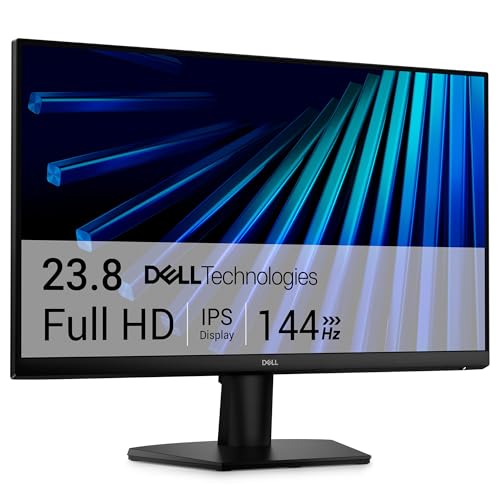
| Dell SE2426H | 23.8 inches | Flat IPS | 144Hz | FreeSync |
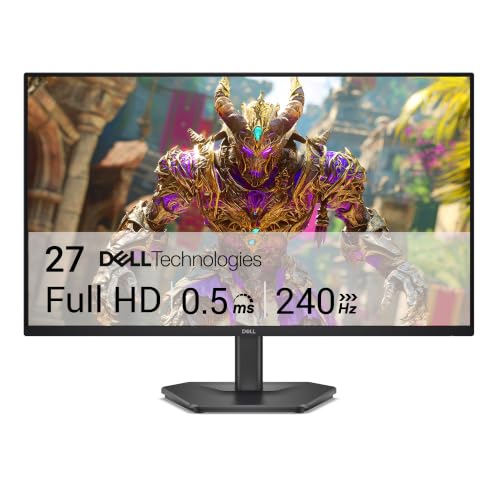
| Dell SE2726HG | 27 inches | Fast IPS | 240Hz | FreeSync Premium / VRR |
| Sceptre E225W-FW144 | 22 inches | Flat Panel | 144Hz | Adaptive Sync |
| LG 24G414B-B Ultragear | 24 inches | Flat IPS | 144Hz | G-Sync Compatible / FreeSync |
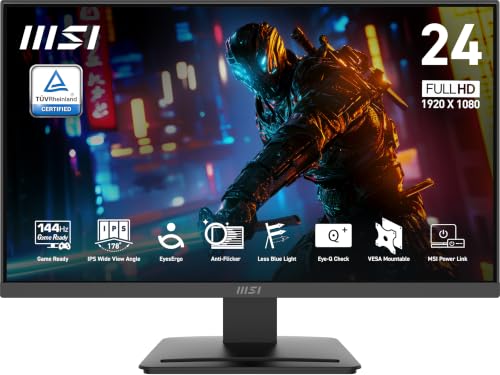
| MSI PRO MP243L E14 | 23.8 inches | Flat IPS | 144Hz | FreeSync |
Detailed Reviews of the Best 1080p Gaming Monitors
SANSUI 32 Inch Curved 240Hz Gaming Monitor
The SANSUI 32 Inch Curved 240Hz Gaming Monitor is designed for gamers who want a sprawling display surface without requiring expensive graphics hardware. Its 1500R curvature draws your peripheral vision into racing simulators and cinematic open-world games, while the 3500:1 static contrast ratio delivers deep black levels in dark scenes.
The 240Hz refresh rate operates smoothly over both HDMI and DisplayPort 1.4 connections. Keep in mind that stretching a 1920×1080 grid across a 32-inch diagonal results in a relatively coarse pixel density of roughly 69 pixels per inch. To avoid seeing individual pixels during desktop reading, the manufacturer advises maintaining a viewing distance of approximately 1.2 meters.
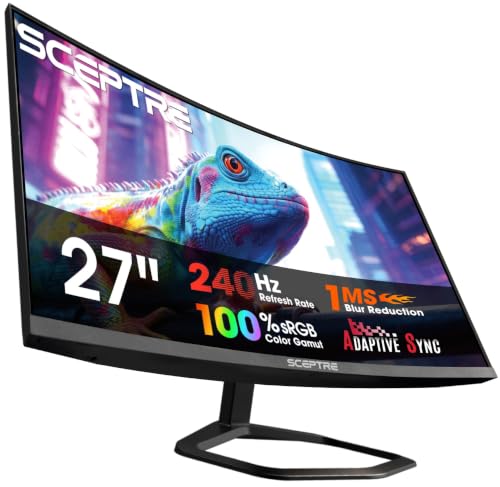
SANSUI 27 Inch Curved 240Hz Gaming Monitor FHD
The SANSUI 27 Inch Curved 240Hz Gaming Monitor FHD offers a more balanced desktop size while retaining the high-speed 240Hz refresh capability. With a high 4000:1 contrast ratio and wide 130% sRGB color gamut coverage, this curved monitor produces vibrant highlights alongside ink-like shadow depths.
Competitive players will appreciate the 1ms MPRT rating paired with AMD FreeSync support to eliminate screen tearing during sudden mouse movements. The stand permits basic forward and backward tilt but lacks height adjustment. If you need a more flexible viewing angle, mounting it to an aftermarket arm using the 100x100mm VESA pattern is recommended.
LG 24G411A-B 24-inch Ultragear Full HD
The LG 24G411A-B 24-inch Ultragear Full HD focuses directly on esports clarity and broad adaptive sync compatibility. The native 120Hz panel overclocks to 144Hz and is officially certified for both NVIDIA G-Sync and AMD FreeSync, ensuring clean frame pacing on virtually any graphics card.
Because it uses an IPS panel, this display maintains consistent color accuracy and wide viewing angles without gamma shifts. Additional gaming firmware tools like Dynamic Action Sync minimize internal signal latency, while the Black Stabilizer brightens murky corners in tactical shooters. The slim stand keeps the physical footprint compact, though it provides only simple tilt adjustments.
Dell 24 Monitor – SE2426H
The Dell 24 Monitor – SE2426H serves as a capable hybrid display suitable for mixed work routines and light evening gaming sessions. It combines a 23.8-inch IPS panel with a 144Hz refresh rate, delivering clear text rendition alongside fluid motion handling.
Dell equips this unit with a TÜV Rheinland 3-star eye comfort certification that curtails hardware-level blue light emissions without tinting the overall color palette. Dual HDMI inputs allow easy switching between a desktop PC and a secondary streaming console. Note that it lacks a dedicated DisplayPort jack, making it best paired with modern HDMI-equipped systems.
Dell 27 240Hz Gaming Monitor – SE2726HG
The Dell 27 240Hz Gaming Monitor – SE2726HG steps up to tournament-grade speeds with a 240Hz Fast IPS panel and a rapid 0.5ms response time specification. It supports AMD FreeSync Premium and HDMI Variable Refresh Rate (VRR), ensuring consistent tear-free output during high-velocity competitive encounters.
Unlike curved VA alternatives, this flat Fast IPS screen ensures fast pixel transitions without dark-level smearing or color inversion at off angles. Connectivity is flexible thanks to dual HDMI ports and a DisplayPort 1.4 connection. The 27-inch size provides large targets in first-person shooters, though users sensitive to pixel grid visibility may prefer higher resolution options covered in our guide to the best 1440p gaming monitors.
Sceptre New 22-Inch Gaming Monitor, FHD 1080p
The Sceptre New 22-Inch Gaming Monitor, FHD 1080p represents the most compact and affordable option in this roundup. Its smaller 22-inch diagonal screen creates a dense pixel grid, rendering sharp character models and crisp text across standard desk setups.
Despite its small stature, it supports refresh rates up to 144Hz over DisplayPort and HDMI, making fast gameplay accessible in constrained spaces. It also integrates basic internal speakers to save room on crowded desks, though audio output is modest. The narrow bezel border makes it an attractive candidate for budget multi-monitor workspaces.
LG 24G414B-B 24-inch Ultragear IPS 1080p 144Hz 1ms
The LG 24G414B-B 24-inch Ultragear IPS 1080p 144Hz 1ms improves upon basic desktop gaming monitors by adding native stereo audio and specialized desktop productivity software. Its native 144Hz refresh rate provides crisp motion clarity without requiring manual panel overclocking steps.
The integrated LG Switch App lets users divide the display into multiple functional zones for streaming workflows and discord chat windows. Dual adaptive sync support for G-Sync and FreeSync guarantees reliable performance regardless of your installed graphics processor. Integrated stereo speakers handle voice communications and casual media playback when you prefer not wearing a headset.
msi PRO MP243L E14 24-inch IPS 1920 x 1080 (FHD)
The msi PRO MP243L E14 24-inch IPS 1920 x 1080 (FHD) provides a flexible solution for home offices that transition into casual gaming stations after work hours. The 23.8-inch IPS panel boasts an above-average 1500:1 contrast ratio, enhancing visual separation between light text and darker desktop elements.
Alongside its 144Hz refresh rate and FreeSync support, MSI includes a proprietary Eye-Q Check tool that tests for eye strain during long working hours. The port selection includes modern HDMI with CEC control as well as a legacy VGA port for retro systems. The four-sided slim bezel styling integrates smoothly into clean, distraction-free home office setups.
How to Choose the Best 1080p Gaming Monitor
Selecting the right Full HD display requires assessing your preferred game genres, available desk space, and system hardware specifications. Here are the core factors to evaluate before making a purchase.
Screen Size and Pixel Density
Pixel density describes how sharply visual details appear on screen. At 1920×1080 resolution, a 24-inch monitor sits near 92 pixels per inch (PPI), which provides clean line clarity and crisp game menus at normal desk distances. Moving to a 27-inch screen lowers density to roughly 81 PPI, which enlarges HUD elements but slightly softens geometric edges.
A 32-inch 1080p display drops density down to roughly 69 PPI. While this large format delivers strong visual immersion in simulator setups, you must sit at least a full arm’s length away to avoid seeing individual pixel boundaries. If you prefer wide physical screen space with higher detail levels, consider exploring the best ultrawide monitors instead.
Panel Technology: IPS vs. Curved VA
The monitors in this guide use either IPS or VA display panels, each suited to distinct lighting conditions and playstyles:
- IPS Panels: Offer wide 178-degree viewing angles and accurate color reproduction across the entire surface. Fast IPS versions exhibit minimal motion blur, making them the preferred choice for fast-paced shooters like Counter-Strike or Valorant.
- VA Panels: Deliver deep contrast ratios typically reaching 3000:1 or 4000:1, producing rich blacks in dim rooms. They are generally built with curved profiles to combat viewing angle shift, though they can exhibit slight dark-level trailing in fast transitions.
Refresh Rates and Input Interfaces
A 144Hz refresh rate displays more than double the visual information of a conventional 60Hz office screen, resulting in smoother camera panning and reduced tracking error. Upgrading further to 240Hz benefits dedicated competitive players who want lower end-to-end system latency and fractionally faster frame updates.
Before purchasing a 240Hz screen, confirm that your computer graphics card includes DisplayPort 1.4 or modern HDMI output capable of driving that refresh rate at 1080p. Monitors with variable refresh technologies like AMD FreeSync and NVIDIA G-Sync keep gameplay tear-free even when frame rates fluctuate under heavy load.
Frequently Asked Questions
Is 1080p still good for gaming in 2026?
Yes, 1080p remains widely supported and practical for competitive PC gaming. It allows budget and midrange graphics cards to sustain high refresh rates near 144Hz or 240Hz without requiring expensive hardware upgrades.
Can I reach 240Hz using an HDMI cable?
Several modern monitors support 240Hz over compatible HDMI 2.0 connections, but it depends on the specific port revision on both your graphics card and monitor. DisplayPort remains the most reliable connection method for locking high refresh rates on PC desktops.
What is the ideal screen size for a 1080p monitor?
Most competitive players consider 24 inches the optimal size for 1080p resolution. It keeps all on-screen action within your immediate field of vision while maintaining a crisp pixel density for reading small HUD text and spotting distant targets.
Final Recommendation
If your primary goal is competitive esports with sharp motion clarity and dependable G-Sync or FreeSync integration, the 24-inch LG Ultragear models offer the best balance of speed and pixel density. For tournament-level tracking on a flat display, the Dell SE2726HG Fast IPS 240Hz monitor delivers exceptional responsiveness. Players seeking deep contrast and cinematic immersion in simulation titles will be better served by the curved 27-inch or 32-inch SANSUI displays, provided their desks offer adequate viewing distance.





Write Your Review
No reviews yet. Be the first to share your experience!