

Finding the best affordable vr headsets requires balancing display resolution, tracking capabilities, and platform compatibility. Hardware options fall into two distinct categories: active standalone headsets capable of PC tethering and passive smartphone enclosures designed for basic media consumption.
If your goal is interactive PC gaming or standalone room-scale movement, dedicated hardware like the Meta Quest lineup or Oculus Rift S provides true spatial tracking. Mobile phone viewers offer an inexpensive gateway for panoramic video but lack the motion controllers and tracking depth required for serious gaming titles.

Pros
- Fits both iOS and Android smartphones
- Includes wireless remote for Android control
- Enlarged lenses for enhanced immersion
- Padded interface for improved wearing comfort
- Beginner-friendly setup guides and content included
Cons
- Requires a compatible smartphone to operate
- Included remote is specified only for Android

Pros
- Untethered standalone wireless operation
- Snapdragon XR2 Gen 2 with 8GB RAM
- Full-color mixed reality passthrough via RGB cameras
- Spacious 256GB internal storage capacity
- Includes exclusive Gorilla Tag bundle items
Cons
- Advertised runtime limited to roughly two hours per charge

Pros
- High-resolution 1832 x 1920 per-eye display
- Spacious 256GB onboard storage capacity
- Integrated controller-free hand tracking
- Includes textured silicone grips and knuckle straps
Cons
- Renewed condition rather than factory-new hardware

Pros
- Snapdragon XR2 Gen 2 processor for smooth visuals
- High-capacity 512GB storage for standalone libraries
- Full-color mixed reality passthrough cameras
- Cordless design allows untethered movement
- Upgraded 8GB RAM ensures responsive performance
Cons
- Advertised battery life limited to around two hours
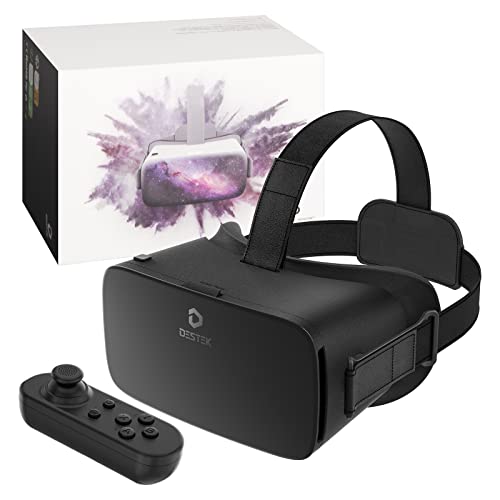
Pros
- Broad compatibility with 5.5 to 7.2 inch phones
- Wide 110-degree field of view
- Lightweight build at approximately 0.3 pounds
- Built-in physical touch buttons on the visor
- Includes bundled wireless controller
Cons
- Controller interactivity is heavily limited on iOS
- Requires a separate smartphone to function

Pros
- Fits smartphones from 4.7 to 7.0 inches
- Adjustable interpupillary distance for optical clarity
- Integrated optical support for myopia users
- Anti-blue light lenses to reduce eye strain
- Lightweight design with adjustable T-shaped strap
Cons
- Requires a separate compatible smartphone to function
- Lacks dedicated motion controllers and standalone tracking hardware

Pros
- Broad compatibility with 5.0 to 7.0-inch phones
- Includes multi-function remote control
- Top knob allows quick lens adjustments
- High-transmittance resin lenses reduce image distortion
Cons
- Visual fidelity depends entirely on phone display
- Controller requires an independent power source

Pros
- Accommodates prescription glasses with independent focus adjustment
- Includes a wireless controller for remote navigation
- Lightweight 13-ounce frame with adjustable head strap
- Anti-blue light aspheric lenses reduce eye strain
Cons
- Conflicting field-of-view specifications in manufacturer documentation
- Visual experience depends on the inserted smartphone screen
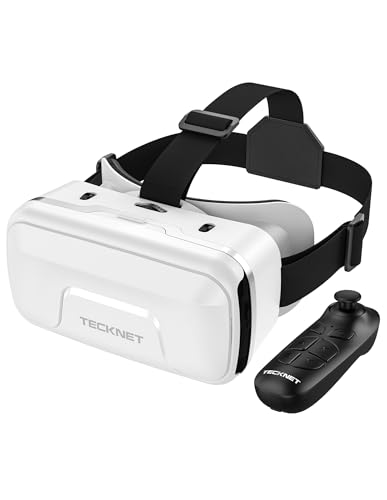
Pros
- Lightweight 268g chassis with breathable foam padding
- Includes wireless Bluetooth controller for navigation
- Supports phones from 4.7 up to 7.2 inches
- Adjustable focus supports myopia up to 600 degrees
- Lenses feature integrated blue-light protection
Cons
- Does not automatically convert standard 2D content to 3D
- Requires dedicated VR apps or split-screen content
- Warranty benefits require user registration

Pros
- Integrated inside-out tracking requires no external sensors
- Halo strap with quick-adjust fit wheel
- Refined optics with reduced screen-door effect
- Intuitive Oculus Touch controllers included
- Direct access to PC VR gaming library
Cons
- Requires a Facebook account to log in
- Requires a tethered connection to a PC
Dedicated VR Headsets for PC and Standalone Play
Dedicated headsets feature integrated displays, onboard processors, and internal motion sensors. These units support six degrees of freedom, allowing you to walk around virtual spaces while tracking both head and controller movement accurately.
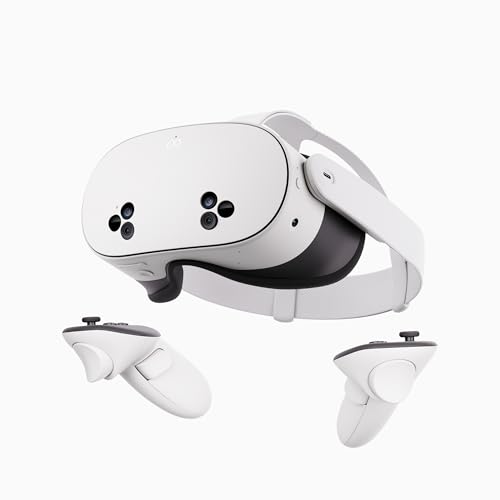
Meta Quest 3S 256GB | Virtual Reality
The Meta Quest 3S serves as an entry point into modern mixed reality without the top-tier pricing of flagship hardware. Powered by the Snapdragon XR2 Gen 2 platform and 8GB of system RAM, it handles intensive standalone titles with smooth performance. Dual RGB color cameras enable full-color passthrough, letting you blend digital interfaces into your physical living room.
For desktop gamers, the headset connects to compatible rigs via wireless streaming or USB link cables to access standard SteamVR libraries. The internal battery lasts roughly two hours under continuous operation, which may necessitate an external power bank for extended sessions. It delivers an excellent balance between cost, performance, and software access.
Meta Quest 3 512GB | Virtual Reality
The Meta Quest 3 steps up visual clarity with its higher-density display architecture and thinner optical assembly. Featuring the same Snapdragon XR2 Gen 2 processor, this model includes expanded 512GB internal storage for substantial game installations without frequent uninstalls. Crisp optical elements minimize edge distortion during fast-paced simulations and high-action flight games.
While commanding a higher investment than the 3S variant, the expanded storage and sharper display reduce visual fatigue during long sessions. It remains compatible with PC streaming setups, functioning as a high-fidelity display for desktop simulation rigs. Players building a modern setup can pair this with the 7 best gaming headsets in 2026 for enhanced spatial audio immersion.
Meta Quest 2 — Advanced All-In-One Virtual Reality
The renewed Meta Quest 2 continues to offer exceptional entry value for budget-conscious VR enthusiasts. With 1832 by 1920 pixels per eye and 256GB of onboard storage, it easily handles older standalone releases and standard PC VR streaming tasks. The bundled knuckle straps and silicone grips improve controller retention during vigorous rhythm games.
Its primary compromise lies in older processing silicon and monochromatic passthrough video compared to current generations. However, when connected directly to a gaming rig, desktop rendering offloads computational work from the headset itself. It remains one of the most cost-effective routes into six-degree-of-freedom PC virtual reality.
Oculus Rift S PC-Powered VR Gaming Headset
The Oculus Rift S is a dedicated tethered headset built strictly for desktop PC connections. It utilizes inside-out Insight tracking via integrated cameras, eliminating the need for external base stations mounted around the room. The halo headband distributes weight evenly across the crown, making it comfortable during lengthy simulation runs.
Because the Rift S relies entirely on DisplayPort and USB connectivity, it operates without onboard battery constraints. However, it cannot function as a standalone unit away from a computer and requires an active tether cable during use. For those who play at a desk alongside a budget battlestation build, it provides stable PC VR gaming without streaming compression.
Smartphone VR Viewers for Media and Casual 3D
Smartphone viewers use your existing mobile device as both the rendering computer and the display panel. These headsets do not run full PC VR titles, but they provide accessible ways to view stereoscopic media and basic interactive apps.
DESTEK V5 VR Headset with 50000+ VR Movies
The DESTEK V5 features a wide 110-degree field of view with anti-blue-light lenses designed to protect eyesight during long movie screenings. It comes equipped with soft fabric face padding and capacitive touch buttons for menu navigation inside supported mobile applications. A bundled Bluetooth gamepad assists with media playback, though advanced interaction is limited primarily to Android devices.
This headset accommodates various smartphone dimensions and functions effectively as a personal theater screen. It lacks positional tracking sensors, restricting movements to simple three-degree rotational viewing. It suits users focused on mobile video experiences rather than competitive gaming.
TECKNET VR Headset for Phone with Controller
TECKNET delivers an adaptable phone shell supporting mobile devices with screen diagonals up to 7.2 inches. It features dual independent lens adjustments for pupil distance and focal length, accommodating near-sighted users without requiring prescription glasses underneath. The lightweight 268-gram chassis incorporates breathable foam padding to enhance airflow during warm sessions.
The package includes a compact Bluetooth controller suited for navigation and basic mobile titles. Visual clarity depends entirely on your smartphone screen resolution and refresh rate. For casual mobile exploration or classroom virtual tours, it offers comfortable ergonomics at a minimal expense.
3D VR Headset for Kids + Android Remote
Designed primarily for younger audiences, the REALITEX headset offers a straightforward entry into mobile virtual reality. The chassis includes wide lenses and generous face padding sized for smaller profiles, alongside introductory mobile software recommendations. An included handheld remote pairs via Bluetooth to facilitate menu navigation on supported Android hardware.
As with all phone enclosures, tracking remains limited to head rotation without room-scale depth. Parents should monitor usage times to avoid eye strain during extended viewing. It functions reliably as an accessible gift for basic 3D media and educational mobile applications.
VR Headset for Phone with Controller
Wennedalyn provides a compact 13-ounce viewer featuring aspheric lenses with anti-distortion coatings and 94 percent light transmission. Independent focal dials allow separate adjustments for each eye, while generous internal cutouts accommodate prescription eyeglasses. The integrated head strap distributes weight comfortably across the forehead and crown.
Its bundled remote aids menu selection without forcing users to extract the smartphone from the front tray. Total visual fidelity remains tethered to your phone display panel, making high-density OLED screens preferable. It represents a practical travel option for mobile 360-degree video playback.
Virtual Reality Headset for Phone with Controller
Haptique combines high-transmittance optical resin lenses with a wide adjustment knob to calibrate optical clarity. Compatible with screens measuring between 5.0 and 7.0 inches, the front clamp secures modern devices while maintaining access for ventilation. The multi-function controller provides basic media transport controls across compatible operating systems.
Because the unit uses passive optical paths, latency and image smoothness rely entirely on your mobile phone processing power. The system serves well for viewing stereoscopic video content but cannot emulate full gaming controllers. It is best suited for budget-conscious media streaming.
VR Headset 3D VR Glasses Universal Virtual Reality
Xiaokeis offers an ultra-budget enclosure built around a lightweight T-shaped headband and anti-blue-light optical glass. Mechanical interpupillary dials enable manual alignment between the optics and your eyes to reduce visual strain. It fits smartphones between 4.7 and 7.0 inches without requiring complex setup procedures.
This viewer omits external electronic components, operating strictly as a passive dual-lens stereoscope. Users must interact with apps via touchscreen before mounting the handset or use separate third-party peripherals. It represents the lowest monetary threshold for trying basic 360-degree mobile panoramic content.
Key Factors When Choosing Affordable VR Hardware
Selecting suitable hardware starts with understanding your intended gaming workload. If you plan to play immersive PC titles like flight simulators or tactical shooters, a standalone headset with PC streaming support is mandatory. Phone enclosures cannot interface with PC gaming software or provide motion controller positional tracking.
Optics and adjustment mechanisms directly influence user comfort during long gaming sessions. Look for physical interpupillary distance dials that align the lenses directly in front of your pupils to avoid blurriness. Headsets with sufficient interior clearance also allow individuals with prescription spectacles to play without scratching internal optical elements.
Frequently Asked Questions
Can smartphone VR headsets run SteamVR games?
Smartphone enclosures cannot run standard SteamVR titles natively. They lack the positional sensors, low-latency tracking, and motion controllers required to interface properly with desktop gaming platforms. Dedicated hardware like the Meta Quest series or Oculus Rift S is required for PC VR titles.
What is the difference between 3DOF and 6DOF tracking?
Three degrees of freedom tracks only rotational head movement, allowing you to look up, down, and sideways from a fixed spot. Six degrees of freedom tracks both rotation and physical movement through physical space, letting you duck, lean, and walk inside the virtual environment.


Write Your Review
No reviews yet. Be the first to share your experience!