

Upgrading to one of the best 240hz gaming monitors is one of the most noticeable improvements you can make for competitive multiplayer titles. Rendering a new frame every 4.16 milliseconds cuts motion blur dramatically compared to standard 60Hz or 144Hz panels. That fluid motion allows you to track targets cleanly during flick shots and rapid camera rotations.
Choosing the right monitor requires matching panel technology and screen resolution to your graphics card and desk space. While 1080p displays remain the standard for high-framerate competitive play, 1440p options offer sharper text and broader utility. Below is a specification-led breakdown of the top 240Hz monitors available today.
Top 240Hz Gaming Monitors Compared
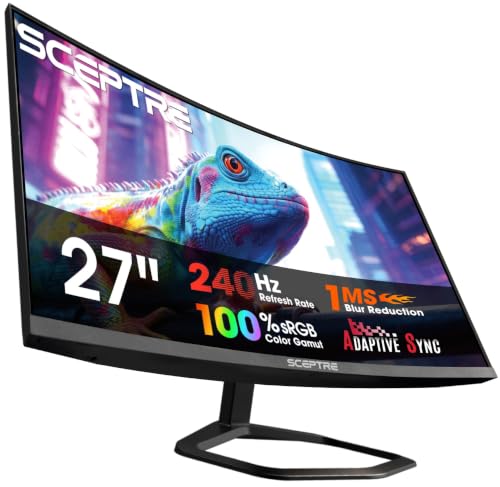
Pros
- High 240Hz refresh rate for fluid gameplay
- Immersive 1500R curved VA panel design
- Versatile connectivity with two HDMI and two DisplayPort connections
- Built-in speakers save desktop space
Cons
- 1080p resolution provides lower pixel density at 27 inches
- Integrated speakers offer modest audio output

Pros
- Fast 240Hz refresh rate for fluid gameplay
- High 4000:1 static contrast ratio
- Immersive 1500R curved display
- FreeSync adaptive sync support
- Wide 130% sRGB color gamut
Cons
- 1080p resolution yields lower pixel density at 27 inches
- Stand provides tilt adjustment only
- No built-in audio speakers
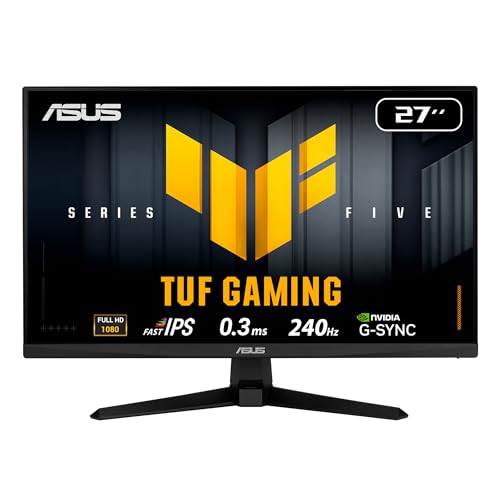
Pros
- Fluid 240Hz refresh rate
- G-Sync and FreeSync Premium adaptive sync support
- ELMB Sync combines blur reduction with variable refresh rates
- Fast IPS panel with 99% sRGB color coverage
- Comprehensive 3-year manufacturer warranty
Cons
- 1080p resolution yields lower pixel density at 27 inches

Pros
- Smooth 240Hz refresh rate via DisplayPort and HDMI
- Immersive 1500R curved 32-inch screen
- High 3500:1 contrast ratio
- Built-in FreeSync support
- DisplayPort cable included in the box
Cons
- Low pixel density with 1080p at 32 inches
- No integrated speakers
- Stand adjustment limited strictly to tilt

Pros
- Fast 240Hz refresh rate via DisplayPort
- Sharp 1440p resolution on an IPS panel
- Versatile stand with full ergonomic adjustments
- AMD FreeSync Premium support reduces tearing
- Includes both DisplayPort and HDMI cables
Cons
- Refresh rate capped at 144Hz over HDMI
- Integrated two-watt speakers provide basic audio output
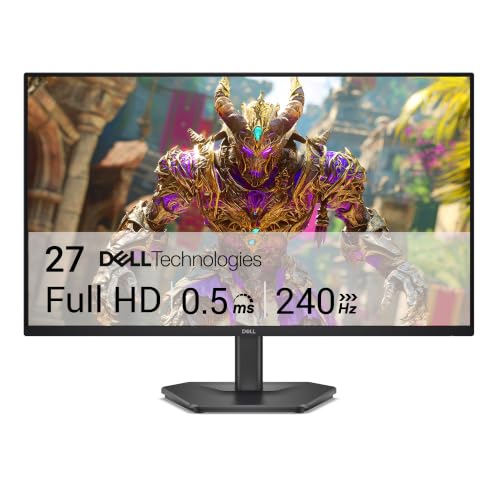
Pros
- High 240Hz refresh rate for fluid motion
- Fast IPS panel with wide viewing angles
- AMD FreeSync Premium and HDMI VRR support
- Dual HDMI and DisplayPort connectivity options
Cons
- 1080p resolution provides lower pixel density at 27 inches
- Stand adjustment is limited to tilt only

Pros
- High 240Hz refresh rate for fluid motion
- Fast IPS panel provides wide viewing angles
- Adaptive Sync prevents visual screen tearing
- DisplayPort 1.4 and HDMI 2.0 inputs
- Standard 100x100 mm VESA mounting support
Cons
- Stand lacks height, swivel, and pivot adjustments
- Standard 1000:1 contrast limits true HDR dynamic range

Pros
- Rapid 240Hz refresh rate with 0.03ms response time
- Vibrant QD-OLED panel with Pantone Validated color accuracy
- Glare Free surface treatment minimizes ambient reflections
- OLED Safeguard thermal modulation helps mitigate burn-in risk
- Fully adjustable stand with height, swivel, tilt, and pivot

Pros
- High 240Hz refresh rate
- AMD FreeSync Premium support
- Versatile dual HDMI and dual DisplayPort inputs
- 100% sRGB color coverage
- Built-in audio speakers
Cons
- Native display resolution is not documented
- Panel type is unspecified in product details
- Stand ergonomic adjustment specifications are omitted

Pros
- High 240Hz refresh rate for competitive gameplay
- Rapid VA panel with fast 0.5ms response time
- AMD FreeSync Premium support prevents tearing
- AI Vision enhances visibility in dark scenes
- Compatible with standard VESA monitor mounts
Cons
- Ergonomic adjustment is limited to tilt only
- 1080p resolution yields modest pixel density at 27 inches
Detailed Reviews of the Best 240Hz Monitors
1. Samsung 27″ Odyssey OLED G6 (G61SH) QD-OLED
The Samsung 27″ Odyssey OLED G6 (G61SH) QD-OLED represents the performance pinnacle among 240Hz screens. Its Quantum Dot OLED panel delivers true per-pixel illumination with infinite contrast and a 0.03ms response time. Fast-moving targets display zero perceptible ghosting or backlight trailing, making it exceptional for competitive tracking.
The QHD 2560×1440 resolution provides a sharp 108 PPI pixel density on its 27-inch canvas. Samsung includes OLED Safeguard thermal modulation to reduce burn-in risks, alongside a fully adjustable stand that supports tilt, swivel, pivot, and height adjustments. It requires a powerful GPU to sustain 240 frames per second at 1440p, making it an enthusiast-tier choice.
2. MONITOR Acer Nitro 27in QHD 2560×1440 IPS 240Hz
For players who want 1440p sharpness without the expense of OLED, the MONITOR Acer Nitro 27in QHD 2560×1440 IPS 240Hz hits an ideal balance. Its IPS panel delivers consistent viewing angles and 1ms GtG pixel transitions. You can read more about this resolution class in our detailed guide to the best 1440p gaming monitors.
Keep in mind that the full 240Hz refresh rate is only accessible over its DisplayPort 1.4 connection, as the dual HDMI 2.0 ports cap at 144Hz. The included Ergostand offers 4.7 inches of height adjustment, 360-degree swivel, and full pivot. It fits PC desks that need both productive desktop real estate and tournament-level speed.
3. ASUS TUF VG279QM5A 27 Inch 1080p 240Hz Fast IPS
The ASUS TUF VG279QM5A 27 Inch 1080p 240Hz Fast IPS focuses purely on competitive esports performance. It leverages a Fast IPS panel with an advertised minimum response time of 0.3ms to minimize smearing. ASUS includes ELMB SYNC, allowing backlight strobing to operate simultaneously with variable refresh rate tech like G-Sync and FreeSync Premium.
Because it pairs a 1080p resolution with a 27-inch diagonal, the pixel density sits around 81 PPI. Fine text is less crisp than on a 1440p screen, but your graphics card has far less overhead to maintain an unbroken 240 FPS stream. Software control via DisplayWidget Center lets you tweak game modes directly from your desktop.
4. KTC 24.5 Inch 240Hz Gaming Monitor (H25T7-A)
Esports veterans often prefer a 24.5-inch diagonal because the entire display sits within your peripheral vision. The KTC 24.5 Inch 240Hz Gaming Monitor delivers that tournament profile using a responsive Fast IPS panel. The smaller 1080p screen produces tighter pixel density than 27-inch 1080p counterparts.
The display features 114% sRGB coverage, 1ms MPRT, and standard VESA 100×100 mounting holes for monitor arms. It pairs naturally with lightweight peripherals covered in our look at the best gaming mice. The stand only supports forward and back tilt, so an aftermarket desk mount is recommended for height changes.
5. Dell 27 240Hz Gaming Monitor – SE2726HG
The Dell 27 240Hz Gaming Monitor – SE2726HG brings brand reliability and clean panel tuning to the high-refresh budget category. Dell integrates a Fast IPS panel with a 0.5ms response time alongside FreeSync Premium and HDMI VRR support. This dual VRR compatibility makes it straightforward to hook up both a gaming PC and modern consoles.
The unit features TÜV Rheinland 3-star eye comfort certification to reduce blue light output without washing out colors. Connectivity includes two HDMI inputs and a DisplayPort 1.4 port. As with most entry-level packages, the stand offers simple tilt adjustments rather than height or swivel versatility.
6. SANSUI 27 Inch Curved 240Hz Gaming Monitor FHD
Gamers seeking deep contrast in darker environments should evaluate the SANSUI 27 Inch Curved 240Hz Gaming Monitor FHD. Unlike IPS displays that hover around a 1000:1 contrast ratio, this VA panel provides a high 4000:1 static contrast. Dark shadows and night scenes in cinematic games appear noticeably deeper without milky gray lifting.
The 1500R curvature wraps the edges slightly closer to your eyes, helping to mitigate the narrow viewing angles inherent to VA designs. It features 130% sRGB color gamut coverage and 1ms MPRT motion reduction. Fast dark-to-light transitions on VA panels can show minor black smearing in competitive titles, which remains a standard trade-off for high contrast.
7. Sceptre 27-Inch Curved Gaming Monitor, FHD 1080p (C275B-FWT240)
The Sceptre 27-Inch Curved Gaming Monitor, FHD 1080p is another high-contrast VA option curved to a 1500R radius. It stands out by providing generous port selection, including two DisplayPort inputs and two HDMI connections. This makes switching between multiple gaming rigs or home office setups hassle-free.
Integrated stereo speakers give you basic desk audio without taking up workspace. The panel delivers 99% sRGB coverage, Blue-Light Shift protection, and a 1ms blur reduction mode. It serves as an accessible entry point if you are learning how to build a battlestation on a budget.
8. New! Sceptre 24.5-inch Gaming Monitor 240Hz 1ms (E255B-FWD240)
The New! Sceptre 24.5-inch Gaming Monitor 240Hz 1ms is designed for players who want maximum speed at the lowest price barrier. Its 24.5-inch flat panel preserves pixel sharpness better than larger 1080p monitors. AMD FreeSync Premium keeps framerates synchronized to eliminate tearing when action intensifies.
Like its curved sibling, it includes dual HDMI and dual DisplayPort inputs along with built-in speakers. The compact footprint makes it a strong contender for secondary stream monitors or cramped tournament desks. Ergonomics remain basic with tilt-only adjustment, but standard 100×100 VESA mounts allow easy arm attachment.
9. msi MAG 274CF X24 27-inch 1920 x 1080 (FHD)
The msi MAG 274CF X24 27-inch 1920 x 1080 (FHD) incorporates MSI Rapid VA panel technology. It reduces typical VA response delays down to a documented 0.5ms minimum GtG. This gives competitive gamers high static contrast alongside cleaner motion rendering than older VA generations.
MSI integrates AI Vision processing, which dynamically brightens shadowy scenes while maintaining accurate color saturation in bright areas. The monitor supports AMD FreeSync Premium and basic HDR decoding. It features both HDMI and a legacy VGA input, expanding compatibility with older desktop systems.
10. SANSUI 32 Inch Curved 240Hz Gaming Monitor
For players who want maximum visual immersion without paying for an ultrawide, the SANSUI 32 Inch Curved 240Hz Gaming Monitor provides a sprawling 32-inch 1500R screen. Its VA panel achieves a 3500:1 contrast ratio, 300 nits of brightness, and 125% sRGB color gamut coverage.
Stretching 1920×1080 resolution across a 32-inch surface results in roughly 69 PPI. SANSUI explicitly recommends a viewing distance of around 1.2 meters to keep pixel structure from looking coarse. If you sit back with a gamepad for racing or arcade titles, it offers huge screen real estate at 240Hz.
Key Specifications Comparison
| Model | Screen Size | Resolution | Panel Type | Response Time | Sync Tech |
|---|---|---|---|---|---|
| Samsung Odyssey OLED G6 | 27 Inch | 2560 x 1440 | QD-OLED | 0.03ms | FreeSync Premium |
| Acer Nitro XV272U | 27 Inch | 2560 x 1440 | Fast IPS | 0.5ms (min) | FreeSync Premium |
| ASUS TUF VG279QM5A | 27 Inch | 1920 x 1080 | Fast IPS | 0.3ms (min) | G-Sync / FreeSync |
| KTC H25T7-A | 24.5 Inch | 1920 x 1080 | Fast IPS | 1ms MPRT | Adaptive Sync |
| Dell SE2726HG | 27 Inch | 1920 x 1080 | Fast IPS | 0.5ms | FreeSync Premium |
| MSI MAG 274CF X24 | 27 Inch | 1920 x 1080 | Rapid VA | 0.5ms (min GtG) | FreeSync Premium |
| SANSUI 27″ Curved | 27 Inch | 1920 x 1080 | Curved VA | 1ms MPRT | FreeSync |
| Sceptre C275B-FWT240 | 27 Inch | 1920 x 1080 | Curved VA | 1ms BR | Adaptive Sync |
| Sceptre E255B-FWD240 | 24.5 Inch | 1920 x 1080 | Flat VA/TN | 1ms BR | FreeSync Premium |
| SANSUI 32″ Curved | 32 Inch | 1920 x 1080 | Curved VA | 1ms MPRT | FreeSync |
How to Choose the Best 240Hz Gaming Monitor
Sustaining 240 frames per second places heavy demands on both your graphics processing unit and your display connection. Understanding how panel materials, screen dimensions, and port standards interact will prevent buyers from making costly setup mistakes.
Panel Types: IPS vs VA vs QD-OLED
Fast IPS panels remain the standard recommendation for esports titles like Valorant, Apex Legends, and Counter-Strike 2. Modern Fast IPS designs switch liquid crystal states rapidly without severe color shift across angles. While their black levels are limited to roughly 1000:1 contrast, they avoid noticeable dark smearing.
VA panels excel at contrast, offering ratios between 3000:1 and 4000:1 for deep blacks in dark gaming environments. However, transitions between pure black and dark gray are traditionally slower on budget VA panels, leading to slight motion blur. QD-OLED panels outperform both, achieving instantaneous 0.03ms pixel response times and true black levels at a higher price.
Resolution and Screen Size Balance
At 24.5 inches, a 1080p resolution provides roughly 90 pixels per inch, which looks sharp at close desk distances. This pairing minimizes GPU load, making it easier to lock in 240 FPS without lowering graphics presets to the absolute minimum. Most professional esports tournaments stick to this form factor.
Stepping up to 27 inches at 1080p lowers pixel density to around 81 PPI, where text edges become softer. For 27-inch setups, 2560×1440 resolution provides far cleaner image fidelity, but pushing 240 FPS at 1440p requires a mid-to-high-tier GPU. Avoid 32-inch 1080p monitors unless you sit over a meter away from your desk.
DisplayPort and HDMI Cable Bandwidth
Not all video ports can carry a 240Hz signal at native resolution. While DisplayPort 1.4 handles 1080p and 1440p at 240Hz without issue, many budget monitors feature HDMI 2.0 ports that cap refresh rates at 120Hz or 144Hz. Always verify whether 240Hz is supported across all inputs if you plan to plug in multiple systems.
Frequently Asked Questions
Can my PC run games at 240Hz?
Your monitor can display at 240Hz on the desktop regardless of your system speed, but in-game framerates depend on your hardware. Competitive titles like Overwatch 2 or Rocket League easily reach 240 FPS on modern mid-range GPUs. Demanding cinematic games will require lowering graphic settings or using upscaling to approach 240 FPS.
Is 240Hz noticeably better than 144Hz?
The leap from 60Hz to 144Hz cuts frame intervals by 9.3 milliseconds, which is instantly apparent to any user. Going from 144Hz to 240Hz reduces frame intervals by an additional 2.8 milliseconds. While less dramatic than the initial jump, competitive players notice improved tracking smoothness and reduced micro-stutter during high-speed engagements.
Final Verdict: Which 240Hz Monitor Fits Your Rig?
If your budget permits and you have an enthusiast GPU, the Samsung 27″ Odyssey OLED G6 (G61SH) QD-OLED delivers benchmark-setting motion clarity and infinite contrast. For high-resolution gaming on a realistic budget, the MONITOR Acer Nitro 27in QHD 2560×1440 IPS 240Hz pairs 1440p crispness with Fast IPS speed.
Competitive shooter players prioritizing raw speed and lower GPU demand should choose the ASUS TUF VG279QM5A 27 Inch 1080p 240Hz Fast IPS or the compact KTC 24.5 Inch 240Hz Gaming Monitor. Matching your monitor’s panel tech to your primary game genre ensures you get the full competitive benefit of a 240Hz refresh rate.


Write Your Review
No reviews yet. Be the first to share your experience!