

Finding the best under $100 gaming motherboards requires balancing core power delivery against modern expansion options. Most sub-$100 options center around the AMD AM4 platform and the B550 chipset, which provides PCIe 4.0 support for dedicated graphics cards and primary NVMe drives without requiring expensive newer memory kits.
At this entry-level price point, builders generally trade off integrated Wi-Fi modules, heavy secondary heatsinks, and high-end audio codecs. Focusing on models with robust VRM configurations and convenient BIOS recovery tools ensures steady stability across extended gaming sessions.

Pros
- PCIe 4.0 support for graphics and storage
- Four DDR4 memory slots up to 4400+ MT/s
- Dual M.2 slots for NVMe storage flexibility
- Reinforced Steel Armor PCIe slot
- Compact micro-ATX form factor
Cons
- Limited to standard Gigabit Ethernet speeds
- No integrated Wi-Fi connectivity
- Restricted to older AM4 DDR4 platform

Pros
- Native PCIe 4.0 support for GPU and primary SSD
- Q-Flash Plus enables simple CPU-less BIOS updates
- Integrated I/O shield speeds up DIY PC assembly
- Includes front-panel USB Type-C header connectivity
- Four DDR4 DIMM slots with XMP memory support
Cons
- Secondary M.2 slot restricted to PCIe 3.0 bandwidth
- Ethernet is limited to standard 1 Gbps speeds

Pros
- PCIe 4.0 support for GPU and primary M.2 drive
- Includes both rear and front-panel USB-C connections
- Dedicated M.2 Key E slot for adding Wi-Fi
- Supports up to 128 GB of DDR4 memory
- Multiple display outputs including HDMI and DisplayPort
Cons
- Does not include an integrated Wi-Fi module
- Secondary M.2 slot is limited to PCIe Gen3 x2

Pros
- PCIe 4.0 graphics and M.2 storage support
- Dual onboard M.2 drive slots
- Four DDR4 memory slots with XMP
- Q-Flash for easy BIOS management
- Compact Micro-ATX footprint
Cons
- Basic 3+3 power phase design
- Secondary M.2 slot limited to PCIe 3.0
- Networking capped at Gigabit Ethernet
Quick Comparison of Top Budget AM4 Motherboards
| Motherboard | Form Factor | VRM Power Phases | PCIe 4.0 M.2 Slots | Rear Type-C Port |
|---|---|---|---|---|
| GIGABYTE B550 Gaming X V2 AMD AM4 ATX Motherboard | ATX | 10+3 Digital | 1 (plus 1x Gen3) | No (Front header only) |
| ASRock AMD B550 PG Riptide ATX Motherboard Dual | ATX | 8 Phase Dr. MOS | 1 (plus 1x Gen3) | Yes (USB 3.2 Gen2) |
| MSI PRO B550M-P Motherboard, mATX | Micro-ATX | Core Boost Design | 1 (plus 1x Gen3) | No |
| GIGABYTE B550M K AMD AM4 Micro-ATX Motherboard | Micro-ATX | 3+3 Digital | 1 (plus 1x Gen3) | No |
Evaluated Motherboards Under $100
GIGABYTE B550 Gaming X V2 AMD AM4 ATX Motherboard
The GIGABYTE B550 Gaming X V2 provides a full-size ATX footprint paired with a digital twin 10+3 power phase design. This enhanced VRM setup includes dedicated thermal heatsinks that help maintain consistent temperatures under sustained multi-core workloads. An integrated I/O shield further simplifies the hardware assembly process for new builders.
Expansion includes one primary PCIe 4.0 x16 slot, one PCIe 4.0 M.2 slot, and a secondary PCIe 3.0 M.2 slot for storage drives. The board also features a front USB 3.2 Gen 1 Type-C header and Q-Flash Plus functionality, which enables BIOS updates without requiring an installed processor, graphics card, or memory modules.
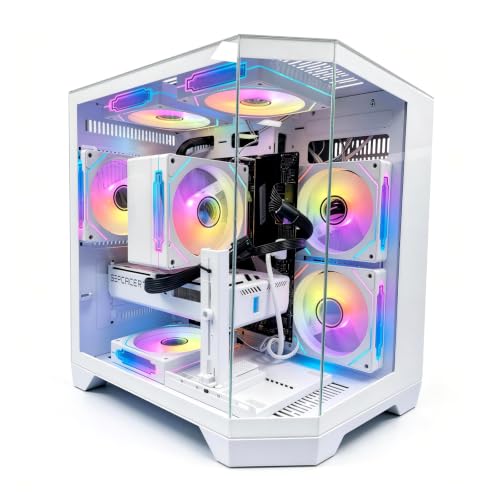
One notable limitation is the absence of a native rear Type-C port, relying instead on front-panel case routing. It is best suited for builders installing six-core or eight-core Ryzen 5000 processors inside standard mid-tower chassis such as those highlighted in our guide to clean white PC cases for gaming.
ASRock AMD B550 PG Riptide ATX Motherboard Dual
The ASRock AMD B550 PG Riptide stands out in the budget bracket by incorporating an 8-phase power delivery system utilizing integrated Dr. MOS power stages. This design improves power efficiency and thermal behavior compared to discrete MOSFET layouts found on many cheaper alternatives. It also provides an M.2 Key E slot reserved for builders wishing to add a dedicated wireless card later.
Rear connectivity includes both USB 3.2 Gen 2 Type-A and Type-C ports, offering 10 Gbps transfer rates for fast external drives and peripherals. Storage capacity is supported by four SATA3 connectors alongside a Hyper M.2 PCIe Gen4 x4 socket and a secondary M.2 Gen3 slot. Audio is driven by a Realtek ALC897 codec with Nahimic software support.
The second full-length PCIe slot operates at PCIe 3.0 speeds, and the secondary M.2 slot shares lane bandwidth with two SATA ports when populated. This board serves gamers who want modern high-speed rear connectivity and future Wi-Fi expansion without exceeding entry-level build budgets.
MSI PRO B550M-P Motherboard, mATX
The MSI PRO B550M-P is a compact Micro-ATX board designed for small-form-factor builds or budget desktop projects. It features four DDR4 memory slots supporting overclocks up to 4400 MT/s, allowing flexible memory upgrades beyond standard two-slot budget options. The primary PCIe 4.0 x16 slot incorporates Steel Armor reinforcement to prevent slot damage from heavy modern graphics cards.
Storage management is straightforward with one PCIe 4.0 x4 M.2 slot for an operating system drive and one PCIe 3.0 x4 M.2 slot for game storage. Automated cooling adjustments are handled through MSI Frozr AI cooling, which calibrates connected case fan curves based on temperature readings.
However, the VRM section lacks substantial passive heatsinks over the upper power phases, meaning airflow must be maintained when running high-draw processors. This board is an efficient choice for builders pairing modest 65W processors like the Ryzen 5 5600 inside compact enclosures.
GIGABYTE B550M K AMD AM4 Micro-ATX Motherboard
The GIGABYTE B550M K offers a baseline entry route into the AMD AM4 ecosystem with essential modern connectivity intact. It retains four DDR4 DIMM slots, giving builders the flexibility to expand memory capacity to 128 GB over time. It also includes dual M.2 connectors, delivering PCIe 4.0 speeds on the top slot and PCIe 3.0 speeds on the lower slot.
The board provides a basic digital 3+3 power phase architecture, which is sufficient for entry-level gaming setups running stock clock profiles. Rear connectivity covers four USB 3.2 Gen 1 ports, standard analog audio jacks, and a Gigabit Ethernet port for lag-free wired networking.
Due to the lightweight VRM power delivery and minimal passive heatsink surface area, this board is not built for sustained heavy overclocking or high-wattage Ryzen 9 processors. It is best deployed in strict budget builds focused on lightweight competitive gaming or everyday home office tasks.
Key Buying Considerations for Budget Gaming Motherboards
When selecting among the best under $100 gaming motherboards, certain technical specifications dictate overall system stability and longevity. Builders should match motherboard characteristics directly to their intended processor, chassis, and peripheral needs.
VRM Power Delivery and Passive Cooling
The Voltage Regulator Module converts twelve-volt power from your power supply into the precise voltage required by the processor. Boards utilizing higher phase counts, such as 10+3 or Dr. MOS configurations, spread thermal loads more evenly across component stages. Models lacking metal heatsinks over the MOSFETs require stronger direct case airflow to prevent thermal throttling during long gameplay sessions.
ATX vs Micro-ATX Form Factors
Form factor determines both expansion capabilities and case compatibility across different configurations. Full ATX boards provide additional PCIe slots for sound cards, capture devices, or extra network adapters, but they require standard mid-tower chassis. Micro-ATX models save space and cost, though they generally offer fewer expansion slots and more compact connector spacing.
Storage and USB Connectivity
The B550 chipset delivers PCIe 4.0 bandwidth directly from compatible AM4 processors to the primary M.2 slot and graphics card. Secondary M.2 slots operate on PCIe 3.0 lanes routed through the chipset, which may share bandwidth with specific SATA ports. Verifying the placement of USB Type-C connections is also vital, as some boards offer rear ports while others only supply internal headers for chassis front panels.
Frequently Asked Questions
Can a sub-$100 B550 motherboard support high-end AM4 processors?
Yes, all B550 motherboards are mechanically and electrically compatible with AM4 processors ranging up to the Ryzen 9 5950X. However, boards with simpler 3+3 or uncooled power phases can experience elevated VRM temperatures under sustained twelve-core or sixteen-core loads. For high-TDP CPUs, a board with robust heatsinks and multi-phase Dr. MOS power delivery is recommended.
Do budget motherboards come with Wi-Fi pre-installed?
Most motherboards selling under $100 omit integrated Wi-Fi adapters to keep manufacturing costs low. Instead, they rely on Gigabit Ethernet ports for wired networking. Several models include an open M.2 Key E slot or available PCIe lanes, enabling builders to install an inexpensive Wi-Fi 6 card whenever needed.
Is PCIe 4.0 necessary for budget gaming builds?
PCIe 4.0 provides double the bandwidth of PCIe 3.0 per lane, which benefits entry-level graphics cards wired with narrow x8 or x4 interfaces. Modern budget GPUs can lose measurable performance when restricted to PCIe 3.0 slots. Selecting a B550 board ensures the primary PCIe slot and top M.2 drive operate at full PCIe 4.0 speeds.
Final Recommendation
For builders who want the most balanced ATX platform with reliable power delivery and convenient BIOS flashing, the GIGABYTE B550 Gaming X V2 AMD AM4 ATX Motherboard is the most complete all-around choice. If high-speed rear USB Type-C connectivity and future wireless expansion through an M.2 Key E slot are priorities, the ASRock AMD B550 PG Riptide ATX Motherboard Dual offers superior peripheral versatility. For compact Micro-ATX builds pairing a six-core CPU with affordable memory, the MSI PRO B550M-P Motherboard, mATX provides a functional, budget-conscious core for our wider collection of gaming PC components and guides.




Write Your Review
No reviews yet. Be the first to share your experience!