

Choosing the best ips gaming monitors comes down to balancing panel resolution, pixel density, and native refresh rate. IPS displays remain the standard choice for PC players who prioritize consistent color rendering and wide viewing angles over the deep black levels found on VA or OLED panels.
Our evaluation focuses on documented hardware specifications across 7 models from brands like ASUS, msi, LG and more. Whether you need a compact 1080p display for high-frame-rate esports or a sharp 1440p workspace, these screens represent distinct tiers of gaming capability.

Pros
- Fast 180Hz refresh rate with 1ms GtG response
- IPS panel provides wide 178-degree viewing angles
- G-Sync compatibility eliminates screen tearing
- Fully adjustable stand with height, tilt, swivel, pivot
- Sharp 2560 x 1440 QHD resolution

Pros
- Crisp 2560 x 1440 QHD resolution
- Fast 180Hz refresh rate and 1ms GtG response
- IPS panel with wide 178-degree viewing angles
- G-Sync compatibility eliminates screen tearing
- Full ergonomic stand with pivot, tilt, and swivel

Pros
- 144Hz overclocked refresh rate
- NVIDIA G-SYNC and AMD FreeSync support
- IPS panel with 99% sRGB coverage
- 1ms Motion Blur Reduction mode
- DisplayPort and HDMI connectivity
Cons
- Stand provides tilt adjustment only
- 144Hz refresh rate requires overclocking

Pros
- Fluid 180Hz refresh rate with 1ms response time
- Sharp 27-inch QHD Fast IPS display
- Simultaneous ELMB and variable refresh rate technology
- G-Sync compatible and FreeSync Premium support
- Wide 130% sRGB color gamut coverage
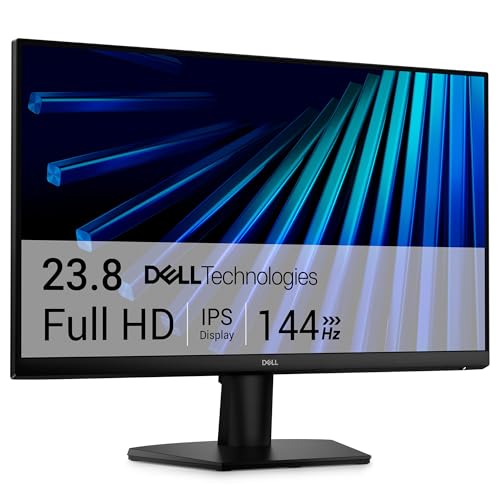
Pros
- Smooth 144Hz refresh rate with AMD FreeSync
- Color-accurate IPS panel with wide viewing angles
- Dual HDMI ports for multi-device setups
- TÜV Rheinland certified blue light reduction
- Slim bezels suitable for multi-monitor arrangements
Cons
- Ergonomic adjustments limited to tilt only
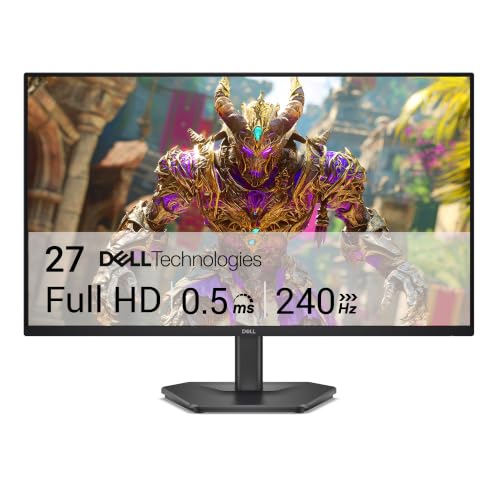
Pros
- High 240Hz refresh rate for fluid motion
- Fast IPS panel with wide viewing angles
- AMD FreeSync Premium and HDMI VRR support
- Dual HDMI and DisplayPort connectivity options
Cons
- 1080p resolution provides lower pixel density at 27 inches
- Stand adjustment is limited to tilt only
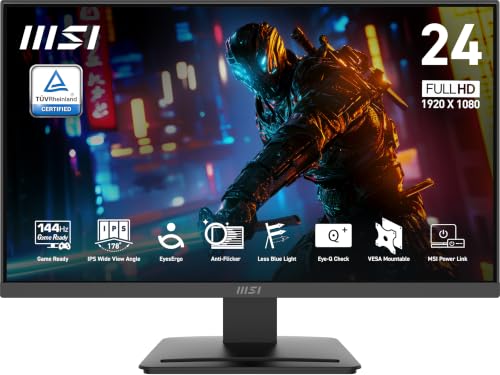
Pros
- Smooth 144Hz refresh rate with FreeSync support
- IPS panel with wide 178-degree viewing angles
- TÜV Rheinland certified eye protection features
- Standard VESA 100x100mm mount compatibility
- Supports both modern HDMI and legacy VGA connections
Cons
- Stand is limited to tilt adjustments only
Quick Comparison of Documented Specifications
To help narrow your choice, the table below compares the primary hardware specs of each monitor based on manufacturer documentation. Reviewing refresh rates alongside native resolutions highlights how demanding each screen will be on your graphics card.
| Model | Screen Size | Resolution | Refresh Rate | Response Time |
|---|---|---|---|---|
| Samsung 32” Odyssey G5 (G50F) | 32 inches | 2560 x 1440 (QHD) | 180Hz | 1ms GtG |
| Samsung 27” Odyssey G5 (G50F) | 27 inches | 2560 x 1440 (QHD) | 180Hz | 1ms GtG |
| LG 24G411A-B Ultragear | 24 inches | 1920 x 1080 (FHD) | 144Hz (OC) | 1ms MBR |
| ASUS TUF Gaming VG27AQ3A | 27 inches | 2560 x 1440 (QHD) | 180Hz | 1ms GtG |
| Dell SE2426H | 23.8 inches | 1920 x 1080 (FHD) | 144Hz | 1ms MPRT |
| Dell SE2726HG | 27 inches | 1920 x 1080 (FHD) | 240Hz | 0.5ms |
| MSI PRO MP243L E14 | 23.8 inches | 1920 x 1080 (FHD) | 144Hz | 1ms |
Detailed Analysis of the Best IPS Gaming Monitors
Samsung 32” Odyssey G5 (G50F)
The Samsung 32” Odyssey G5 (G50F) pairs a generous 32-inch surface with a 2560 x 1440 QHD resolution and a 180Hz refresh rate. It suits players who sit farther back from their desks or prefer large visual fields without moving to an ultrawide form factor. The 1ms gray-to-gray response time helps minimize visual smearing in fast-paced gameplay.
Because the resolution is spread across a 32-inch panel, pixel density sits around 93 pixels per inch. Text clarity and fine desktop elements are not as crisp as on smaller QHD options, though the included fully ergonomic stand provides excellent tilt, swivel, pivot, and height adjustments.
Samsung 27” Odyssey G5 (G50F)
For standard desk depths, the Samsung 27” Odyssey G5 (G50F) represents the traditional sweet spot between screen size and visual sharpness. It delivers roughly 109 pixels per inch at 2560 x 1440 resolution, ensuring clean edges in games and sharp typography in desktop apps. Like its 32-inch counterpart, it runs at 180Hz with G-Sync compatibility.
This model is an ideal pick for mid-range gaming systems, matching well with our guide to the best 1440p gaming monitors. Note that while it accepts an HDR10 input signal, basic edge-lit backlighting means it will not provide dramatic contrast in dark environments.
ASUS TUF Gaming VG27AQ3A 27 Inch 1440p 180Hz
The ASUS TUF Gaming VG27AQ3A 27 Inch 1440p 180Hz focuses heavily on competitive motion handling. Its Fast IPS panel covers 130% of the sRGB color space and features ASUS Extreme Low Motion Blur Sync, which allows backlight strobing to operate simultaneously with variable refresh rate technologies. This effectively reduces tracking blur during high-speed camera rotations.
Integrated stereo speakers add basic utility for notifications or casual audio without needing headphones. However, the included stand only supports tilt adjustments, meaning buyers needing height or swivel versatility will need a third-party VESA mount.
Dell 27 240Hz Gaming Monitor – SE2726HG
Designed primarily for competitive shooters, the Dell 27 240Hz Gaming Monitor – SE2726HG steps up refresh speeds to a rapid 240Hz with an advertised 0.5ms response time. It supports FreeSync Premium and HDMI VRR, providing smooth frame delivery on both PC graphics cards and current consoles. The Fast IPS panel maintains 99% sRGB coverage for vibrant color rendering.
The major compromise is its 1080p resolution on a 27-inch frame, resulting in lower pixel density that reveals individual pixels when sitting close. It fits players who prioritize raw framerates and motion clarity over high desktop detail.
LG 24G411A-B 24-inch Ultragear Full HD
The LG 24G411A-B 24-inch Ultragear Full HD caters to budget setups and compact workspaces. Running at a native 120Hz that overclocks to 144Hz, it features Dynamic Action Sync to minimize processing latency alongside 1ms Motion Blur Reduction. Its 24-inch frame retains crisp pixel density at 1080p.
This model is a solid candidate when planning how to build a budget battlestation without sacrificing color fidelity. Keep in mind that reaching the top 144Hz refresh rate requires toggling the panel overclock setting inside the monitor menu.
Dell 24 Monitor – SE2426H
The Dell 24 Monitor – SE2426H offers a straightforward 23.8-inch 1080p screen that bridges basic office productivity and gaming. Operating at 144Hz with AMD FreeSync support, it features TÜV Rheinland 3-star eye comfort certification with hardware blue light reduction. Ultra-thin bezels make it suitable for dual-monitor configurations.
Connectivity is limited to dual HDMI ports without a DisplayPort option, which restricts older graphics cards that rely on DP for variable refresh rate syncing. The stand is limited strictly to tilt adjustments.
msi PRO MP243L E14 24-inch IPS 1920 x 1080 (FHD)
The msi PRO MP243L E14 24-inch IPS 1920 x 1080 (FHD) stands out in the budget category by offering an advertised 1500:1 static contrast ratio, which is noticeably higher than typical 1000:1 IPS panels. It operates at 144Hz and includes legacy VGA along with modern HDMI 2.0 inputs.
Gamers using modern performance graphics cards will notice the absence of a DisplayPort connection. However, standard VESA 100x100mm mounting holes make it easy to attach to aftermarket monitor arms for better ergonomics.
Key Buying Considerations for IPS Displays
When selecting an IPS monitor, balance resolution against your graphics hardware. A 1080p display requires substantially less GPU power to maintain triple-digit frame rates, making it suitable for entry-level builds. Conversely, 1440p panels require stronger rendering hardware but deliver noticeably sharper details and more usable desktop space.
Be aware that an HDR10 label on budget and mid-tier IPS monitors does not translate to genuine high dynamic range. Without full-array local dimming, these panels simply accept the metadata signal without producing wide brightness differences or deep blacks. Stand adjustability is another critical practical factor to verify before buying.
Frequently Asked Questions
Why choose IPS over VA or TN panels for gaming?
IPS panels offer superior color consistency and wider viewing angles compared to TN and VA screens. While VA panels produce deeper blacks, they frequently suffer from dark-level motion smearing. Modern Fast IPS designs achieve rapid pixel transitions that rival TN panels while maintaining natural colors.
Is 1080p resolution acceptable on a 27-inch monitor?
At 27 inches, 1080p resolution yields approximately 81 pixels per inch. This makes individual pixels and text fringing perceptible at standard viewing distances of around two feet. Competitive players often accept this trade-off for higher refresh rates, but everyday mixed use generally benefits from 1440p at that screen size.


Write Your Review
No reviews yet. Be the first to share your experience!