

Securing a PC against hardware failures requires dedicated local storage for complete image backups, game libraries, and critical media. Selecting the best backup hard drives depends on whether your setup needs massive desktop capacity, internal bay expansion, or pocket-sized transfer drives.
Speed, connector type, rotational speed, and operating system file formatting dictate which unit best fits your routine. We evaluated the documented specifications of 9 models from brands like Western Digital, Seagate, Techkey and more to determine their optimal use cases and notable limitations.
Quick Comparison of the Top Backup Drives

Pros
- Lightweight and compact 0.35-pound design
- Simple plug-and-play setup on Windows systems
- Compatible with PC, Mac, Linux, and consoles
- Supports direct play for PS4 and Xbox One games
Cons
- Cannot run current-gen PS5 or Xbox Series games directly
- Requires reformatting to exFAT for Mac use
- Modest mechanical HDD transfer speeds
Pros
- Plug-and-play operation for Windows PCs
- Compact and lightweight portable design
- USB 3.0 interface with included cable
- Plays PS4 and Xbox One games directly
Cons
- Cannot run PS5 or Xbox Series games directly
- Requires reformatting to ExFAT for Mac use
- HDD transfer speeds much slower than SSDs

Pros
- Massive 10TB desktop storage capacity
- Plug-and-play USB 3.0 drag-and-drop file transfers
- Automatic recognition for Windows and Mac computers
- Includes Rescue Data Recovery Services protection
Cons
- Requires an external power adapter to function
- Requires reformatting for use with Apple Time Machine
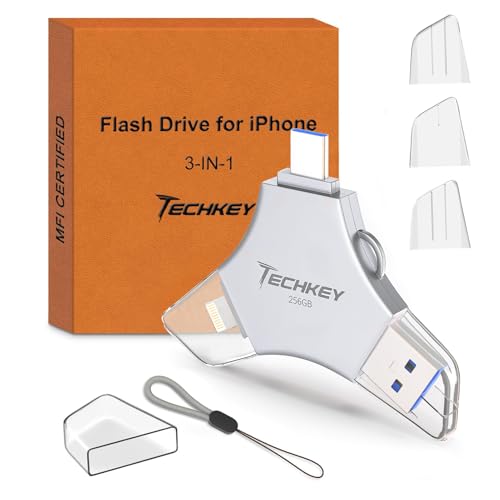
Pros
- Versatile multi-connector design for iOS, Android, and PC
- Apple MFi certified for reliable system compatibility
- Generous 256GB capacity for offline media backups
- Integrated passcode and Touch ID security encryption
- Durable metal housing with keychain attachment
Cons
- Requires dedicated companion app installation on iOS
- Specific USB version and transfer speeds are not specified

Pros
- High 6TB storage capacity
- Fast 7200 RPM spindle speed
- Large 256MB data cache
- Rated for continuous 24/7 multi-drive operation
- Broad SATA 6Gb/s platform compatibility
Cons
- Sold as a renewed product
- Requires a 3.5-inch drive bay and SATA power

Pros
- Large 12TB capacity for extensive backups
- Fast 10Gbps USB 3.2 Gen 2 interface
- Silent fan-less aluminum construction
- 7200RPM enterprise-grade internal drive
- Backward compatible with USB 3.0
Cons
- Requires reformatting for macOS APFS compatibility
- Three-pound weight is not ideal for travel

Pros
- Triple interface supports USB-A, USB-C, and Lightning
- Official MFi certification for iOS ecosystem compatibility
- Enables local offline backups without recurring cloud fees
- Supports passcode and Touch ID data encryption
- Compact metal casing includes a keychain loop
Cons
- Requires proprietary app installation for iOS operation
- Specific read and write transfer speeds are not stated
Pros
- Massive 14TB enterprise-grade 7200RPM internal drive
- USB 3.2 Gen 2 Type-C connectivity
- Silent fan-less cooling inside aluminum chassis
- Backward compatible with USB 3.0 ports
Cons
- Requires reformatting for macOS use
- Heavy 3-pound enclosure limits mobile use
Detailed Reviews: The Best Backup Hard Drives
1. Avolusion PRO-G2 14TB USB 3.2 Gen 2 (10Gbps)
The Avolusion PRO-G2 14TB is an external desktop drive built around a 7200 RPM enterprise-grade internal mechanism. It utilizes a fast USB 3.2 Gen 2 Type-C interface capable of theoretical bandwidth up to 10Gbps. This makes it practical for multi-terabyte system imaging and expansive cold-storage gaming archives.
The enclosure features a fan-less aluminum chassis designed for passive thermal dissipation and quiet desktop operation. Windows users can connect it immediately, while macOS users must reformat the drive to APFS before initiating Time Machine backups. Its desktop footprint requires dedicated power and flat surface placement.
2. Seagate Expansion 10TB USB 3.0 External Hard
The Seagate Expansion 10TB desktop hard drive offers straightforward external capacity via a standard USB 3.0 Type-A interface. It provides drag-and-drop functionality for Windows and Mac setups without software setup requirements. The drive includes access to Seagate Rescue Data Recovery Services for unexpected disk failures.
Because it operates over standard USB 3.0 protocols, data transfers remain capped at traditional hard disk write speeds. It also relies on an external AC wall adapter for power. This makes it ideal for stationary PC desks rather than on-the-go backup routines.
3. Avolusion PRO-G2 12TB USB 3.2 Gen 2 (10Gbps)
This 12TB variant of the Avolusion PRO-G2 matches the 7200 RPM enterprise drive characteristics of its larger sibling. The USB 3.2 Gen 2 Type-C interface ensures full bus bandwidth utilization without standard mechanical drive bottlenecks. It arrives pre-formatted for direct connectivity with Windows machines.
Its aluminum shell helps dissipate heat quietly without active fan noise under heavy data transfers. Formatting to APFS or HFS+ is required for macOS compatibility. It serves as a balanced high-capacity option for users with demanding archival storage demands.
4. ST6000NM0115 3.5″-Inch HDD 6TB 7200 RPM 512e SATA
The ST6000NM0115 is an enterprise-class internal 3.5-inch SATA hard drive spinning at 7200 RPM with a 256MB cache. Engineered for multi-drive chassis and 24/7 duty cycles, it features integrated vibration tolerance suited for desktop arrays or local network attached storage. When planning hardware upgrades, pairing solid storage with our guide to building a battlestation on a budget ensures steady long-term operation.
As an internal component, it requires a free 3.5-inch drive bay, SATA power cabling, and a motherboard data port. Buyers should note that this unit is renewed, making proper SMART diagnostics essential upon initial setup. It is a solid pick for internal secondary backup partitions.
5. Western Digital 1TB WD Blue PC Internal Hard Drive
The WD Blue 1TB internal drive provides baseline mechanical storage via a standard SATA 6 Gb/s connection. Operating at 7200 RPM with a 64MB cache buffer, it handles basic daily system image schedules smoothly. It also provides access to downloadable Acronis True Image WD Edition software for simple disk cloning.
With only 1TB of raw capacity, this drive cannot store massive contemporary game libraries or years of 4K video files. It is strictly suitable for budget desktop towers that need an isolated, non-SSD volume for routine file backups. Installation requires internal chassis space and standard SATA wiring.
6. Kosbees 1 TB External Hard Drives,Portable Hard
The Kosbees 1TB external drive is a bus-powered portable unit that draws all necessary operating juice through a single USB 3.0 cable. It offers read speeds up to 133MB/s and write speeds reaching 103MB/s for mobile productivity. Weighing 0.6 pounds, it slips easily into laptop bags or console accessory cases.
Console players can store and play legacy PS4 or Xbox One games directly from this enclosure. Current generation titles for PS5 and Xbox Series X must be copied back to internal SSDs before launching. Mac users must format to ExFAT or APFS before writing files.
7. Kosbees 500 GB External Hard Drives,Portable Hard
The Kosbees 500GB portable hard drive provides entry-level capacity inside an ultra-slim 0.35-pound shell. It relies on a USB 3.0 interface to achieve transfer speeds between 103MB/s and 133MB/s. It requires no separate AC brick, drawing operational current straight from your computer or console port.
Accounting for binary capacity calculation, usable Windows space lands around 465GB. This capacity limits large modern backup archives, though it remains useful for storing office documents, photos, and smaller project folders. Its lightweight build makes it an affordable off-site data carrier.
8. USB Flash Drive for iPhone/iPad
The Techkey 256GB flash drive functions as a portable hybrid backup medium using USB, Lightning, and Type-C connectors. Certified under Apple MFi standards, it enables direct photo and video offloading from iPhones, iPads, Android phones, and PCs. An integrated keychain loop simplifies keeping your data attached to keys.
Mobile devices require the companion app to enable one-click backups and password encryption. While practical for mobile photo rolls, solid-state flash thumb drives lack the cost-per-gigabyte value and write endurance of mechanical desktop drives for full-disk system recovery images. It fits quick multi-device sharing best.
9. MFi Certified USB 3.0 Flash Drive 128GB
This 128GB flash device offers triple-interface flexibility with USB 3.0, Type-C, and Lightning connectors on a rotating body. It is designed primarily to quickly siphon media off smartphone camera rolls without consuming cloud storage allowances. PC connections work natively through standard file managers.
Its 128GB volume fills rapidly when handling uncompressed video or modern PC games. The small form factor runs warmer during prolonged sequential file write operations than full-sized external drives. It serves best as a targeted pocket backup tool for phone contacts and family photos.
Key Specifications Overview
| Product | Form Factor | Stated Capacity | Interface | Key Trade-Off |
|---|---|---|---|---|
| Avolusion PRO-G2 14TB | 3.5-inch Desktop | 14TB | USB 3.2 Gen 2 (Type-C) | Requires AC wall adapter |
| Seagate Expansion 10TB | 3.5-inch Desktop | 10TB | USB 3.0 | Bulkier external chassis |
| Avolusion PRO-G2 12TB | 3.5-inch Desktop | 12TB | USB 3.2 Gen 2 (Type-C) | Reformatting required for Mac |
| ST6000NM0115 6TB | 3.5-inch Internal | 6TB | SATA 6Gb/s | Renewed drive condition |
| WD Blue 1TB | 3.5-inch Internal | 1TB | SATA 6Gb/s | Limited capacity for modern files |
| Kosbees 1TB | 2.5-inch Portable | 1TB | USB 3.0 | Modest 103MB/s write speeds |
| Kosbees 500GB | 2.5-inch Portable | 500GB | USB 3.0 | Restricted storage headroom |
| Techkey 3-in-1 256GB | Thumb Drive | 256GB | USB / Type-C / Lightning | Requires app on iOS devices |
| Techkey 3-in-1 128GB | Thumb Drive | 128GB | USB 3.0 / Lightning / Type-C | Small volume for PC system images |
How to Choose the Best Backup Hard Drive
Choosing the correct backup device requires balancing capacity, connection interfaces, and physical portability. Understanding these technical boundaries ensures your backup workflow operates without unexpected bandwidth bottlenecks or power limitations.
Desktop External vs. Internal vs. Portable Storage
Desktop external enclosures, like the Avolusion PRO-G2 series, house high-speed 3.5-inch enterprise drives that deliver massive capacities. They rely on external AC adapters, making them permanent desk fixtures for scheduled nocturnal backups. Portable 2.5-inch external drives draw power directly from USB ports, trading peak volume for travel-ready convenience.
Internal SATA hard drives fit straight into desktop PC chassis or multi-drive home server enclosures. They eliminate desktop cable clutter and external enclosures entirely. However, they lack portability and remain vulnerable if an electrical surge damages the host computer power supply.
Interface Speed and File System Compatibility
Modern hard drives communicate through SATA 6Gb/s, USB 3.0, or USB 3.2 Gen 2 ports. While mechanical platter speeds max out well below the 10Gbps ceiling of USB 3.2 Gen 2, modern bridge controllers reduce protocol overhead. This keeps sustained sequential read and write transfers reliable during multi-hour drive clones.
Drive formatting also dictates cross-platform utility. Drives pre-formatted as NTFS work out of the box on Windows but require reformatting to APFS or ExFAT for read and write privileges on Apple hardware. Verify your operating system support before establishing automatic backup scripts.
Frequently Asked Questions
Can I run modern PS5 or Xbox Series games from an external hard drive?
No. Current generation titles require high-speed internal solid-state storage to operate. External mechanical drives can store PS5 or Xbox Series installation packages for cold archiving, but the data must be transferred back to the internal SSD before launching.
Why does my hard drive report less space in Windows than advertised on the box?
Storage hardware manufacturers market capacity in decimal formatting, where one kilobyte equals 1,000 bytes. Windows computes capacity in binary notation, where one kibibyte equals 1,024 bytes. Consequently, a documented 1TB drive provides roughly 931 gigabytes of addressable volume in Windows.
Final Recommendation
For extensive PC disk mirroring and comprehensive media archives, the Avolusion PRO-G2 14TB USB 3.2 Gen 2 (10Gbps) delivers the highest capacity and fastest bus interface. Users needing a permanent internal drive for a local backup partition will find strong value in the ST6000NM0115 3.5″-Inch HDD 6TB 7200 RPM 512e SATA. If you require portable storage without an AC power cord, the Kosbees 1 TB External Hard Drives,Portable Hard offers dependable bus-powered transport for daily mobile backups.




Write Your Review
No reviews yet. Be the first to share your experience!