

Standalone virtual reality systems operate entirely without an external PC or console, relying on internal chipsets, batteries, and sensor arrays for tracking. Selecting the right unit requires balancing onboard processing capability, panel resolution, weight distribution, and compatibility with optional tethered PC streaming. This guide evaluates leading hardware based on documented specifications, system memory, display clarity, and software ecosystem support.
Quick Recommendation Overview
For standalone performance, the Meta Quest 3 family represents the current benchmark for consumer VR gaming, offering Snapdragon XR2 Gen 2 computing and color passthrough. The Meta Quest 3 512GB leads in display resolution and onboard space, while the Meta Quest 3S configurations provide an accessible entry point with the same system-on-chip. Enterprise and high-end PC tethering users will find specialized utility in the HTC Vive Focus series, whereas passive phone-based shells serve strictly as basic media viewers rather than true standalone 6DOF gaming rigs.

Pros
- Sharp 1832 x 1920 per-eye resolution
- Standalone functionality with 128GB onboard storage
- Integrated hand-tracking technology
- Includes silicone grip covers and knuckle straps
- Glasses spacer included in the box
Cons
- Touch controllers rely on replaceable AA batteries

Pros
- Untethered standalone wireless operation
- Snapdragon XR2 Gen 2 with 8GB RAM
- Full-color mixed reality passthrough via RGB cameras
- Spacious 256GB internal storage capacity
- Includes exclusive Gorilla Tag bundle items
Cons
- Advertised runtime limited to roughly two hours per charge
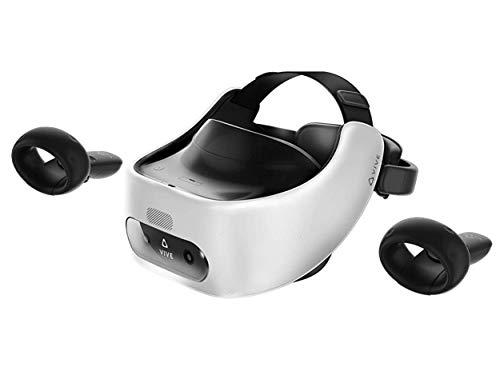
Pros
- Full six degrees of freedom tracking
- Complete bundle with controllers included
- Cable-free wireless design
- Includes Quick Charge 3.0 power adapter
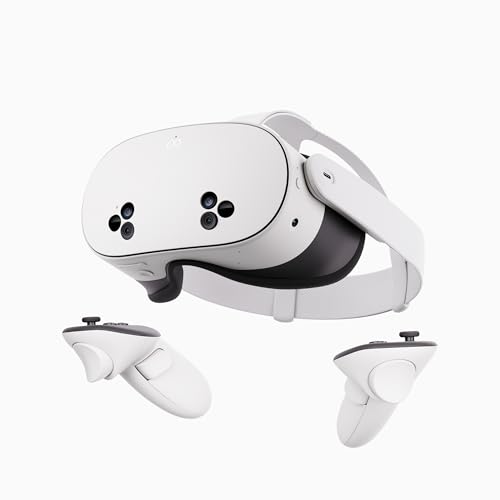
Pros
- Snapdragon XR2 Gen 2 processing power
- Completely wireless standalone design
- Full-color passthrough with dual RGB cameras
- Upgraded 8GB memory capacity
- Lightweight build at approximately 1.14 pounds
Cons
- Battery life limited to around two hours per charge
- Base 128GB storage space may fill quickly
- Renewed condition rather than factory-new hardware

Pros
- High-resolution 1832 x 1920 per-eye display
- Spacious 256GB onboard storage capacity
- Integrated controller-free hand tracking
- Includes textured silicone grips and knuckle straps
Cons
- Renewed condition rather than factory-new hardware

Pros
- Snapdragon XR2 Gen 2 processor for smooth visuals
- High-capacity 512GB storage for standalone libraries
- Full-color mixed reality passthrough cameras
- Cordless design allows untethered movement
- Upgraded 8GB RAM ensures responsive performance
Cons
- Advertised battery life limited to around two hours
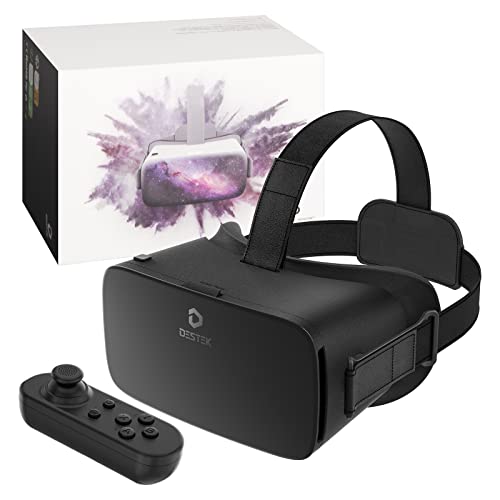
Pros
- Broad compatibility with 5.5 to 7.2 inch phones
- Wide 110-degree field of view
- Lightweight build at approximately 0.3 pounds
- Built-in physical touch buttons on the visor
- Includes bundled wireless controller
Cons
- Controller interactivity is heavily limited on iOS
- Requires a separate smartphone to function

Pros
- Fits smartphones from 4.7 to 7.0 inches
- Adjustable interpupillary distance for optical clarity
- Integrated optical support for myopia users
- Anti-blue light lenses to reduce eye strain
- Lightweight design with adjustable T-shaped strap
Cons
- Requires a separate compatible smartphone to function
- Lacks dedicated motion controllers and standalone tracking hardware
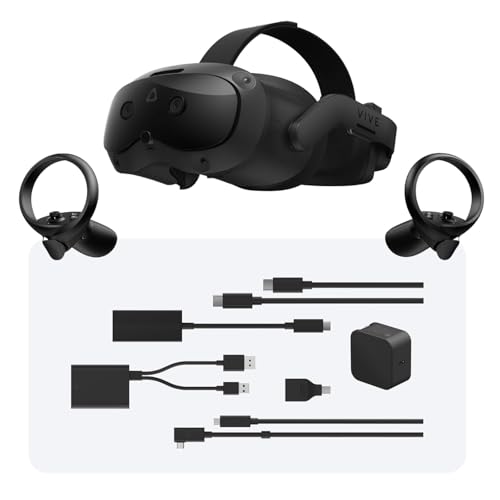
Pros
- Lossless DisplayPort PC VR streaming connection
- High 2448 x 2448 per-eye resolution
- Integrated eye tracking and auto-IPD adjustment
- Hot-swappable battery design maintains continuous operation
- Base-station-free inside-out tracking system
Cons
- Display refresh rate is limited to 90 Hz
- Full face and body tracking requires optional accessories
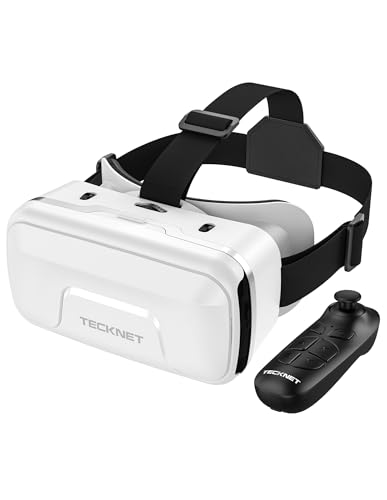
Pros
- Lightweight 268g chassis with breathable foam padding
- Includes wireless Bluetooth controller for navigation
- Supports phones from 4.7 up to 7.2 inches
- Adjustable focus supports myopia up to 600 degrees
- Lenses feature integrated blue-light protection
Cons
- Does not automatically convert standard 2D content to 3D
- Requires dedicated VR apps or split-screen content
- Warranty benefits require user registration
Analyzing the Top Standalone VR Headsets
Meta Quest 3 512GB: High-Resolution Spatial Computing
The Meta Quest 3 512GB | Virtual Reality is designed for enthusiasts who demand crisp visual reproduction and extensive storage for standalone titles. Powered by Qualcomm’s Snapdragon XR2 Gen 2 platform paired with 8GB of system RAM, it provides roughly double the graphical processing potential of legacy XR2 hardware. The display delivers an advertised 4K+ Infinite Display, providing nearly a 30 percent improvement in resolution over earlier models for significantly clearer text reading and reduced screen-door effect.
Dual RGB color cameras enable high-fidelity stereoscopic passthrough, supporting mixed reality applications where digital elements align with real physical objects. The generous 512GB internal capacity accommodates large game installations without requiring constant uninstallations. Its primary limitation is the documented battery life of roughly two hours under continuous load, making external battery solutions necessary for lengthy gaming sessions.
Meta Quest 3S: Modern Chipset with Scaled Optics
The Meta Quest 3S 256GB | Virtual Reality and the renewed Meta Quest 3S 128GB | Virtual Reality deliver core next-generation performance at a lower threshold. Both models retain the Snapdragon XR2 Gen 2 chipset and 8GB of RAM, ensuring smooth frame pacing across modern standalone titles. They also feature the same dual RGB camera configuration for full-color mixed reality boundaries.
To reduce cost compared to the flagship Quest 3, the 3S hardware balances high internal compute power with standard optical lenses rather than higher-density pancake displays. For users focused primarily on action-heavy standalone titles like rhythm games or arena shooters, the 3S architecture delivers identical framerate reliability at a reduced cost. Storage choices between 128GB and 256GB require buyers to balance budget against how many large-format games they intend to install concurrently.
Meta Quest 2: Legacy Budget Standalone
Available in models like the Oculus Quest 2 Advanced All-in-One Virtual Reality and the renewed Meta Quest 2 — Advanced All-In-One Virtual Reality, the Quest 2 remains an established standalone device. It features 1832 x 1920 pixels per eye resolution paired with inside-out optical 6DOF tracking and touch controllers. These bundles include silicone grip covers and adjustable knuckle straps designed to stabilize handling during fast arm movements.
While the Quest 2 catalog remains broad, its older processing architecture lacks the raw throughput found in the Snapdragon XR2 Gen 2. It relies on monochrome passthrough rather than full-color mixed reality cameras, limiting its functionality in modern augmented spaces. It remains suitable as an introductory system for casual VR fitness and standard gaming, provided users acknowledge newer software releases may bypass its hardware generation.
HTC Vive Focus Vision Wired Bundle: High-End PC and Standalone Hybrid
The HTC Vive Focus Vision Wired Bundle targets advanced enthusiasts, simulation players, and professional workflows requiring uncompressed visual pipelines. It boasts a 5K display panel delivering 2448 x 2448 pixels per eye, a 120-degree field of view, and native 90Hz refresh rate. In addition to standalone tracking capabilities, the bundle integrates a dedicated DisplayPort mode for lossless wired streaming straight from a gaming desktop.
Hardware ergonomics are reinforced by an automated motor-driven IPD system, built-in eye tracking, and hand-tracking cameras for realistic social presence in platforms like VRChat. The unit incorporates a hot-swappable battery module supported by a small reserve power cell, permitting battery replacements without shutting down active programs. The trade-off is substantial weight and a significantly higher purchase tier compared to mainstream consumer headsets.
HTC Vive Pro Focus Plus: Commercial Standalone Utility
The HTC Vive Pro Focus Plus 6DOF VR Headset in Almond is an enterprise-oriented 6DOF standalone system equipped with ultrasonic tracked controllers. Designed primarily for commercial training setups and light standalone simulations, it bypasses external tracking beacons through front-facing optical sensors. While functional for specialized software distributions, its standalone entertainment library is narrow compared to the consumer Meta platform, making it less practical for conventional gaming setups.
Phone-Based Enclosures: Media Viewers vs. True Standalone VR
Products such as the DESTEK V5 VR Headset with 50000+ VR Movies, the TECKNET VR Headset for Phone with Controller, and the VR Headset 3D VR Glasses Universal Virtual Reality represent a completely different hardware category. These units are optical stereoscopic enclosures designed to hold a standard smartphone rather than complete computing platforms. They feature anti-blue-light acrylic lenses, mechanical focal adjustments, and simple one-handed Bluetooth remotes.
While useful for passive 360-degree video consumption and basic stereoscopic 3D media, these devices lack onboard processors, positional camera tracking, and room-scale 6DOF interaction. Software compatibility is constrained by your mobile operating system, with iOS devices generally restricted to basic playback commands. Buyers looking for interactive, room-scale gaming must look toward dedicated standalone units rather than phone holders.
Key Hardware Factors to Consider
Selecting the best standalone vr headsets involves reviewing system silicon, optical fidelity, and long-term ergonomics. Standalone devices carry all computational components within the facial enclosure, making thermal efficiency and physical balance critical metrics.
Processing Power and System Memory
Modern standalone rendering relies heavily on the integrated System-on-Chip. Platforms built around the Snapdragon XR2 Gen 2 feature roughly twice the graphical compute potential of first-generation XR2 processors. Pairing this architecture with 8GB of RAM ensures developers can implement higher texture resolutions, broader draw distances, and stable framerates without visual stutter during intensive scenes.
Display Resolution and Lens Technology
Screen clarity is measured both by native pixel density and optical clarity across the field of view. Standard Fresnel lenses require precise eye centering along an optical sweet spot to avoid perimeter blurring. Advanced pancake optical assemblies allow for a slimmer headset profile, reduced internal volume, and uniform edge-to-edge sharpness, which minimizes eye strain during fine-detail tasks.
Mixed Reality and Passthrough Sensors
Modern standalone units increasingly prioritize color passthrough over static monochrome room boundary grids. Dual RGB camera arrays allow users to view their actual room layout in full color with correct stereoscopic depth. This capability supports mixed reality software, enabling virtual interfaces to coexist with furniture, work desks, and audio accessories.
If you split time between virtual reality gaming and a traditional desktop setup, pairing a comfortable headset with proper peripherals like high performance gaming headsets and ergonomic accessories ensures balanced comfort during extended sessions.
Frequently Asked Questions
Can standalone VR headsets connect to a gaming PC?
Yes. Most dedicated standalone headsets support PC tethering through high-bandwidth USB-C cables, dedicated DisplayPort kits, or wireless streaming protocols over standard Wi-Fi. This allows users to tap into external desktop graphics cards when playing demanding simulation titles, while maintaining the option to play untethered native titles independently.
What is the difference between 3DOF and 6DOF tracking?
Three Degrees of Freedom (3DOF) only registers head rotation: pitching up and down, turning side to side, and tilting. Six Degrees of Freedom (6DOF) registers both rotational orientation and physical translation through 3D space, allowing you to duck, jump, lean around corners, and step across your play boundary naturally.
How much internal storage is necessary for standalone VR?
Base storage tiers like 128GB suffice for users who routinely complete and uninstall games or prioritize smaller arcade titles. If you intend to store large cinematic titles, complex role-playing games, and mixed reality applications without constantly managing free storage, 256GB or 512GB capacities provide far greater convenience.
Final Verdict: Selecting Your Standalone Headset
The optimal standalone VR choice depends directly on your graphical expectations, software goals, and budget boundaries. The Meta Quest 3 512GB stands as the premier consumer pick, offering sharp optical clarity, massive internal storage, and balanced mixed reality capabilities. If your priority is maximum processing value, the Meta Quest 3S configurations deliver the same XR2 Gen 2 engine at an attractive entry tier. Those seeking uncompressed PC VR tethering with advanced hardware features like auto-IPD and eye tracking should look toward the HTC Vive Focus Vision wired ecosystem, while passive smartphone goggles remain strictly limited to basic media viewing.


Write Your Review
No reviews yet. Be the first to share your experience!