

Choosing among the best 24 inch gaming monitors comes down to motion clarity, panel consistency, and connectivity. At roughly 24 inches, a 1920×1080 resolution offers a sharp pixel density without placing heavy rendering loads on your graphics card. This makes the form factor the preferred choice for competitive esports and modest desktop spaces.
While larger displays like those found in our guide to 1440p gaming monitors offer more workspace, a compact 24-inch screen keeps the entire field of view within sight without rapid eye tracking. If you are assembling a budget PC setup as outlined in our budget battlestation guide, these high-refresh displays provide fluid response without excessive hardware overhead.

Pros
- 144Hz overclocked refresh rate
- NVIDIA G-SYNC and AMD FreeSync support
- IPS panel with 99% sRGB coverage
- 1ms Motion Blur Reduction mode
- DisplayPort and HDMI connectivity
Cons
- Stand provides tilt adjustment only
- 144Hz refresh rate requires overclocking
Pros
- Smooth 144Hz refresh rate with AMD FreeSync
- Color-accurate IPS panel with wide viewing angles
- Dual HDMI ports for multi-device setups
- TÜV Rheinland certified blue light reduction
- Slim bezels suitable for multi-monitor arrangements
Cons
- Ergonomic adjustments limited to tilt only

Pros
- High 180Hz refresh rate on both video inputs
- Deep 4000:1 static contrast ratio
- AMD FreeSync adaptive sync support
- Standard VESA 75x75mm mount compatible
- HDMI cable included in the box
Cons
- No integrated speakers
- Limited 80 percent DCI-P3 color coverage

Pros
- Smooth 144Hz IPS panel with vivid colors
- Supports both G-SYNC Compatible and FreeSync
- Height and tilt adjustable ergonomic stand
- Built-in stereo speakers and headphone port
- Dynamic Action Sync reduces input lag
Cons
- 1ms response rating requires Motion Blur Reduction
- 1080p resolution limits workspace compared to 1440p
Pros
- Smooth 144Hz refresh rate with FreeSync support
- IPS panel with wide 178-degree viewing angles
- TÜV Rheinland certified eye protection features
- Standard VESA 100x100mm mount compatibility
- Supports both modern HDMI and legacy VGA connections
Cons
- Stand is limited to tilt adjustments only
Quick Comparison of 24-Inch Displays
| Model | Panel Type | Refresh Rate | Variable Refresh | Video Ports |
|---|---|---|---|---|
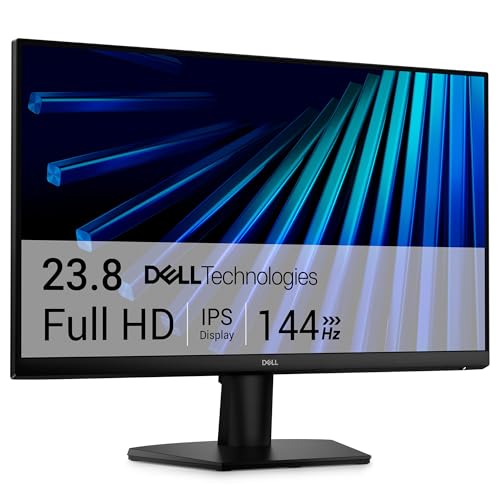
| LG 24G411A-B 24-inch Ultragear Full HD | IPS | 120Hz (144Hz O/C) | G-Sync Comp, FreeSync | HDMI, DisplayPort |
| Dell 24 Monitor – SE2426H | IPS | 144Hz | AMD FreeSync | 2x HDMI |
| SANSUI 24 Inch 180Hz Gaming Computer Monitor | VA / High Contrast | 180Hz | AMD FreeSync | HDMI 2.0, DP 1.4 |
| LG 24G414B-B 24-inch Ultragear IPS 1080p 144Hz 1ms | IPS | 144Hz Native | G-Sync Comp, FreeSync | HDMI, DisplayPort |
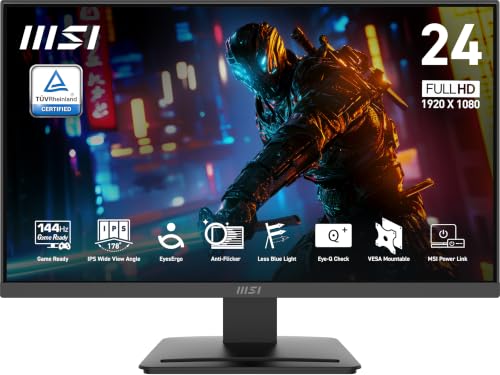
| msi PRO MP243L E14 24-inch IPS 1920 x 1080 (FHD) | IPS | 144Hz | AMD FreeSync | HDMI 2.0, VGA |
Detailed Reviews of the Best 24 Inch Gaming Monitors
1. LG 24G411A-B 24-inch Ultragear Full HD
The LG 24G411A-B 24-inch Ultragear Full HD delivers reliable esports motion processing using an IPS panel capable of 99 percent sRGB coverage. It runs at a native 120Hz refresh rate with a supported 144Hz overclock mode, paired with a 1ms Motion Blur Reduction setting to minimize ghosting in fast-paced shooters.
Both NVIDIA G-Sync Compatible and AMD FreeSync certifications ensure tear-free synchronization with varied graphics cards. Competitive assists include Dynamic Action Sync to diminish input latency and a Black Stabilizer to brighten shadows. However, reaching the full 144Hz refresh rate requires toggling the monitor overclock function in the internal menu rather than running natively out of the box.
2. Dell 24 Monitor – SE2426H
The Dell 24 Monitor – SE2426H focuses on clean desk ergonomics alongside a native 144Hz refresh rate and a 1ms MPRT specification. Its IPS panel provides dependable 178-degree viewing angles and includes TUV Rheinland 3-star eye comfort certification designed to cut down blue light exposure during long gaming sessions.
Dual HDMI ports make it easy to switch between a desktop tower and a console without shifting cables. A notable consideration is the absence of a DisplayPort connection, which may limit variable refresh rate compatibility when pairing the monitor with certain NVIDIA desktop GPUs.
3. SANSUI 24 Inch 180Hz Gaming Computer Monitor
For players focused primarily on high frame rates, the SANSUI 24 Inch 180Hz Gaming Computer Monitor pushes screen refresh up to 180Hz across both its HDMI 2.0 and DisplayPort 1.4 connections. Its advertised 4000:1 static contrast ratio yields visibly darker blacks in low-light game scenes compared to typical IPS alternatives.
The display covers 110 percent of the sRGB color space and includes gaming crosshair overlays along with 75x75mm VESA bracket compatibility. The high-contrast panel design can present slightly narrower optimal viewing angles than IPS panels, requiring direct center positioning for ideal color accuracy.
4. LG 24G414B-B 24-inch Ultragear IPS 1080p 144Hz 1ms
The LG 24G414B-B 24-inch Ultragear IPS 1080p 144Hz 1ms operates at a native 144Hz refresh rate out of the box without requiring manual overclocking. It integrates built-in stereo audio and a dedicated 3.5mm headset pass-through port, simplifying sound routing for players who prefer to keep desk cabling minimal.
It supports both FreeSync and G-Sync Compatible protocols alongside LG Switch software for managing multi-window desktop layouts. Although HDR10 decoding is supported on paper, the standard peak panel brightness limits true dynamic range performance, making SDR the recommended mode for competitive clarity.
5. msi PRO MP243L E14 24-inch IPS 1920 x 1080 (FHD)
The msi PRO MP243L E14 24-inch IPS 1920 x 1080 (FHD) bridges home office productivity and after-hours competitive play with a 144Hz IPS panel boasting a 1500:1 contrast ratio. It provides standard VESA 100x100mm mounting holes and a tilt-adjustable stand that simplifies integration onto aftermarket monitor arms.
Connectivity consists of an HDMI 2.0 port paired with a legacy D-Sub VGA connector, offering wide compatibility for older secondary PCs. The trade-off is the absence of a modern DisplayPort connector, which makes it less flexible for multi-screen setups utilizing high-end GPU outputs.
How to Choose the Right 24-Inch Gaming Monitor
When selecting a 24-inch monitor, prioritize native refresh rates and panel technology over marketing buzzwords like HDR certification on budget screens.
Refresh Rate and Motion Blur: A 144Hz or 180Hz display updates the image more than twice as fast as an office monitor. This reduction in input delay directly improves target tracking in fast-paced first-person shooters.
Panel Types: IPS panels provide consistent color accuracy and wide viewing angles, making them the standard recommendation for varied gameplay. High-contrast panels offer deeper black levels for atmospheric titles, though they can suffer from minor pixel response transitions in dark scene shifts.
Port Selection: If your graphics card relies on DisplayPort for adaptive sync features, ensure your monitor includes that physical input rather than relying strictly on HDMI ports.
Frequently Asked Questions
Is 1080p resolution sharp enough on a 24-inch screen?
Yes. A 1080p resolution on a 23.8 to 24-inch screen yields roughly 92 pixels per inch. This density offers clean text and sharp in-game imagery at standard desktop viewing distances without putting heavy loads on your GPU.
Can I run G-Sync over HDMI on budget monitors?
NVIDIA G-Sync Compatibility generally requires a DisplayPort connection on most desktop monitors. If your chosen screen only features HDMI ports, variable refresh rate support may be limited to AMD graphics cards or select HDMI VRR consoles.






Write Your Review
No reviews yet. Be the first to share your experience!