

Finding the best monitors under $300 for gaming no longer requires settling for basic 1080p office displays with slow response times. Modern manufacturing has pushed fast 1440p panels, 300Hz refresh rates, and sharp 4K options directly into this accessible price category.
Your primary decision comes down to raw competitive speed versus panel resolution. Shooters benefit most from high frame rate 1440p IPS screens, while visual titles and productivity favor pixel density. The curated picks below represent the most capable gaming screens available within this strict budget limit.

Pros
- High 180Hz refresh rate with 1ms GtG response
- Detailed 32-inch QHD resolution
- Immersive 1000R curved screen design
- AMD FreeSync for tear-free gaming
- Versatile dual HDMI and DisplayPort inputs
Cons
- Stand ergonomics limited to tilt adjustment

Pros
- Fast 300Hz refresh rate for competitive gameplay
- Sharp 2560x1440 QHD resolution on a 27-inch panel
- ELMB Sync works concurrently with variable refresh rate
- Wide 95% DCI-P3 color gamut coverage
- Convenient software-based monitor controls via DisplayWidget Center

Pros
- Fast IPS panel with sharp 1440p resolution
- High 270Hz overclocked refresh rate
- Low 1ms gray-to-gray response time
- ELMB Sync combats motion blur alongside VRR
- USB-C input with DisplayPort Alt Mode
Cons
- Maximum 270Hz refresh rate requires overclocking

Pros
- Crisp 4K UHD resolution on an IPS panel
- Smooth 120Hz refresh rate with AMD FreeSync Premium
- Solid 1500:1 contrast ratio with 99% sRGB coverage
- Hardware-level ComfortView Plus low blue light technology
- Integrated upgraded stereo sound

Pros
- Smooth 180Hz refresh rate
- Crisp 1440p Fast IPS panel
- ELMB Sync combines motion blur reduction with adaptive sync
- USB-C port handles video input and hub connectivity
- DisplayWidget Center simplifies display adjustments via mouse
Comparing the Top Gaming Monitors Under $300
Each monitor in this price bracket prioritizes different hardware specifications to keep costs down. Reviewing the documented display resolution, refresh rate ceilings, and panel architectures helps clarify which model matches your primary gaming genres.
| Monitor Model | Screen Size | Resolution | Refresh Rate | Panel / Standout Feature |
|---|---|---|---|---|
| ASUS TUF Gaming VG27AQM5A 27 Inch 1440p 300Hz | 27 inches | 2560 x 1440 | 300Hz | Fast IPS, ELMB Sync, 95% DCI-P3 |
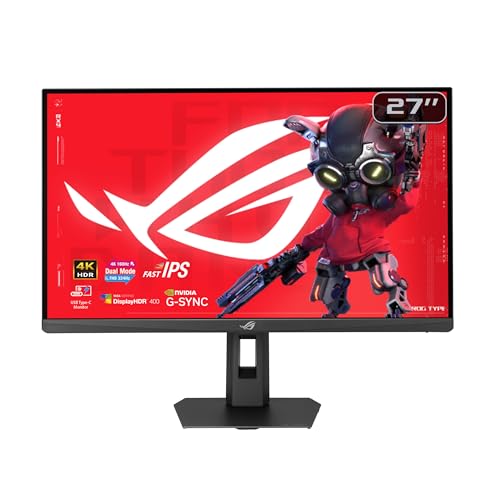
| ASUS ROG XG27ACMG 27 Inch 1440p 270Hz USB-C G-SYNC | 27 inches | 2560 x 1440 | 270Hz (OC) | Fast IPS, USB-C DP Alt Mode |
| Dell 27 Monitor S2725QS, 4K UHD IPS, 120Hz, 5ms | 27 inches | 3840 x 2160 | 120Hz | 4K IPS, 1500:1 Contrast, FreeSync Premium |
| LG 32GS60QC-B Ultragear 32-inch Curved | 32 inches | 2560 x 1440 | 180Hz | 1000R Curve, AMD FreeSync, 99% sRGB |
| ASUS ROG XG27ACS 27 Inch 1440p 180Hz USB-C G-SYNC | 27 inches | 2560 x 1440 | 180Hz | Fast IPS, USB-C Hub, 1ms GTG |
Detailed Reviews: Best Monitors Under $300 for Gaming
1. ASUS TUF Gaming VG27AQM5A: Highest Refresh Rate for Competitive Esports
The ASUS TUF Gaming VG27AQM5A 27 Inch 1440p 300Hz delivers an astounding 300Hz refresh rate alongside a 2560×1440 resolution. This combination makes it a premier choice for competitive players who demand fluid motion clarity in titles like Counter-Strike 2, Apex Legends, or Valorant.
It utilizes Fast IPS panel technology with ASUS ELMB Sync, enabling simultaneous variable refresh rates and backlight strobing to diminish motion blur. The panel also covers 95% of the DCI-P3 color spectrum, ensuring strong saturation alongside its blistering speed. However, driving modern titles at 300 frames per second at 1440p requires a substantially capable graphics card.
2. ASUS ROG XG27ACMG: Tournament Speed with USB-C Connectivity
The ASUS ROG XG27ACMG 27 Inch 1440p 270Hz USB-C G-SYNC targets players who split their time between a desktop gaming rig and a modern gaming laptop. Its integrated USB Type-C port supports DisplayPort Alternate Mode, streamlining single-cable video input from portable workstations.
With an overclockable 270Hz refresh rate and a 1ms gray-to-gray response time, fast-paced action stays sharp with minimal ghosting. Factory grayscale tracking and 95% DCI-P3 gamut coverage provide clean color gradation across dark environments. The primary trade-off is the lack of high-wattage USB power delivery, meaning laptops will still require an external power brick during extended gaming sessions.
3. Dell S2725QS: Crisp 4K Resolution for Detailed Visuals and Mixed Workloads
The Dell 27 Monitor S2725QS, 4K UHD IPS, 120Hz, 5ms stands apart by offering a full 3840×2160 Ultra HD panel at an accessible price. Gamers who prioritize text clarity, high pixel density, and open-world atmospheric single-player campaigns will find this display remarkably sharp.
It supports AMD FreeSync Premium up to a respectable 120Hz refresh rate, making it an excellent pairing for current-generation consoles and midrange PC builds alike. The IPS panel offers an enhanced 1500:1 contrast ratio and ComfortView Plus blue light reduction. However, its 5ms baseline response time means fast twitch shooters may show slightly more motion trailing than dedicated 1ms gaming panels.
4. LG 32GS60QC-B Ultragear: Immersive 32-Inch Curved Display
For players who want an expansive screen, the LG 32GS60QC-B Ultragear 32-inch Curved offers a generous 32-inch footprint paired with an aggressive 1000R curve. This curvature matches the natural field of view, pulling peripheral vision into simulation titles and sprawling action RPGs.
The display maintains a fluid 180Hz refresh rate and QHD resolution, supported by AMD FreeSync and Dynamic Action Sync to keep input latency low. With 99% sRGB coverage and HDR10 decoding, visual assets remain punchy and vibrant. The main compromise is the stand ergonomics, which only permit tilt adjustments unless you mount the display to an aftermarket VESA arm.
5. ASUS ROG XG27ACS: Reliable 180Hz Fast IPS Performer
The ASUS ROG XG27ACS 27 Inch 1440p 180Hz USB-C G-SYNC represents a dependable sweet spot between performance, premium build quality, and essential desktop features. Its 180Hz Fast IPS panel provides reliable pixel transitions that eliminate noticeable ghosting during rapid camera sweeps.
Like its higher-tier sibling, this monitor incorporates DisplayWidget Center software so you can calibrate picture settings directly with your mouse. The inclusion of a USB-C video connection and G-SYNC compatibility ensures broad platform versatility. While it lacks the extreme 300Hz ceiling of top-tier esports displays, it handles both competitive and single-player games with remarkable balance.
How to Choose the Best Gaming Monitor Under $300
Shopping within a $300 budget requires balancing three core attributes: resolution, refresh rate, and physical panel size. Understanding these relationships ensures you invest your budget where it directly improves your everyday gaming experience.
1440p vs. 4K Resolution at 27 Inches
A 2560×1440 resolution on a 27-inch screen provides roughly 109 pixels per inch, which balances high visual sharpness against manageable GPU rendering demands. Explore our dedicated 1440p monitors hub and our guide to the best 1440p gaming monitors to see how this resolution performs across different tiers.
In contrast, 4K resolution pushes pixel density to over 160 pixels per inch, resulting in immaculate textures and razor-sharp text rendering. However, driving native 4K gaming demands top-tier graphics hardware, making 1440p the safer, higher-frame-rate choice for pure gaming performance.
Refresh Rates and Response Times
Monitors boasting 180Hz to 300Hz refresh rates reduce motion blur and deliver lower display latency, provided your graphics card can supply matching frame rates. Technologies like Fast IPS have effectively eliminated the severe smearing that once plagued older budget panels.
Response times measured at 1ms gray-to-gray or lower ensure that fast-moving objects remain sharp rather than turning into hazy streaks. For readers exploring even tighter budgets, check our guide on best monitors under $100 for gaming to understand how lower price points affect refresh rates and panel technology.
Connectivity and USB-C Integration
Modern gaming displays frequently incorporate USB Type-C connections alongside traditional HDMI and DisplayPort inputs. While convenient for connecting laptops via DisplayPort Alternate Mode, budget implementations rarely include high-wattage Power Delivery.
Ensure your chosen model provides the exact video bandwidth you need to unlock its maximum refresh rate. Most 1440p monitors require a DisplayPort connection to achieve their advertised 240Hz, 270Hz, or 300Hz frequencies without color subsampling. Browse our main gaming monitors section for broader category coverage.
Frequently Asked Questions
Can I get true 4K gaming under $300?
Yes, models like the Dell S2725QS deliver genuine 4K resolution alongside a 120Hz refresh rate under this price threshold. However, playing demanding modern PC titles at native 4K will require substantial graphics horsepower to maintain stable frame rates.
Is 1440p better than 1080p for a 27-inch monitor?
A 27-inch 1080p screen results in a relatively low pixel density of roughly 81 pixels per inch, which can make fine details look pixelated. A 1440p display offers significantly sharper visuals and expanded desktop workspace without demanding excessive graphics resources.
Do budget monitors deliver real HDR performance?
Displays in this price range typically support HDR10 signaling, meaning they can accept and decode high dynamic range video feeds. However, without dedicated multi-zone local dimming backlights, they cannot reproduce the deep blacks and extreme peak brightness seen on premium OLED displays.
Final Verdict: Which Gaming Monitor Under $300 Fits You?
For dedicated competitive multiplayer titles where every millisecond counts, the ASUS TUF Gaming VG27AQM5A 27 Inch 1440p 300Hz is the clear performance champion with its unmatched 300Hz Fast IPS panel.
If you prefer rich pixel clarity, console compatibility, and productivity over blistering frame rates, the Dell 27 Monitor S2725QS, 4K UHD IPS, 120Hz, 5ms delivers an unbeatable 4K value. Meanwhile, gamers seeking sweeping immersion will appreciate the deep 1000R curve and expansive real estate of the LG 32GS60QC-B Ultragear 32-inch Curved.


Write Your Review
No reviews yet. Be the first to share your experience!