

Choosing the best m2 ssds for a modern PC build comes down to motherboard interface support, thermal limits, and workload demands. While PCIe 5.0 storage pushes sequential transfers past 14,000 MB/s, standard PCIe 4.0 drives often deliver identical real-world game loading times with significantly less heat output.
For builders assembling a balanced desktop alongside our guide on how to build the ultimate battlestation on a budget, matching drive speeds to your motherboard M.2 slot specifications avoids wasted bandwidth. Below is an objective analysis of current drives, controllers, and conversion hardware based on documented hardware specifications.

Pros
- Read speeds reach up to 6,000 MB/s
- Includes Acronis cloning software for drive migration
- Standard M.2 2280 form factor ensures wide compatibility
- Backed by a 5-year limited warranty
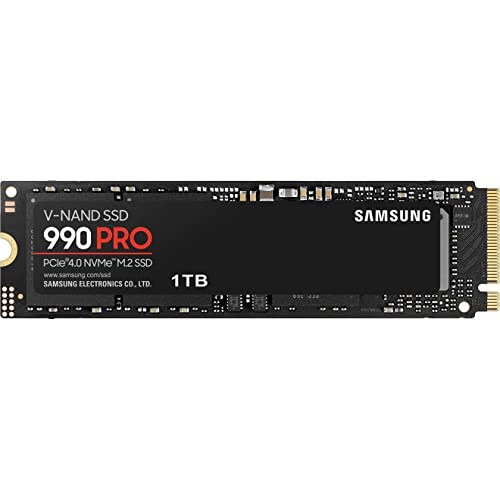
Pros
- Up to 7,450 MB/s sequential read speeds
- Up to 1,550K IOPS random write performance
- Improved power efficiency over the 980 PRO
- DirectStorage and PlayStation 5 system compatibility
- Samsung Magician software support for drive maintenance
Cons
- Laptop installation requires PCI-SIG D8 clearance
- Maximum throughput requires a compatible PCIe 4.0 motherboard

Pros
- Fast PCIe 4.0 read speeds up to 7,100MB/s
- High sequential write speeds up to 6,700MB/s
- Standard M.2 2280 form factor
- Power-efficient operation for mobile platforms
- Dedicated dashboard software for drive health
Cons
- Utilizes QLC NAND flash memory
- Advertised 1,200 TBW rating applies to 4TB model

Pros
- Screwless flip-open design for fast drive swaps
- Supports up to 10Gbps transfer speeds
- Accommodates four standard M.2 NVMe drive lengths
- Aluminum top provides direct thermal pad contact
- Bus-powered USB-C connectivity requires no extra cables
Cons
- Incompatible with M.2 SATA SSDs
- Constructed with an ABS frame rather than an all-metal enclosure

Pros
- PCIe 4.0 read speeds up to 7,100MB/s
- Sequential write speeds up to 6,700MB/s
- Compact M.2 2280 form factor
- Low-power profile suited for laptops
- Dedicated Sandisk Dashboard management tool
Cons
- Utilizes QLC NAND rather than TLC
- Top 1,200 TBW endurance rating requires 4TB capacity

Pros
- Sequential read speeds reaching up to 14,700 MB/s
- PCIe 5.0 x4 bandwidth for heavy data workflows
- Random performance up to 2,600K write IOPS
- Power-efficient 5nm controller design
- Samsung Magician integration for drive maintenance
Cons
- Requires PCIe 5.0 hardware to reach advertised speeds
- Peak performance demands adequate system thermal dissipation
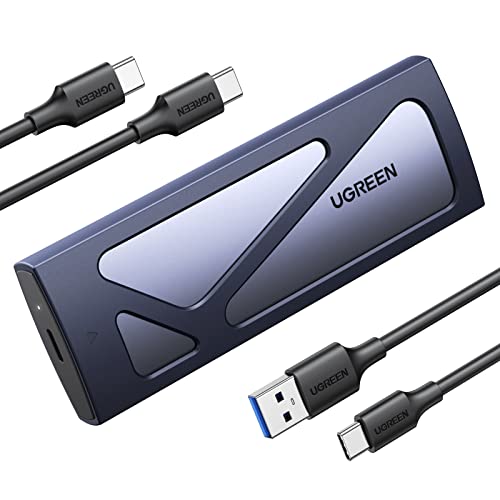
Pros
- Fast 10Gbps USB 3.2 Gen 2 transfer rates
- Tool-free drive mounting mechanism
- Supports NVMe capacities up to 8TB
- Durable aluminum housing with silicone sleeve
Cons
- Does not support SATA NGFF or mSATA drives
- Full speed requires compatible USB 3.2 Gen 2 ports

Pros
- Up to 7,450 MB/s sequential read speeds
- Up to 6,900 MB/s sequential write performance
- Generous 2TB storage capacity
- Enhanced power efficiency per watt over 980 PRO
- Compact M.2 2280 form factor
Cons
- Requires PCIe 4.0 hardware for maximum rated speeds
Pros
- Advertised sequential read speeds up to 14,700 MB/s
- Advertised sequential write speeds up to 13,400 MB/s
- Random performance reaching up to 2,600K IOPS
- Power-efficient 5nm controller design
- Samsung Magician software support for drive management

Pros
- Modern PCIe 4.0 NVMe interface
- Standard M.2 2280 compatibility
- Power-efficient design suitable for laptops
- Compatible with SanDisk Dashboard software
Cons
- Maximum advertised speeds require 1TB or larger models
- Uses QLC NAND rather than TLC
- Base 500GB capacity limits large project storage
Technical Specifications Comparison
| Drive Model | Interface | Max Sequential Read | Max Sequential Write | Form Factor |
|---|---|---|---|---|
| Samsung 9100 PRO (1TB / 2TB) | PCIe 5.0 x4 | Up to 14,700 MB/s | Up to 13,400 MB/s | M.2 2280 |
| Samsung 990 PRO (1TB / 2TB) | PCIe 4.0 x4 | Up to 7,450 MB/s | Up to 6,900 MB/s | M.2 2280 |
| Sandisk Optimus 5100 (1TB / 2TB) | PCIe 4.0 x4 | Up to 7,100 MB/s | Up to 6,700 MB/s | M.2 2280 |
| Kingston NV3 (1TB) | PCIe 4.0 x4 | Up to 6,000 MB/s | Up to 4,000 MB/s | M.2 2280 |
| Sandisk Optimus 5100 (500GB) | PCIe 4.0 x4 | PCIe 4.0 Speeds | PCIe 4.0 Speeds | M.2 2280 |
High-End PCIe 5.0 Performance Drives
Extreme enthusiast workstations benefit from the bandwidth ceiling offered by PCIe 5.0 x4 architecture. The Samsung SSD 9100 PRO 2TB, PCIe 5.0×4 M.2 2280 and the Samsung SSD 9100 PRO 1TB, PCIe 5.0×4 M.2 2280 push sequential throughput up to 14,700 MB/s read and up to 13,400 MB/s write. Both capacities feature an integrated 5nm controller that improves power efficiency up to 49 percent over previous generations.
These PCIe 5.0 drives achieve random read figures of up to 1,850K IOPS and write speeds reaching 2,600K IOPS. These specifications are engineered specifically for continuous AI workflow training, raw uncompressed 8K video streaming, and rapid asset compiling. However, running these Gen5 units requires a compatible motherboard with dedicated PCIe 5.0 M.2 lanes and substantial passive or active motherboard heatsinks to prevent thermal throttling during continuous write runs.
Flagship PCIe 4.0 Storage for Gaming and Daily Workloads
For PC gaming and typical desktop multitasking, top-tier Gen4 storage remains the sweet spot for performance and operating temperatures. The Samsung SSD 990 PRO 2TB, PCIe 4.0 M.2 2280 alongside the Samsung SSD 990 PRO 1TB, PCIe 4.0 M.2 2280 operate near the theoretical limits of the PCIe 4.0 bus, hitting sequential read speeds of 7,450 MB/s and write speeds of 6,900 MB/s.
The 990 PRO series features a nickel-coated controller and dynamic thermal guard management to keep thermals stable inside desktop setups and gaming consoles like the PlayStation 5. The high random read profile of up to 1,400K IOPS facilitates responsive DirectStorage asset decompression in supported titles. A key trade-off is cost per gigabyte, which is higher than entry-level Gen4 options due to dedicated onboard DRAM caching.
Mainstream PCIe 4.0 Options for Everyday Storage
Builders requiring secondary storage or budget-conscious primary drives have strong options from Kingston and Sandisk. The Kingston NV3 1TB M.2 2280 NVMe SSD reaches up to 6,000 MB/s read and 4,000 MB/s write over a standard Gen 4×4 interface. It ships with Acronis cloning software and carries a 5-year warranty, making it a functional upgrade for general gaming libraries.
Content creators seeking dense capacities can consider the Sandisk Optimus 5100 2TB NVMe SSD, PCIe 4.0, the Sandisk Optimus 5100 1TB NVMe SSD, PCIe 4.0, or the entry-capacity Sandisk Optimus 5100 500GB NVMe SSD, PCIe 4.0. These drives leverage 8th generation BiCS QLC 3D CBA NAND to reach burst read speeds up to 7,100 MB/s. While QLC flash provides excellent storage density, buyers should note that sustained writes on massive files can dip once the dynamic write cache fills.
Portable M.2 Enclosures for Backups and Drive Swapping
When upgrading to a new internal SSD, external enclosures allow builders to convert their old M.2 drive into a high-speed external backup. The SABRENT USB-C NVMe Enclosure & Reader features a flip-open, tool-free aluminum chassis that supports M.2 NVMe drives in 2230, 2242, 2260, and 2280 form factors with transfer speeds up to 10Gbps.
Similarly, the UGREEN USB-C M.2 NVMe SSD Enclosure for Mac provides 10Gbps USB 3.2 Gen2 throughput using the Realtek RTL9210 controller chip. Both enclosures rely on passive thermal pads against an aluminum housing to shed heat. Note that both units require standard M-Key or B+M Key NVMe protocol drives and do not support older M.2 SATA NGFF drives.
Key Buying Considerations for M.2 SSDs
Before purchasing an M.2 SSD, verify your motherboard slot configuration. Many motherboards share PCIe lanes between the primary graphics card slot and secondary M.2 slots. Inserting an NVMe drive into specific secondary sockets may reduce the GPU connection to x8 bandwidth or disable adjacent SATA ports.
Evaluate your real need for PCIe 5.0 throughput. While Gen5 drives produce exceptional benchmark numbers, modern game engines rarely saturate the 7,000 MB/s pipeline of PCIe 4.0 drives. If your workload involves gaming and light content creation, a premium Gen4 drive like the Samsung 990 PRO offers simpler heat management and broader platform compatibility.
Frequently Asked Questions
Does a PCIe 5.0 SSD work in a PCIe 4.0 slot?
Yes, PCIe generations are backward compatible. A PCIe 5.0 drive inserted into a PCIe 4.0 slot will function normally, but maximum sequential speeds will be capped by the Gen4 bandwidth ceiling of roughly 7,500 MB/s.
Do M.2 NVMe drives require a heatsink?
PCIe 4.0 drives generally run reliably with standard motherboard heat spreaders. PCIe 5.0 drives, however, generate considerably more heat and typically demand large finned heatsinks to prevent thermal throttling under heavy read and write operations.


Write Your Review
No reviews yet. Be the first to share your experience!