

Choosing among the best nvidia graphics cards comes down to matching silicon architecture, memory bandwidth, and physical clearance to your system. High-tier Blackwell boards demand massive cooling clearances and dedicated 16-pin power connections, while modest entry options operate within standard motherboard slot constraints.
Top Nvidia Graphics Cards at a Glance

Pros
- Next-generation 16GB GDDR7 video memory
- Factory extreme clock up to 2640 MHz
- Triple DisplayPort 2.1a and HDMI 2.1b outputs
- Digital resolution support up to 7680 x 4320
- Built on NVIDIA Blackwell architecture
Cons
- Large dimensions require substantial chassis clearance
- Limited to a single HDMI port

Pros
- Compact 7.4-inch length fits smaller desktop enclosures
- Dual HDMI 2.1a outputs for multi-screen connectivity
- Factory overclocked 1492 MHz boost speed
- Dual-fan cooler maintains steady airflow in small cases
Cons
- Narrow 96-bit memory bus limits bandwidth
- Reduced 6GB VRAM capacity constrains demanding workloads
- Only a single DisplayPort connector is provided

Pros
- NVIDIA Blackwell architecture with DLSS 4 support
- SFF-Ready profile with a 2.5-slot form factor
- Dual BIOS switch for Quiet and Performance modes
- 0dB technology stops fans during low thermal loads
- Factory overclock reaches up to 2587 MHz
Cons
- 12-inch length may challenge very compact cases
- 2.5-slot design blocks adjacent PCIe expansion slots

Pros
- Factory overclocked up to 2730 MHz boost clock
- Robust 3.6-slot triple-fan cooling system
- Durable phase-change thermal pad and protective PCB coating
- Includes bundled GPU bracket to prevent sag
- Built with high-grade components via Auto-Extreme manufacturing
Cons
- Large 348mm length requires significant chassis clearance
- Thick 3.6-slot profile occupies extensive motherboard space
- Demands minimum 850W PSU with 16-pin connector

Pros
- Compact dual-slot design fits tight PC cases
- Hardware support for ray tracing and DLSS
- Factory overclocked boost clock up to 1500 MHz
- IP5X dust resistance improves fan longevity
- Rigid and corrosion-resistant stainless steel bracket
Cons
- Reduced 6GB VRAM limits demanding graphics settings
- Entry-level specifications limit high-resolution gaming performance
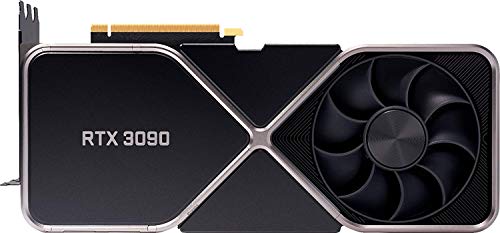
Pros
- Substantial 24GB GDDR6X video memory
- Wide 384-bit memory interface
- Three DisplayPort 1.4a outputs
- HDMI 2.1 connectivity included
Cons
- Large 12-inch length requires substantial case clearance
- Three-inch thickness takes up multiple expansion slots
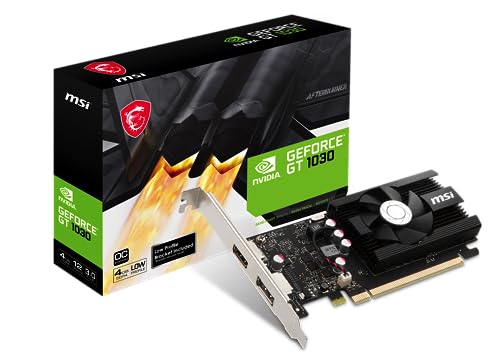
Pros
- Compact dimensions fit space-constrained cases
- Includes both HDMI and DisplayPort connections
- Dedicated 4GB VRAM buffer
- Lightweight construction at 0.6 pounds
Cons
- Slower DDR4 memory configuration
- Narrow 64-bit memory interface
- Limited suitability for modern 3D gaming

Pros
- Compact 7.5-inch card length fits smaller cases
- Dedicated 2nd Gen RT Cores for ray tracing
- 3rd Gen Tensor Cores for AI processing
- Dual-fan WINDFORCE cooling solution
Cons
- Reduced 6GB GDDR6 memory buffer
- Narrow 96-bit memory bus restricts bandwidth

Pros
- Quad-fan cooling with vapor chamber and phase-change pad
- Rigid full-metal diecast shroud and structural GPU bracket
- Protective PCB coating against dust and moisture
- High factory clock speeds up to 2790 MHz
- Durable 80-amp MOSFET power delivery design
Cons
- Massive 3.8-slot form factor restricts adjacent expansion slots
- Large 14.1-inch length requires a spacious chassis
- Substantial 6.3-pound weight demands secure mounting support

Pros
- High-capacity 32GB GDDR7 memory configuration
- Compact 2.5-slot thickness compared to rival flagships
- Dual BIOS switch for hardware-level profile switching
- 0dB silent operation under light graphics loads
- Durable dual-ball bearing cooling fans
Cons
- Long 13.7-inch card length restricts compact builds
- Hefty five-pound weight places strain on PCIe slots
Detailed Reviews: The Best Nvidia Graphics Cards
ASUS TUF Gaming GeForce RTX 5090 32GB GDDR7 OC
The ASUS TUF Gaming GeForce RTX 5090 delivers top-tier compute performance anchored by 32GB of cutting-edge GDDR7 video memory on the Blackwell architecture. Engineered with a 2.5-slot profile and dual-ball bearing Axial-tech fans, this card targets enthusiasts running extreme multi-monitor setups or high-refresh 4K gaming panels. Its 772 AI TOPS rating handles heavy generative workflows, though users must plan for substantial chassis airflow and clean auxiliary power delivery.
ASUS TUF Gaming GeForce RTX™ 5080 16GB GDDR7 OC
Built for demanding modern titles, the ASUS TUF Gaming GeForce RTX 5080 features 16GB GDDR7 memory paired with an aggressive 2730 MHz boost clock in OC mode. The card requires an 850W power supply equipped with a native 12V-2×6 cable and occupies 3.6 expansion slots with a 348mm length. Its protective PCB coating and phase-change thermal pad ensure structural resilience, making it a natural match for pairing with modern ultrawide gaming monitors.
ASUS ROG Astral GeForce RTX 5080 16GB GDDR7 White
The ASUS ROG Astral GeForce RTX 5080 White Edition focuses on premium thermal dissipation via a custom quad-fan array and a patented vapor chamber. Rated at 1899 AI TOPS with a 2790 MHz OC boost, it delivers immense throughput for creative rendering and high-framerate competitive play. The sheer bulk of its 3.8-slot enclosure requires reinforced mounting brackets and a full-tower chassis to prevent physical sag over extended usage periods.
msi Gaming RTX 5080 16G Ventus 3X OC Black
MSI provides a straightforward, high-efficiency Blackwell solution with the Ventus 3X OC Black, sporting 16GB GDDR7 across a wide 256-bit interface. The triple-fan configuration provides steady airflow while the 2640 MHz extreme clock profile delivers consistent frametimes in demanding rasterized scenarios. With triple DisplayPort 2.1a ports and HDMI 2.1b output, this board easily integrates into modern multi-display workstation rigs.
ASUS Prime GeForce RTX 5070 12GB GDDR7 OC Edition
Designed under small-form-factor enthusiast guidelines, the ASUS Prime GeForce RTX 5070 fits inside compact builds thanks to its tidy 2.5-slot profile. It provides 12GB GDDR7 memory, 1005 AI TOPS, and a boost clock reaching 2587 MHz under OC operation. This card offers ideal performance density for builders targeting high-refresh 1440p displays without expanding into massive desktop footprints.
nVidia GeForce RTX 3090 Founders Edition Graphics
The legendary Nvidia GeForce RTX 3090 Founders Edition remains a dependable choice for legacy productivity workstations needing a massive 24GB frame buffer. Its 384-bit memory bus pushes rapid data transfer for local machine learning models and complex 3D asset rendering. While older Ampere architecture draws notable power and outputs considerable heat, the sheer VRAM capacity continues to offer practical utility.
ASUS Dual GeForce RTX 3050 6GB GDDR6 OC Edition
For budget-conscious builders assembling an entry-level rig, the ASUS Dual GeForce RTX 3050 delivers standard 1080p rendering with dedicated ray-tracing and Tensor cores. It fits easily into small cases due to its strict 2-slot thickness, IP5X dust-resistant fans, and modest power consumption profile. The 6GB memory configuration remains adequate for mainstream esports titles, though dense texture packs in modern titles require manual setting adjustments.
msi Gaming RTX 3050 Ventus 2X 6G OC Graphics Card
The MSI Ventus 2X 6G OC features a dual-fan cooling layout that maintains steady temperatures on a 96-bit Ampere GPU core. Clocked to 1492 MHz boost, it supplies dual HDMI 2.1a outputs alongside a DisplayPort 1.4a connection for versatile living-room or desktop connectivity. It serves as an accessible replacement card for aging prebuilt desktops without requiring heavy auxiliary power cabling.
GIGABYTE GeForce RTX 3050 WINDFORCE OC V2 6G
Gigabyte balances footprint and airflow in the Windforce OC V2, employing alternate-spinning fans over a compact heatsink structure. The 6GB GDDR6 memory interface supports essential DLSS upscaling modes to boost frame output in lightweight action games. It provides an economical path forward when following an entry-level battlestation guide on an uncompromising budget.
msi Gaming GeForce GT 1030 4GB DDR4 64-bit HDCP
The MSI GeForce GT 1030 is strictly an ultra-compact display adapter engineered for basic desktop rendering, home-theater systems, or legacy office machines lacking integrated graphics. Equipped with 4GB DDR4 memory on a narrow 64-bit bus, its thermal envelope stays small enough for single-slot low-profile configurations. It is not designed for modern 3D gaming workloads, functioning primarily as a multi-monitor output device.
Key Technical Factors to Consider
Video memory capacity directly dictates whether your system will stutter when loading ultra-resolution assets or high-polygon meshes. Modern high-resolution gaming demands at least 12GB to 16GB of VRAM to avoid bottlenecking texture streaming across system buses. Compact entry-level boards equipped with 6GB are suitable for 1080p, while professional production pipelines clearly benefit from the 24GB or 32GB allocations found on flagship hardware.
Physical clearance has become one of the most critical specifications in graphics hardware selection. Flagship models span up to 3.8 slots and exceed 340mm in length, frequently crowding motherboard headers and interfering with front-mounted liquid radiators. Always verify both internal case clearance and power supply connectivity, especially the dedicated 16-pin 12V-2×6 standard required by modern Blackwell flagships.
Frequently Asked Questions
What power supply connector does the RTX 50-series require?
High-end Blackwell graphics cards like the RTX 5080 and 5090 utilize the updated 16-pin 12V-2×6 power connection standard. Manufacturers recommend power supply capacities of at least 850W with dedicated high-amperage cabling to ensure stable transient power response under intense processing spikes.
Is 6GB VRAM sufficient for modern PC gaming?
A 6GB memory configuration handles competitive esports titles and general 1080p gameplay at standard settings. However, modern releases with ray-tracing passes and high-resolution texture packs will frequently exceed 6GB, necessitating lower graphic presets to maintain consistent framerates.



Write Your Review
No reviews yet. Be the first to share your experience!