

For most PC and console racers, start with connection and platform support. The Razer BlackShark V2 X offers a lightweight wired 3.5 mm setup, while the NUBWO G06 adds wireless modes and long advertised battery life. For VR sim racing, Pimax Crystal Super is a separate visual upgrade, not a conventional headset replacement.
This comparison of best gaming headsets for racing uses supplied specifications, not independent performance measurements. Spatial audio labels do not establish racing-game accuracy, and advertised wireless latency claims should not be treated as measured results.
Top Gaming Headsets for Racing

Pros
- Lightweight 240g frame for extended comfort
- Broad compatibility via standard 3.5mm audio jack
- TriForce 50mm drivers for distinct frequency tuning
- Cardioid microphone with targeted voice pickup
Cons
- Surround sound requires Windows 10 64-bit
- Xbox One may require a separate stereo adapter

Pros
- Versatile 2.4GHz, Bluetooth, and 3.5mm connections
- Up to 100-hour rated battery life
- Simultaneous Bluetooth pairing for incoming mobile calls
- Large 50mm composite diaphragm drivers
Cons
- Xbox consoles require a wired 3.5mm connection
- Wireless functionality on consoles requires USB dongle

Pros
- Lightweight 240-gram design minimizes fatigue during long sessions
- TriForce 50 mm drivers deliver clear acoustic separation
- Universal 3.5 mm jack supports multiple gaming platforms
- Memory foam ear cushions provide effective passive sound isolation
- Flexible cardioid microphone captures focused vocal audio
Cons
- Relies entirely on a wired 3.5 mm connection
- Lacks active noise cancellation technology

Pros
- Ultralight 212-gram design for extended comfort
- Dual LIGHTSPEED wireless and Bluetooth support
- AI-assisted noise reduction on beamforming microphone
- Rated for over 24 hours of battery life
- Broad compatibility with PC, PlayStation, and Switch

Pros
- Dual 2.4GHz wireless and Bluetooth 5.2 support
- Up to 40 hours of battery life
- Convenient QuickSwitch wireless toggle button
- Swarm II app with 10-band EQ customization
- Flip-to-mute microphone with variable mic monitoring
Pros
- Large 50mm audio drivers
- Convenient flip-to-mute 6mm boom microphone
- DTS Headphone:X 2.0 surround sound support
- Versatile 3.5mm and USB DAC connectivity
- Comfortable lightweight frame with rotating ear cups
Cons
- DTS Headphone:X 2.0 requires Logitech G HUB software
- Advanced surround sound unavailable on standard console connections
Pros
- Official Xbox console licensing
- Durable aluminum frame construction
- Comfortable memory foam ear cushions
- Detachable noise-cancelling microphone
- Integrated in-line audio controls
Cons
- Requires controllers with a 3.5mm jack
- Tethered wired connection only

Pros
- Angled 53mm drivers tuned for gaming audio
- Plush memory foam for long-session comfort
- Durable and flexible aluminum frame
- Clear 10mm microphone with LED mute indicator
- Versatile USB-C, USB-A, and 3.5mm connections
Cons
- Wired-only design restricts physical movement
- Requires cable management across different platforms

Pros
- Ultra-high 3840x3840 resolution per eye
- Expansive 140-degree field of view
- Mini-LED local dimming for deep contrast
- Inside-out tracking removes need for base stations
- Integrated spatial audio and noise-canceling microphone
Cons
- Requires a tethered DisplayPort PC connection
- Demanding resolution requires high-end GPU hardware
How These Picks Differ
Razer BlackShark V2 X Gaming Headset: Lightweight wired pick
Its 240 g weight, closed earcups, memory-foam cushions, and 3.5 mm connection suit racers who want a simple wired setup. Razer lists PC, Mac, PlayStation, Xbox One, and Switch compatibility; Xbox One may require a separately purchased stereo adapter. Software-enabled 7.1 surround sound is limited to Windows 10 64-bit, so console users should not expect that feature. The cardioid microphone also suits team chat.
Pros: Lightweight, passive noise isolation, broad stated platform support. Cons: Wired connection; surround feature has a Windows-specific requirement. Who should skip it: Racers who need wireless freedom or rely on surround processing outside Windows 10 64-bit.
IMYB A36 Gaming Headset with Mic Stereo Headphones: Basic wired value
The A36 uses 50 mm drivers, a 3.5 mm jack, and a 6.5 ft braided cable. Its stated compatibility covers PC, PlayStation, Xbox, Switch, and mobile devices, though older Xbox One controllers may need an adapter. A rotary volume control and microphone mute button keep basic adjustments on the cable.
Pros: Broad listed device support, long cable, inline controls. Cons: Wired-only; supplied data does not specify headset weight in standard units or a surround-processing requirement. Who should skip it: Buyers seeking wireless connectivity, detailed fit measurements, or a documented platform-specific spatial-audio feature.
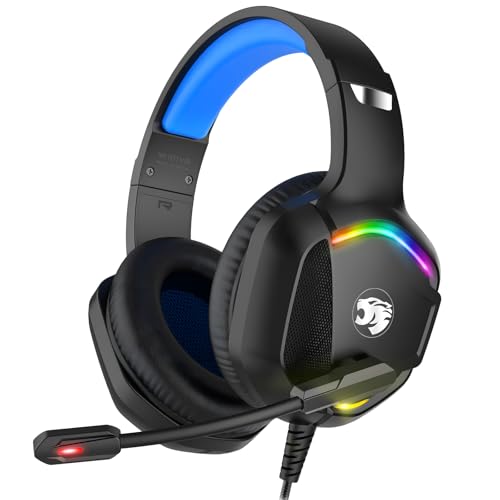
NUBWO Wireless Gaming Headset with Mic for Ps5 Ps4: Multi-mode wireless
The NUBWO G06 supports 2.4 GHz wireless for PC, PS5, and PS4, Bluetooth 5.3 for mobile devices, and 3.5 mm wired use for Xbox and Switch. Xbox Series support is wired only. Its advertised battery life reaches 100 hours, but that figure is a manufacturer claim, not an independent result. A 50 mm driver and simultaneous phone pairing may suit racers who want game audio and mobile connectivity.
Pros: Multiple connection modes, stated long battery life, phone pairing alongside 2.4 GHz. Cons: Platform modes differ; Xbox Series requires the cable. The listed 0 ms latency claim is not a measured guarantee. Who should skip it: Racers who need one wireless mode across every listed platform or verified latency figures.
Razer BlackShark V2 X Xbox Gaming Headset: Wired Xbox choice
This Xbox-focused variant has a 3.5 mm connection, 240 g weight, memory-foam cushions, and 50 mm drivers. Windows Sonic support may provide spatial audio when paired with compatible Windows or Xbox settings. The bendable cardioid microphone and closed earcups suit console chat and shared rooms. Compatibility beyond Xbox is described broadly, so check the target device’s 3.5 mm headset jack and audio support.
Pros: Lightweight wired design, Windows Sonic support, flexible microphone. Cons: No wireless option; spatial audio depends on compatible system settings. Who should skip it: PC racers seeking wireless play or a headset with a documented USB audio connection.
Turtle Beach Stealth 500 Wireless Multiplatform: Wireless Xbox and PC
The Stealth 500 combines low-latency 2.4 GHz wireless for Xbox and PC with Bluetooth 5.2. Its QuickSwitch button changes between wireless and Bluetooth, and advertised battery life is up to 40 hours with quick charge. A 10-band EQ through Swarm II gives users sound adjustments, while the flip-to-mute omnidirectional microphone supports chat.
Pros: Two wireless connection types, app-based EQ, quick switching. Cons: Supplied data specifies 2.4 GHz compatibility for Xbox and PC, not other consoles; advertised battery life is not independently measured here. Who should skip it: PlayStation or Switch racers who need confirmed wireless compatibility.
Logitech G325 Lightspeed Wireless Gaming Headset: Lightweight wireless
At 212 g, the G325 pairs LIGHTSPEED wireless with Bluetooth and lists compatibility with PC, PS4, PS5, Switch, and mobile devices. Logitech specifies 24-bit customizable audio, a built-in beamforming microphone with noise reduction, and more than 24 hours of battery life. The built-in microphone avoids a boom arm, but the supplied details do not identify a 3.5 mm wired mode.
Pros: Low listed weight, dual wireless connectivity, stated multi-platform support. Cons: No wired connection is specified; battery duration is a manufacturer claim. Who should skip it: Racers who require a cable backup or a detachable boom microphone.
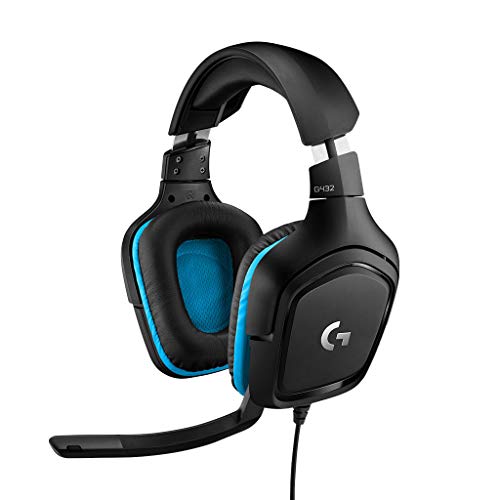
Logitech G432 Wired Gaming Headset: Wired surround option
The G432 has 50 mm drivers, a 6 mm flip-to-mute boom microphone, and USB DAC or 3.5 mm connections for PC and Mac. DTS Headphone:X 2.0 requires Logitech G HUB software. PlayStation and Switch support is listed, but console audio modes differ from PC USB use. This makes the model more suitable for PC racers willing to configure software than for buyers seeking a plug-and-play wireless setup.
Pros: Two listed PC connection options, boom mic, software-based DTS processing. Cons: Wired design; DTS Headphone:X 2.0 requires G HUB. Who should skip it: Racers who do not want software setup or need wireless movement around a cockpit.
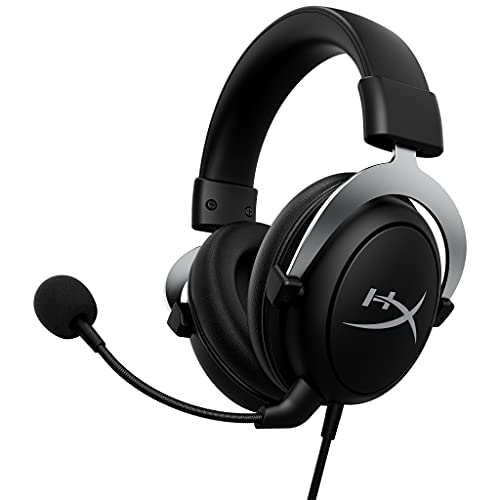
HyperX CloudX, Official Xbox Licensed: Console-focused wired pick
CloudX is officially licensed for Xbox and connects through a 3.5 mm headset jack on compatible Xbox controllers. Its aluminum frame, memory-foam cushions, detachable noise-canceling microphone, and inline controls suit console racers who want a replaceable chat mic. The supplied compatibility information centers on Xbox, so do not assume equivalent support across PC or other consoles without checking the connection and device requirements.
Pros: Xbox licensing, detachable microphone, inline controls, aluminum frame. Cons: Wired connection; listed compatibility is Xbox-focused. Who should skip it: Multi-platform racers needing confirmed support beyond Xbox or wireless operation.
HyperX Cloud III Wired Gaming Headset: Wired multi-platform option
Cloud III lists PC, PS5, and Xbox Series X|S support and includes USB-C, USB-A, and 3.5 mm connections. Its angled 53 mm drivers, memory foam, aluminum frame, and noise-canceling 10 mm microphone target longer play and clear chat. The supplied specifications do not state battery life or wireless capability, so treat it as a wired choice.
Pros: Multiple listed connectors, broad stated platform support, durable frame and memory foam. Cons: Wired; spatial-audio support details are not provided. Who should skip it: Racers who want wireless use or need documented surround-processing compatibility.
Pimax Crystal Super VR Headset: Dedicated VR sim racing
This is a PC-connected VR headset, not a conventional audio headset. Its listed 3840 × 3840 resolution per eye, 140-degree field of view, up-to-90 Hz refresh rate, eye tracking, and integrated spatial audio target immersive simulator setups. It requires a DisplayPort connection to a PC, and the supplied data gives no specific GPU requirement. Confirm PC capability and simulator compatibility before choosing it; VR adds display and tracking requirements beyond headset audio.
Pros: High listed per-eye resolution, wide field of view, integrated audio and microphone. Cons: Specialized PC VR hardware; GPU requirements and detailed game compatibility are not specified. Who should skip it: Racers who only need chat audio, play on console, or do not have a suitable PC VR setup.
How to Choose a Racing Headset
Match connection to platform
Check the exact connection before buying. A 3.5 mm headset needs a compatible controller or audio jack; some Xbox One controllers may need an adapter. USB audio and wireless dongles have platform-specific support, while Bluetooth is not listed as a universal console gaming connection in these product specifications.
Choose wired or wireless for your cockpit
Wired models avoid battery charging and suit fixed wheel-and-seat setups, but cable routing matters around moving controls. Wireless picks reduce cable clutter, yet battery claims vary and platform modes may differ. Prefer a clearly stated connection for your PC or console rather than assuming every mode works everywhere.
Prioritize fit, isolation, and microphone use
Weight and cushion details help narrow long-session choices: the listed Razer models weigh 240 g, and Logitech G325 weighs 212 g. These numbers do not guarantee personal comfort. Closed earcups may reduce outside sound, while microphone designs range from boom and flip-to-mute types to built-in models.
Understand spatial audio claims
Surround and spatial-audio features depend on headset software, platform settings, and game support. Razer lists Windows 10 64-bit for its software-enabled 7.1 feature; Logitech G432 requires G HUB for DTS Headphone:X 2.0. These labels alone do not prove better positional cues in a particular racing game.
Frequently Asked Questions
Do racing games need surround sound?
No. Stereo headsets can provide game audio and chat. Spatial processing is an optional feature, and its availability depends on the headset, operating system, software, and game. Choose it for preference, not as a guaranteed racing advantage.
Which listed headset is designed for VR racing?
Pimax Crystal Super is the only dedicated VR headset in this group. It connects to a PC through DisplayPort and includes integrated spatial audio. It is not a substitute for a standard headset when playing on console or a flat display.
Final Recommendation
Choose Razer BlackShark V2 X Gaming Headset for a lightweight wired setup with broad stated compatibility, or NUBWO G06 for wireless modes and a claimed long battery life. PC racers seeking DTS processing can consider Logitech G432, while Xbox-focused buyers can compare Razer Xbox and HyperX CloudX. Choose Pimax Crystal Super only for a compatible PC VR simulator setup. These distinctions make the best gaming headsets for racing a platform and connection decision first, with audio features and fit close behind.


Write Your Review
No reviews yet. Be the first to share your experience!