
A capable gaming headset must balance directional acoustic detail, sustained physical comfort, and vocal clarity for communications. Choosing the right pair requires weighing connection stability against cable freedom, alongside driver architecture and microphone hardware.
We evaluated the technical specifications, driver tunings, microphone capsules, and connectivity options of the leading headsets. The following overview highlights the top configurations available for different budgets and gaming setups.

Pros
- Up to 70 hours of battery life
- Low-latency 2.4GHz wireless connectivity
- Detachable wideband broadcast-style microphone
- Comfortable memory foam earcups with breathable fabric
- Modern USB-C charging support

Pros
- Durable aluminum frame construction
- Comfortable memory foam ear cushions
- Detachable Discord and TeamSpeak certified microphone
- Large 53mm drivers provide detailed audio
- Broad multi-platform wired compatibility
Cons
- Virtual 7.1 surround sound unsupported on consoles
- Wired configuration limits user movement

Pros
- Expansive stereo image from open-back design
- Comfortable replaceable velour ear cushions
- Durable spring-steel headband build
- Includes 1/4-inch adapter for studio gear
- Lightweight 0.55-pound design
Cons
- Requires a dedicated amplifier or audio interface
- Attached fixed cable is not detachable
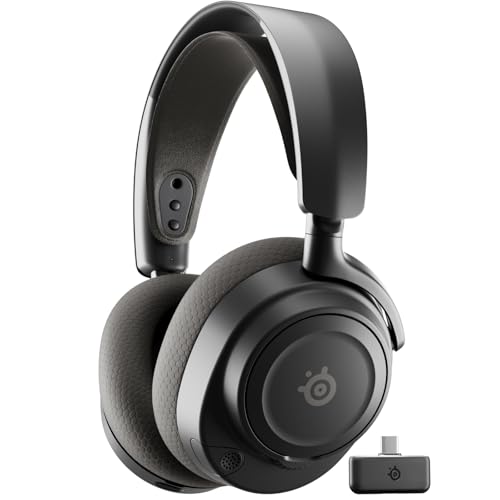
Pros
- Simultaneous 2.4GHz and Bluetooth wireless audio mixing
- Advertised 50-plus hour battery life with fast charging
- ClearCast Gen 2 mic with hardware noise reduction
- Cross-platform USB-C dongle with included USB-A adapter
- Durable steel frame paired with memory foam cushions
Cons
- Sonar AI microphone enhancement restricted to PC
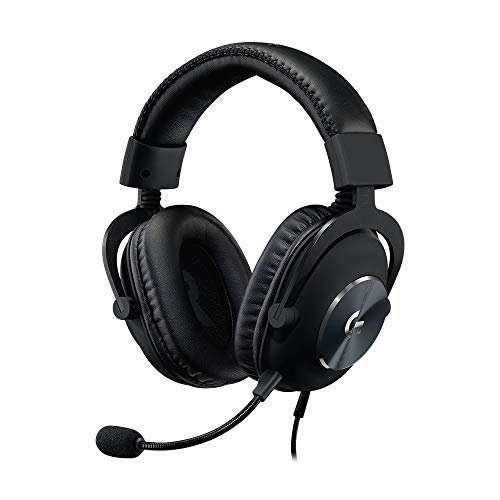
Pros
- Detachable microphone with Blue VO!CE tuning technology
- Durable steel and aluminum frame construction
- Interchangeable leatherette and breathable velour ear pads
- External USB sound card with onboard EQ memory
- Secondary mobile cable with inline microphone included
Cons
- Blue VO!CE and surround sound require Windows PC software
- Advanced processing unavailable over standard 3.5mm analog connection
Quick Comparison of Documented Specifications
| Headset Model | Connection Type | Driver Size | Microphone Design | Key Hardware Trait |
|---|---|---|---|---|
| Razer BlackShark V2 Pro Wireless Gaming Headset | 2.4GHz Wireless / Bluetooth | 50mm Titanium | Detachable Super Wideband | Up to 70 hours battery life |
| SteelSeries Arctis Nova 7 Wireless Gen 2 | Simultaneous 2.4GHz + Bluetooth | 40mm Neodymium | Retractable ClearCast Gen 2 | Dual-source audio mixing |
| HyperX Cloud II Gaming Headset | Wired (3.5mm / USB Sound Card) | 53mm Dynamic | Detachable Noise-Cancelling | Durable aluminum frame |
| Logitech G PRO X Wired Gaming Headset – Black | Wired (3.5mm / USB DAC) | 50mm Pro-G | Detachable Blue VO!CE 6mm | External USB sound card with onboard EQ |
| beyerdynamic DT 990 Pro (250 Ohm) | Wired (3.5mm / 6.35mm adapter) | 45mm Dynamic | None (Headphones only) | 250-ohm open-back studio design |
The Top Gaming Headsets Analyzed
1. Razer BlackShark V2 Pro Wireless Gaming Headset
The Razer BlackShark V2 Pro Wireless Gaming Headset is designed specifically for competitive multiplayer environments. It features 50mm TriForce Titanium drivers that separate low, midrange, and treble frequency bands for precise audio cues.
Voice transmission is managed by an oversized 9.9mm HyperClear Super Wideband detachable microphone that samples a wider frequency response than typical boom mics. The headset provides up to 70 hours of operational battery life and recharges through a standard USB-C port.
With closed-back earcups stuffed with memory foam, external ambient noise is attenuated naturally during matches. However, the aggressive high-frequency tuning prioritizes positional cues like footsteps over sub-bass resonance, making it less suited for cinematic single-player titles.
2. SteelSeries Arctis Nova 7 Wireless Gen 2
The SteelSeries Arctis Nova 7 Wireless Gen 2 excels in setups where multiple audio streams are required simultaneously. Its dual wireless chipset allows simultaneous playback of high-speed 2.4GHz game audio and mobile Bluetooth streams.
A compact USB-C dongle delivers cross-platform operation across PC, PlayStation, Nintendo Switch, and mobile platforms. The onboard battery is rated for more than 50 hours of continuous uptime, supported by quick charging that delivers multiple hours from a short top-up.
A retractable ClearCast Gen 2 bidirectional microphone slides completely inside the left earcup when not in use. While the Sonar software suite enables granular parametric equalization on PC, console users have fewer equalization options directly on hardware.
3. HyperX Cloud II Gaming Headset
The HyperX Cloud II Gaming Headset remains a reliable benchmark in wired gaming peripherals. Built around a solid aluminum frame, the headband spreads weight evenly while plush memory foam cushions insulate the ears.
Audio is produced by large 53mm dynamic drivers that deliver a balanced frequency response with impactful bass. The included inline USB audio control box provides hardware-driven virtual 7.1 surround sound without requiring proprietary desktop software suites.
Connectivity options cover standard 3.5mm jacks and USB connections for universal compatibility across desktop and console systems. The primary limitation is its hardwired design, which cannot match the freedom of movement offered by wireless alternatives.
4. Logitech G PRO X Wired Gaming Headset
The Logitech G PRO X Wired Gaming Headset – Black targets esports participants who require broadcast-grade vocal processing. Its detachable boom microphone leverages Blue VO!CE software filters, including compressors, limiters, and noise reducers.
The headset employs hybrid-mesh 50mm Pro-G drivers designed to minimize distortion across complex soundscapes. Logitech packages both leatherette and breathable velour earpads in the box, letting players customize their passive noise isolation and thermal comfort.
The included USB DAC features onboard memory to store five-band equalization curves for tournament systems. Unlocking the full suite of voice filters requires the Logitech G HUB utility on a Windows PC, reducing mic customization on consoles.
5. beyerdynamic DT 990 Pro (250 Ohm)
The beyerdynamic DT 990 Pro (250 Ohm) takes an audiophile approach to gaming audio. Featuring an open-back acoustic architecture, it produces an expansive soundstage that pinpoints directional audio cues with natural depth.
A rugged spring-steel headband and replaceable soft velour earpads offer exceptional physical comfort during marathon sessions. Because the earcups are acoustically open, airflow prevents heat buildup around the ears during prolonged use.
Operating these 250-ohm studio headphones requires a dedicated headphone amplifier or audio interface to achieve adequate listening volume. Furthermore, they feature an integrated coiled cable and lack a built-in microphone, requiring a separate desktop mic.
Key Factors to Consider When Buying a Gaming Headset
Driver diameter does not tell the whole story when judging auditory performance. Enclosure acoustics, chamber damping, and frequency tuning dictate how clearly footsteps or subtle reloading sounds register over explosive lower frequencies.
When selecting peripheral gear to match a modern desk setup, consider how audio cables interact with items like a dedicated MMO mouse or a silent mechanical keyboard. Reducing desktop clutter with wireless 2.4GHz connectivity eliminates cable drag across your mouse mat.
Acoustic enclosure style is another critical division. Closed-back earcups isolate background noises and prevent audio spill into sensitive microphones, while open-back headphones deliver a wider soundstage at the expense of sound leakage.
Microphone broadcast quality relies on capsule dimensions and signal processing. High-bandwidth capsules capture natural speech timbre, whereas basic pin-hole microphones often introduce compression artifacts that make callouts harder to decipher in tactical matches.
Frequently Asked Questions
Does a 2.4GHz wireless headset have noticeable audio latency?
Modern 2.4GHz wireless gaming headsets transmit uncompressed digital audio with latency levels typically well under 30 milliseconds. This latency is imperceptible during fast-paced competitive gameplay, matching the functional speed of wired connections.
Can you drive 250-ohm studio headphones directly from a motherboard?
Standard integrated motherboard audio jacks often lack the output voltage required to properly power 250-ohm drivers. Without a dedicated headphone amplifier, the output may suffer from reduced volume levels and flat dynamic range.
Are open-back headphones suitable for shared living spaces?
Open-back earcups intentionally allow acoustic energy to escape outward. Anyone sitting in close proximity will hear your game audio, and your open earcups will let ambient household noises reach your ears unimpeded.
Final Recommendation Summary
For players focused on competitive first-person shooters, the Razer BlackShark V2 Pro Wireless Gaming Headset delivers an optimal combination of low-latency wireless play and tuned audio profiles. If multi-device flexibility is your priority, the SteelSeries Arctis Nova 7 Wireless Gen 2 provides practical dual-source mixing.
Wired enthusiasts on moderate budgets will find dependable durability and balanced acoustics in the HyperX Cloud II Gaming Headset. Alternatively, those wanting an expansive spatial soundstage with an external desktop microphone setup should explore the beyerdynamic DT 990 Pro (250 Ohm).