

Positional audio gives competitive players a practical advantage by mapping footsteps, reloads, and environmental sound cues across a virtual sphere. Most modern 7.1 gaming headsets achieve this effect through software processing or specialized USB digital-to-analog converters rather than cramming multiple physical drivers into each earcup.
Choosing the best 7.1 gaming headsets requires looking closely at connection interfaces and platform requirements. Software-driven surround sound frequently requires Windows drivers, while USB DAC solutions offer more consistent processing across supported devices. For wider context on general audio gear, you can browse our guide to the best gaming headsets currently available.
Quick Overview: Top 7.1 Gaming Headset Picks
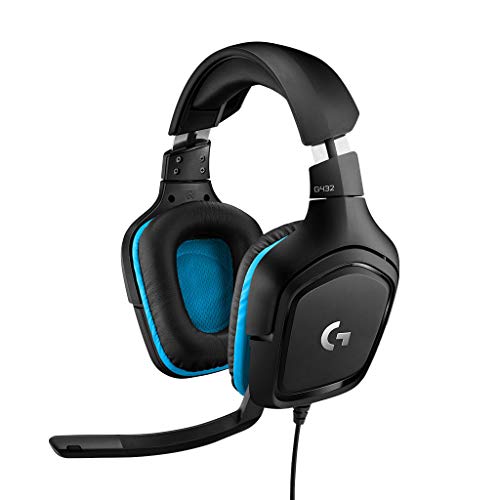
Pros
- Large 50mm audio drivers
- Convenient flip-to-mute 6mm boom microphone
- DTS Headphone:X 2.0 surround sound support
- Versatile 3.5mm and USB DAC connectivity
- Comfortable lightweight frame with rotating ear cups
Cons
- DTS Headphone:X 2.0 requires Logitech G HUB software
- Advanced surround sound unavailable on standard console connections

Pros
- Dual 2.4 GHz and Bluetooth 5.4 wireless connections
- Lightweight 239-gram ergonomic construction
- Long battery life rated up to 45 hours
- USB-C fast charging supports play while charging
- Versatile 4-in-1 connection options
Cons
- Bluetooth mode is incompatible with PS4 and PS5
- Xbox Series X/S functionality requires wired 3.5 mm connection
- Older Xbox console models are not supported

Pros
- Lightweight 240g frame for extended comfort
- Broad compatibility via standard 3.5mm audio jack
- TriForce 50mm drivers for distinct frequency tuning
- Cardioid microphone with targeted voice pickup
Cons
- Surround sound requires Windows 10 64-bit
- Xbox One may require a separate stereo adapter
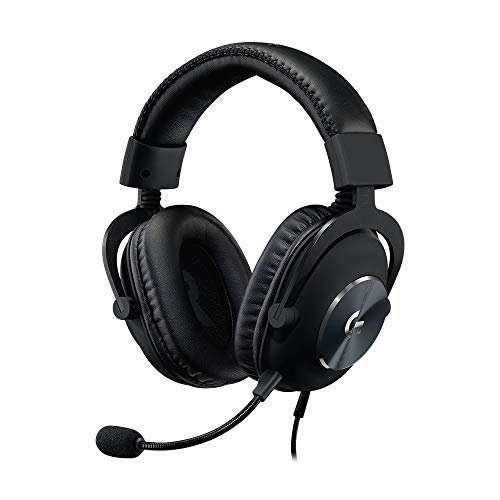
Pros
- Detachable microphone with Blue VO!CE tuning technology
- Durable steel and aluminum frame construction
- Interchangeable leatherette and breathable velour ear pads
- External USB sound card with onboard EQ memory
- Secondary mobile cable with inline microphone included
Cons
- Blue VO!CE and surround sound require Windows PC software
- Advanced processing unavailable over standard 3.5mm analog connection
Detailed Product Breakdown
Logitech G PRO X Wired Gaming Headset – Black
The Logitech G PRO X Wired Gaming Headset – Black is designed for competitive PC environments requiring durable hardware and customizable communication. It combines 50 mm hybrid-mesh PRO-G drivers with an external USB sound card capable of processing next-generation 7.1 object-based spatial audio.
Its primary strength lies in software control via Logitech G HUB, which unlocks Blue VO!CE microphone filtering with real-time compression and de-essing. The steel and aluminum frame provides long-term rigidity, and the package includes both leatherette and breathable velour earpads. Note that full surround processing and microphone tuning require the USB DAC on a Windows PC; console setups connect via analog 3.5 mm and operate in stereo.
Razer BlackShark V2 X Gaming Headset
The Razer BlackShark V2 X Gaming Headset targets esports players seeking clear positional tracking in an ultralight chassis. Weighing approximately 240 grams, the headset utilizes Razer TriForce 50 mm drivers designed to separate high, mid, and low frequency bands to reduce acoustic distortion.
Spatial audio is handled via Razer 7.1 surround sound software, which requires a registration code and a 64-bit installation of Windows 10. The non-detachable cardioid microphone focuses on forward voice pickup while minimizing lateral keyboard clatter. Because it connects via standard 3.5 mm analog audio, multi-platform console users will receive stereo output unless their platform supports native spatial audio layers like Windows Sonic.
Logitech G432 Wired Gaming Headset – Black
The Logitech G432 Wired Gaming Headset – Black provides a functional entry point into directional PC audio. It features large 50 mm drivers paired with an included USB sound card that runs DTS Headphone:X 2.0 surround sound processing through Logitech G HUB software.
The physical design prioritizes everyday usability with a 6 mm boom microphone that automatically mutes when flipped upward into the earcup housing. The rotating earcups lie flat around your neck between rounds, and the leatherette padding helps maintain a firm acoustic seal. Like most software-dependent models, advanced DTS surround features remain inactive on consoles using the 3.5 mm connection.
AOC Wireless Gaming Headset for PS5, PS4
The AOC Wireless Gaming Headset for PS5, PS4 provides versatile cord-free connectivity across PC, PlayStation consoles, and mobile devices. It offers dual-mode 2.4 GHz wireless and Bluetooth 5.4, alongside an integrated DAC capable of delivering 96 kHz/24-bit high-resolution audio processing.
Acoustics are powered by 50 mm graphene diaphragms housed in dual chambers to preserve spatial channel separation. Weighing 239 grams with up to 45 hours of stated battery life, it delivers solid endurance for marathon sessions. However, Bluetooth mode is not natively supported on PlayStation hardware, and Xbox consoles require the 3.5 mm wired cable rather than the low-latency wireless dongle.
Comparison of Documented Specifications
| Headset Model | Connection Type | Driver Size | Surround Tech | Weight |
|---|---|---|---|---|
| Logitech G PRO X | USB DAC or 3.5 mm | 50 mm PRO-G | DTS Headphone:X 2.0 / G HUB | 320 g |
| Razer BlackShark V2 X | 3.5 mm Analog | 50 mm TriForce | Razer 7.1 Software (Win 10) | 240 g |
| Logitech G432 | USB DAC or 3.5 mm | 50 mm Standard | DTS Headphone:X 2.0 / G HUB | 280 g |
| AOC Wireless Gaming Headset | 2.4 GHz, BT 5.4, 3.5 mm | 50 mm Graphene | Integrated Virtual 7.1 DAC | 239 g |
How Virtual 7.1 Surround Sound Works
True physical 7.1 audio systems place seven discrete speakers and a subwoofer around the listener. In a headset, this concept is simulated using head-related transfer functions (HRTF) to manipulate acoustic timing and frequency response between two stereo drivers.
Because the brain detects direction based on microsecond timing delays and ear shape reflections, spatial algorithms delay audio cues slightly between the left and right ears. This creates the illusion of sound originating in front of, behind, or above you. For budget-focused builders outfitting a complete desk setup, pairing an affordable surround headset with our recommendations in the budget battlestation guide provides strong performance without excessive spending.
Key Buying Considerations for 7.1 Headsets
Before purchasing a 7.1 surround model, evaluate how you intend to connect the headset and which platform handles your primary gaming library.
- Platform and Software Dependence: The majority of budget and mid-range 7.1 headsets require companion desktop software to enable spatial rendering. If you play strictly on PlayStation or Nintendo Switch, high-end PC surround profiles will not be applied through a 3.5 mm jack.
- Earcup Materials and Weight: Leatherette ear cushions provide superior passive noise attenuation and enhance lower bass frequencies. Breathable velour or fabric meshes let more air circulate, which reduces heat buildup during long gaming stretches.
- Acoustic Drivers: Larger 50 mm drivers deliver sufficient power and dynamic range to separate distinct channels without muddying mid-range voice chat during heavy explosions.




Write Your Review
No reviews yet. Be the first to share your experience!