

If you specifically need an 802.11ac router, none of these six picks qualifies: every model listed uses Wi-Fi 6, Wi-Fi 6E, or Wi-Fi 7. They may suit a gaming setup if you want newer wireless features, but check compatibility and wired-port needs before choosing.
For a multi-gig wired connection and gaming controls, consider the TP-Link Archer GE400. The ASUS RT-AX82U is a Wi-Fi 6 option with AiMesh support, while the ASUS RT-AX1800S keeps the feature set simpler. The HYPEREV adds a gaming-acceleration service to an existing network; MSI and TP-Link offer Wi-Fi 6E with a 6 GHz band.
This is a specification-based comparison, not a report of hands-on tests. Router specifications do not guarantee a lower ping: results depend on the internet connection, distance, interference, obstacles, and the game server.
Router Picks for Gaming
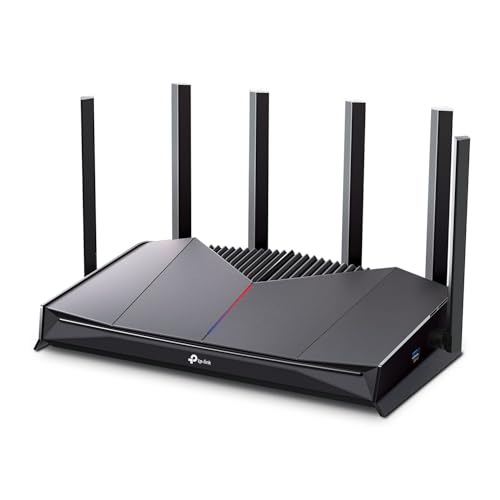
Pros
- Dual 2.5 Gbps multi-gigabit ports
- WiFi 7 Multi-Link Operation support
- Hardware and software gaming traffic prioritization
- EasyMesh support for whole-home expansion
- Coverage for up to 90 connected devices
Cons
- Lacks support for the 6 GHz frequency band
- Incompatible with TP-Link Deco mesh systems
- Requires a standalone modem for internet access
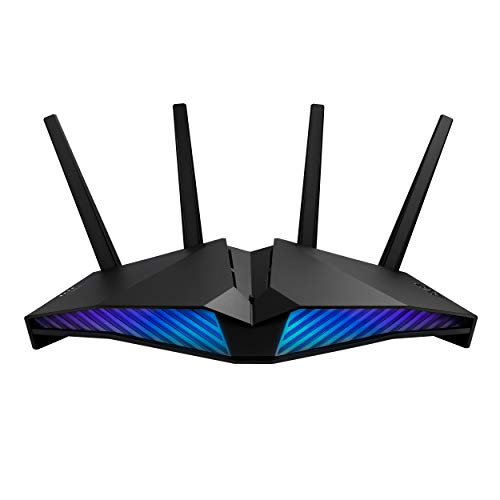
Pros
- WiFi 6 speeds up to 5400 Mbps with 160MHz channels
- Dedicated gaming port prioritizes wired hardware
- Mobile Game Mode reduces latency via ASUS app
- AiMesh support for expanding whole-home coverage
- Included AiProtection Pro network security

Pros
- WiFi 6 speeds up to 2402Mbps
- Works alongside existing routers without full replacement
- Broad compatibility with consoles, PC, and Steam Deck
- Includes 90-day GearUP VIP Core plan
- Mobile app control for network acceleration settings
Cons
- Incompatible with Starlink networks
- Route optimization requires paid subscription after 90 days

Pros
- Dual-band WiFi 6 with OFDMA and MU-MIMO support
- Four dedicated Gigabit LAN ports for wired setups
- Subscription-free Trend Micro network protection included
- AiMesh support for expanding coverage with compatible routers
- Built-in Instant Guard mobile VPN encryption

Pros
- Tri-band support including the 6GHz band
- 1.8GHz quad-core processor for multi-device management
- AI QoS automatic traffic prioritization
- Eight concurrent data streams
- Integrated Mystic Light RGB synchronization
Cons
- Requires WiFi 6E devices for 6GHz access
- Large chassis requires significant setup space

Pros
- Dedicated 6 GHz band for Wi-Fi 6E devices
- Fast 2.5G multi-gigabit WAN port
- Integrated network-level game acceleration features
- EasyMesh support for seamless whole-home expansion
- Simple setup and management via Tether app
Cons
- LAN ports are limited to 1 Gbps
- Requires Wi-Fi 6E hardware to use 6 GHz
How to Choose a Gaming Router
Start with the wireless standard your devices support. Wi-Fi 6 and Wi-Fi 6E devices can use their corresponding features, while a Wi-Fi 7 router can also serve older clients. A router’s advertised combined throughput is not the speed a single device will necessarily achieve.
For competitive play, use Ethernet when practical. A wired connection avoids the extra wireless link between the gaming device and router, but it cannot fix latency or congestion elsewhere in the internet connection. Check the router’s LAN ports and your internet plan before paying for multi-gig hardware.
Wi-Fi 6E adds a 6 GHz band, but only compatible Wi-Fi 6E devices can use it. It can provide another wireless band for supported devices; it does not mean every console or PC will connect on 6 GHz. A dual-band model such as the Archer GE400 does not include 6 GHz.
Gaming features such as QoS and game acceleration can help manage or route traffic, but advertised benefits are not measured results. Check whether a feature requires an account or subscription, and compare its value with straightforward Ethernet, better router placement, or a compatible mesh setup.
Recommended Routers and Their Trade-Offs
TP-Link Archer GE400: Multi-Gig Ports and a Game Dashboard
The TP-Link Dual-Band BE6500 WiFi 7 Gaming Router 6.5 is a dual-band Wi-Fi 7 router rated for up to 5,765 Mbps on 5 GHz and 688 Mbps on 2.4 GHz. It includes one 2.5 Gbps WAN/LAN port, one 2.5 Gbps LAN port, and three 1 Gbps LAN ports.
Its multi-gig ports suit a compatible multi-gig modem, internet plan, or wired device. The dedicated gaming panel, QoS, and WTFast game-server acceleration are relevant if you want network controls in one place. It is a dual-band design, not a 6 GHz router, and the stated wireless rates are theoretical maximums.
The manufacturer lists coverage up to 2,600 square feet and support for up to 90 devices, but actual coverage varies with the building and placement. EasyMesh extension requires compatible EasyMesh devices and is not compatible with Deco systems.
Compare more gaming router options if you want to weigh this model against a broader selection.
ASUS RT-AX82U: Wi-Fi 6 and AiMesh Expandability
The ASUS RT-AX82U (AX5400) Dual Band WiFi 6 Extendable supports Wi-Fi 6, 160 MHz channels, and a stated combined speed of up to 5,400 Mbps. Its mobile game mode is controlled through the ASUS Router app, and its AiMesh compatibility supports expansion with compatible ASUS routers.
This is a candidate for a Wi-Fi 6 household that values app controls, security features, and a possible mesh upgrade. AiProtection Pro and Instant Guard are listed features. The supplied specifications do not state its port speeds or a dedicated gaming Ethernet port, so verify wired requirements before buying.
HYPEREV AX3000: Add-On Gaming Acceleration
The HYPEREV AX3000 Gaming Router WiFi Booster for PS5 is presented as an add-on for an existing network, with Wi-Fi 6 and a stated rate up to 2,402 Mbps. It includes a 90-day GearUP VIP Core plan, which is intended to optimize routes for supported games.
It may appeal to console or PC players who want to try game-specific routing without replacing their current router. The advertised claim of ping reduction is not an independently verified result, and continued service may depend on a paid plan after the included period. The product data also says it is not compatible with Starlink.
ASUS RT-AX1800S: Basic Wi-Fi 6 and Gigabit Ethernet
The ASUS RT-AX1800S Dual Band WiFi 6 Extendable supports Wi-Fi 6, MU-MIMO, and OFDMA. It has one Gigabit WAN port and four Gigabit LAN ports, making it a straightforward fit for several wired devices on an internet plan that does not require multi-gig Ethernet.
AiProtection Classic, Instant Guard, and AiMesh compatibility are listed features. This model is a practical option when basic Wi-Fi 6 and wired gigabit connections matter more than 6 GHz or multi-gig ports. Its actual coverage and throughput depend on network and building conditions.
MSI Radix AXE6600: Tri-Band Wi-Fi 6E
The MSI Radix AXE6600 WiFi 6E Tri-Band Gaming Router has 2.4, 5, and 6 GHz bands, an eight-stream design, AI QoS, and a stated combined rate up to 6.6 Gbps. Its 1.8 GHz quad-core processor and RGB lighting are also specified.
Consider it if your gaming PC or other devices support Wi-Fi 6E and you want a separate 6 GHz band. The supplied information does not specify its Ethernet port layout or a mesh standard, so check those details if wired connections or whole-home expansion are priorities.
TP-Link Archer GXE75: Wi-Fi 6E with a 2.5G WAN Port
The TP-Link Tri-Band AXE5400 Wi-Fi 6E Gaming Router offers 2.4, 5, and 6 GHz bands, a 2.5G WAN port, and four 1G LAN ports. Its gaming panel includes network and device information, with listed application, gear, and server acceleration features.
This model suits a setup needing Wi-Fi 6E and multi-gig internet input while keeping wired devices on gigabit LAN. Its 2.5G port is specified as WAN, not a 2.5G LAN port. EasyMesh-compatible devices can extend coverage, but the supplied details do not establish compatibility with other mesh ecosystems.
Are These Actually AC Routers?
No. “AC” commonly refers to the Wi-Fi 5, or 802.11ac, generation. The products in this guide are Wi-Fi 6, Wi-Fi 6E, or Wi-Fi 7 models, so they are newer alternatives rather than matches for a strict AC-router requirement.
If you need a router specifically labeled 802.11ac, check the exact model’s specifications before purchase; none of the listed products meets that description. For a general comparison of newer gaming-focused options, see our gaming router guide.
Final Recommendation
Choose the Archer GE400 if multi-gig wired ports and its gaming dashboard fit your setup, but note its lack of 6 GHz. Pick the ASUS RT-AX82U for Wi-Fi 6 and AiMesh, or the RT-AX1800S for basic Wi-Fi 6 with four gigabit LAN ports.
Choose one of the Wi-Fi 6E models only if your devices can use 6 GHz: MSI lists tri-band operation, while TP-Link specifies a 2.5G WAN port and four gigabit LAN ports. Consider HYPEREV as an add-on acceleration option, not a guaranteed latency fix. For a strict 802.11ac requirement, select a different product.



Write Your Review
No reviews yet. Be the first to share your experience!