

For the best gaming monitors for under $300 27 inch 144hz, prioritize resolution, graphics-card compatibility, and the connections your setup requires.
These three 27-inch displays use 4K IPS panels and support at least 144Hz, but they target different PC and console priorities.
The KTC model is the strongest specification match for buyers wanting 4K, a refresh rate above 144Hz, adaptive sync, and an adjustable stand.
The ASUS option focuses on gaming features such as ELMB Sync, G-SYNC compatibility, FreeSync Premium, and HDMI 2.1 console support.
The LXZ monitor offers broad connectivity, picture-in-picture features, and a fully adjustable stand, although its advertised color gamut is more modest.

Pros
- Sharp 4K Fast IPS panel with 160Hz refresh
- Wide 132% sRGB color gamut
- Generous port selection with dual HDMI 2.1 connections
- Fully adjustable ergonomic stand
- FreeSync and G-SYNC compatible adaptive sync
Cons
- Standard 1000:1 contrast ratio limits deep black levels
- Basic HDR400 offers modest peak dynamic range

Pros
- Sharp 4K UHD resolution at 144Hz
- Dual HDMI 2.1 and dual DisplayPort 1.4 ports
- Fully adjustable stand with pivot and height adjustment
- AMD FreeSync and NVIDIA G-Sync compatibility
- Integrated PIP and PBP display modes
Cons
- Limited to standard 8-bit color depth
- Modest 1000:1 static contrast ratio
- Uses smaller 75x75mm VESA mount spacing

Pros
- Sharp 4K resolution paired with 160Hz refresh rate
- Fast IPS panel offers a 1ms response time
- HDMI 2.1 enables 4K 120Hz console gaming
- NVIDIA G-SYNC Compatible and AMD FreeSync Premium support
- Wide 95% DCI-P3 color gamut coverage
How These 27-Inch 4K Monitors Compare
| Monitor | Resolution and refresh rate | Panel and color information | Adaptive sync or gaming features | Stand and connectivity highlights |
|---|---|---|---|---|
| KTC 27 Inch 4K 160Hz Gaming Monitor, UHD Fast IPS | 3840 × 2160, up to 160Hz, with 144Hz support | Fast IPS, HDR400, 132% sRGB, 1000:1 contrast ratio | FreeSync and G-SYNC compatible | Height, pivot, swivel, and tilt adjustment; two HDMI 2.1 and two DisplayPort 1.4 ports |
| LXZ 27 Inch 4K Gaming Monitor 144Hz IPS Computer | 3840 × 2160 at 144Hz | IPS, true 8-bit color, 84% NTSC, 1000:1 contrast ratio | FreeSync and G-SYNC support through DisplayPort; advertised 1ms response mode | Height, tilt, swivel, and pivot adjustment; HDMI 2.1, DisplayPort 1.4, PIP, and PBP |
| ASUS TUF Gaming VG27UQ1A 27 Inch 4K 160Hz G-SYNC | 3840 × 2160 at 160Hz | Fast IPS, HDR support, 95% DCI-P3 | G-SYNC Compatible, FreeSync Premium, ELMB Sync, and Variable Overdrive | HDMI 2.1 supports 4K 120Hz for compatible consoles; DisplayPort cable included |
1. KTC 27 Inch 4K 160Hz Gaming Monitor, UHD Fast IPS
The KTC H27P22S is a strong fit for PC gamers who want 4K detail without limiting their monitor choice to exactly 144Hz.
Its fast IPS panel supports 160Hz and explicitly lists 144Hz support, while FreeSync and G-SYNC compatibility can help reduce tearing with compatible graphics hardware.
HDR400, a claimed 132% sRGB gamut, and a 1000:1 contrast ratio provide useful specification points for games, media, and general desktop work.
The adjustable stand supports height, pivot, swivel, and tilt changes, making it easier to position the screen for gaming or productivity.
Its main limitation is that advertised HDR and color-gamut figures do not independently establish real-world HDR brightness or color accuracy.
2. LXZ 27 Inch 4K Gaming Monitor 144Hz IPS Computer
The LXZ monitor suits buyers who want 4K resolution, 144Hz motion, flexible positioning, and multiple-input multitasking features.
Its IPS panel uses true 8-bit color and lists 84% NTSC coverage, which is a documented specification for everyday gaming and creative work.
FreeSync and G-SYNC support are specified through the DisplayPort connections, so PC users should use compatible DisplayPort hardware for those features.
Dual HDMI 2.1 ports are listed for 4K 120Hz console output when the console, game, cable, and settings support that mode.
PIP and PBP can display multiple input sources, while the height-adjustable, pivoting, swiveling, and tilting stand supports mixed work and gaming setups.
Compared with the other options, its listed color-gamut coverage is less extensive, and the advertised 1ms figure should not be treated as an independently measured result.
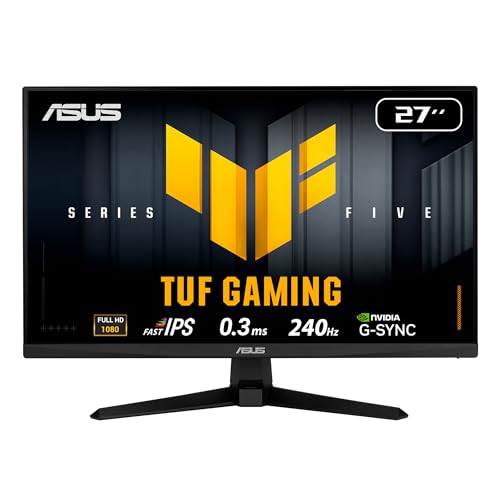
3. ASUS TUF Gaming VG27UQ1A 27 Inch 4K 160Hz G-SYNC
The ASUS TUF Gaming VG27UQ1A is aimed at PC gamers who value motion-management features and broad adaptive-sync support.
Its Fast IPS panel supports 4K at 160Hz, while ELMB Sync is designed to operate with variable refresh rate technologies for clearer fast movement.
G-SYNC Compatible, FreeSync Premium, and Variable Overdrive provide several synchronization options, depending on the graphics card and selected monitor settings.
The monitor lists HDR support and 95% DCI-P3 coverage, but these specifications alone do not confirm a particular HDR experience or professional color accuracy.
For console users, HDMI 2.1 support is specified for 4K 120Hz output without chroma subsampling when the connected system supports the required mode.
A limitation is that the supplied specifications do not describe stand adjustment ranges, so buyers needing detailed ergonomic measurements should verify them before ordering.
What to Check Before Choosing a 27-Inch 144Hz Monitor
4K Resolution Requires Suitable Graphics Hardware
All three candidates use 3840 × 2160 resolution, which gives a sharper desktop image and more detailed game rendering than lower resolutions.
However, a 144Hz or 160Hz panel does not guarantee that a PC will render games at those frame rates.
Check the GPU, game settings, and connection standard together, especially when targeting 4K high-refresh gaming in demanding titles.
Match Adaptive Sync to the Connection
Adaptive sync can reduce visible tearing when the monitor and graphics card coordinate refresh timing, but support may depend on the selected input.
The LXZ listing specifically identifies DisplayPort for FreeSync and G-SYNC support, while KTC and ASUS advertise broader compatibility features.
Confirm the graphics card output, cable capability, and driver settings before assuming every advertised mode will operate simultaneously.
Consider Console Compatibility Separately
The KTC and LXZ models list HDMI 2.1 inputs, while ASUS specifies 4K 120Hz console support through HDMI 2.1.
Actual console output still depends on the console, game, cable, display settings, and whether the title supports the chosen resolution and refresh rate.
Check Ergonomics and Desk Placement
KTC and LXZ provide detailed stand adjustments, including height, tilt, swivel, and portrait rotation, which benefit mixed gaming and workstations.
The ASUS specifications supplied here identify the panel and gaming functions but do not provide equivalent stand adjustment details.
For an arm-mounted setup, verify the exact VESA pattern and included mounting hardware before purchasing, because those details are not supplied consistently here.
How This Category Compares With Other Monitor Options
These models prioritize 4K detail and high refresh rates rather than curved-screen immersion or lower-cost 1080p performance.
If you are comparing panel shapes, see the guide to curved gaming monitors under $300.
For a broader look at refresh-rate choices and 4K alternatives, review gaming monitors under $300 with lower refresh rates.
You can also browse the wider Gaming Monitors category for related display guides.
Frequently Asked Questions
Are these monitors suitable for 144Hz PC gaming?
Yes, each listed model supports at least 144Hz according to the supplied specifications, although achievable frame rates depend on the PC.
Is 4K always better than 1440p for gaming?
4K provides greater image detail, but it usually places more rendering demand on the graphics card than 1440p.
Choose 4K when desktop sharpness and visual detail matter most, or compare with 1440p gaming monitors when higher frame rates are the priority.
Which model is most suitable for console gaming?
The ASUS model explicitly lists 4K 120Hz console support through HDMI 2.1, while KTC and LXZ also list HDMI 2.1 connectivity.
Verify the console, game, cable, and display settings because the monitor specification alone cannot guarantee a particular output mode.
Final Recommendation
Choose the KTC monitor if you want the clearest combination of 4K, 160Hz support, adaptive sync, color claims, and full stand adjustment.
Choose the ASUS TUF model if ELMB Sync, multiple adaptive-sync technologies, and documented HDMI 2.1 console support matter most.
Choose the LXZ monitor if PIP, PBP, extensive stand adjustment, and multiple HDMI and DisplayPort inputs are more useful for your setup.
This comparison is based on supplied specifications rather than independent display testing, so confirm current listings, compatibility, and budget fit before buying.





Write Your Review
No reviews yet. Be the first to share your experience!