

Connecting a headset to an Xbox Series X, Series S, or Xbox One requires specific hardware compatibility. Microsoft uses a proprietary wireless protocol, meaning generic USB wireless headsets designed exclusively for PC or PlayStation will not transmit audio on Xbox consoles.
Players generally choose between certified 2.4GHz wireless models that use dedicated security chips, or analog wired headsets that connect directly to the 3.5mm port on the Xbox wireless controller. Both approaches offer low latency, but they differ significantly in battery demands, setup complexity, and price.
If you also play across multiple platforms or want a broader perspective on audio performance, check out our guide to the best gaming headsets across all systems. Below, we examine the best gaming headsets for xbox based on driver engineering, microphone clarity, and structural comfort.
Quick Comparison: Best Gaming Headsets for Xbox
Pros
- Official Xbox console licensing
- Durable aluminum frame construction
- Comfortable memory foam ear cushions
- Detachable noise-cancelling microphone
- Integrated in-line audio controls
Cons
- Requires controllers with a 3.5mm jack
- Tethered wired connection only

Pros
- Dual 2.4GHz wireless and Bluetooth 5.2 support
- Up to 40 hours of battery life
- Convenient QuickSwitch wireless toggle button
- Swarm II app with 10-band EQ customization
- Flip-to-mute microphone with variable mic monitoring

Pros
- Up to 60 hours of battery life per charge
- Multi-function charging base station included
- Lag-free 2.4GHz wireless connectivity
- On-ear game and chat audio balance controls
- Included Dolby Atmos 3D audio support
Cons
- Compatibility limited to Xbox and PC systems
- Dolby Atmos requires the Dolby Access app and account
- Microphone noise cancellation requires specific physical orientation

Pros
- Up to 70 hours of battery life
- Low-latency 2.4GHz wireless for Xbox and PC
- Convenient flip-to-mute microphone design
- Breathable fabric memory foam ear cushions
- Multiple wireless and wired connection options
Cons
- Bluetooth audio works with mobile devices only
- Microphone is not supported on Nintendo Switch
- Dongle compatibility with third-party controllers may vary

Pros
- Lightweight 240-gram design minimizes fatigue during long sessions
- TriForce 50 mm drivers deliver clear acoustic separation
- Universal 3.5 mm jack supports multiple gaming platforms
- Memory foam ear cushions provide effective passive sound isolation
- Flexible cardioid microphone captures focused vocal audio
Cons
- Relies entirely on a wired 3.5 mm connection
- Lacks active noise cancellation technology

Pros
- Dual 2.4GHz and Bluetooth 5.2 wireless support
- Up to 40-hour rated battery life
- Convenient QuickSwitch audio toggle button
- Comprehensive 10-band EQ via Swarm II software
- Flip-to-mute microphone with built-in monitoring
Pros
- Lightweight 250g design with memory foam padding
- Unidirectional microphone with 120-degree pickup angle
- Foldable and rotating earcups for easy storage
- Broad 3.5mm plug-and-play console compatibility
- Tangle-resistant braided 1.5-meter audio cable
Cons
- Dual 3.5mm PC splitter cable not included
- Requires manual PC audio setup with Xbox controllers

Pros
- Advertised 80-hour battery life with quick charging
- Dual 2.4GHz wireless and Bluetooth 5.5 support
- Flip-to-mute microphone with AI noise reduction
- Glasses-friendly memory foam ear cushions
- Ten-band EQ customization via Swarm II software

Pros
- Up to 45 hours of battery life
- Low-latency 2.4GHz wireless connection
- Detachable noise-cancelling ENC microphone
- Comfortable rotatable ear cups
- Large 50mm dynamic sound drivers
Cons
- Microphone not supported on Nintendo Switch
- Bluetooth unsupported on Xbox and PlayStation
- Incompatible with 2013 to 2015 Xbox One controllers

Pros
- Simultaneous 2.4GHz and Bluetooth audio mixing
- Rated 50-plus hour battery life with fast charging
- Multi-platform compatibility via USB-C dongle
- Sturdy steel frame with memory foam ear cushions
Cons
- Sonar AI microphone features restricted to PC
Detailed Reviews: The Best Xbox Headsets
1. SteelSeries Arctis Nova 7X Wireless Gen 2
SteelSeries Arctis Nova 7X Wireless Gen 2 delivers multiplatform utility using a USB-C transmitter equipped with a dedicated Xbox mode switch. This hardware switch allows the transmitter to authenticate with Xbox consoles while maintaining plug-and-play capability on PC, PlayStation, and mobile platforms.
The headset provides simultaneous 2.4GHz wireless and Bluetooth connectivity, letting users mix party chat or game audio with phone calls and Discord. The Gen 2 model advertises more than 50 hours of battery life on a single charge, supported by USB-C fast charging that adds several hours of runtime from a brief top-up.
A primary limitation is that deep EQ preset adjustments require the desktop Sonar software on PC before transferring your preferred profile over to console sessions. Nevertheless, its steel headband, ski-goggle suspension strap, and ClearCast Gen 2 bidirectional microphone make it a dependable premium choice.
2. RIG 800 PRO HX Wireless Gaming Headset
RIG 800 PRO HX Wireless Gaming Headset features a dedicated multi-function charging base station that doubles as the wireless receiver dock. When your session ends, the headset docks into the base via magnetic pins, preventing dead battery surprises before long sessions.
Audio is handled by 40mm drivers paired with low-frequency acoustic resonators to produce controlled bass without overwhelming midrange footstep cues. Plugging the adapter into an Xbox console unlocks a pre-activated Dolby Atmos for Headphones license, delivering pinpoint 3D positional awareness in supported games.
The modular snap-fit frame provides small, medium, and large sizing slots rather than a sliding adjustment rail. While this design creates a stable clamping force and reduces weight, users with unique head shapes may find the discrete sizing steps less granular than continuous sliders.
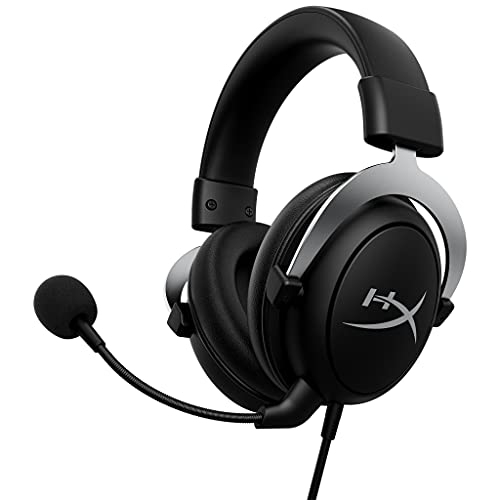
3. HyperX CloudX, Official Xbox Licensed
HyperX CloudX, Official Xbox Licensed relies on an analog 3.5mm connection that plugs directly into official Xbox controllers. By skipping wireless transceivers and internal batteries entirely, it eliminates charging routines, latency concerns, and wireless signal drops.
The solid aluminum frame provides exceptional structural rigidity compared to plastic budget alternatives. Thick memory foam padding along the ear cushions and headband distributes weight evenly, minimizing pressure hot spots during extended competitive sessions.
Because audio processing is handled by the Xbox controller digital-to-analog converter, total volume output depends on the controller battery level and firmware settings. There are also no built-in EQ modes or sidetone controls on the physical hardware outside of an in-line volume wheel and mute toggle.
4. Turtle Beach Stealth 600 Wireless Gaming Headset
Turtle Beach Stealth 600 Wireless Gaming Headset is designed around large 50mm Nanoclear drivers that provide strong dynamic range and spacious staging. A physical QuickSwitch button allows instantaneous toggling between low-latency 2.4GHz console audio and Bluetooth connectivity for secondary mobile devices.
The integrated flip-to-mute boom microphone includes artificial intelligence noise reduction to suppress household background noise such as mechanical keyboards and fans. Turtle Beach also incorporates its patented ProSpecs relief system, easing clamping pressure for gamers who wear glasses.
The plastic chassis feels bulkier than minimalist competitive models, and the earcups retain a noticeable clamping force out of the box. Users who play in quiet rooms may also find the Superhuman Hearing audio mode over-amplifies treble frequencies at higher volume levels.
5. Razer BlackShark V2 X Xbox Gaming Headset
Razer BlackShark V2 X Xbox Gaming Headset is a lightweight wired model weighing only 240 grams. It uses Razer TriForce 50mm drivers, which partition bass, midrange, and treble tuning into discrete acoustic zones to prevent muddiness in dense sound mixes.
The closed-back earcups use thick leatherette-lined foam cushions that produce an effective acoustic seal. This passive isolation helps block out ambient room noise without introducing the electronic hiss occasionally found in budget active noise-canceling headsets.
The fixed 3.5mm cable and permanently attached cardioid boom mic limit portability compared to modular alternatives with detachable cables. However, for a dedicated desk or living-room console setup, its straightforward analog build ensures broad cross-platform reliability.
6. Turtle Beach Stealth 500 Wireless Multiplatform
Turtle Beach Stealth 500 Wireless Multiplatform delivers cable-free convenience at an accessible price point. It pairs amplified 40mm audio drivers with an ultra-lightweight floating headband design that rests gently across the top of the skull.
The internal battery provides up to 40 hours of playtime and supports quick charging over modern USB-C cables. Users can pair the headset to the Swarm II desktop or mobile companion app to configure custom 10-band equalization curves and manage firmware updates.
The omnidirectional microphone provides clear communication for casual party chat but lacks the tight noise-rejection pattern found on premium cardioid boom mics. As a result, nearby room chatter can occasionally bleed into the voice channel if the mic gate sensitivity is not adjusted.
Key Hardware Factors When Choosing an Xbox Headset
Choosing the best gaming headsets for xbox involves balancing wireless freedom against system integration and acoustic tuning. Understanding these core specifications will help you avoid compatibility pitfalls.
Wireless Authentication vs 3.5mm Controller Audio
Standard Bluetooth audio is not supported natively by Xbox Series X|S or Xbox One consoles. To play wirelessly, a headset must feature a certified USB transmitter with Microsoft security hardware, or use direct Xbox Wireless pairing. Analog 3.5mm headsets bypass this entirely by drawing power and signal directly from the wireless Xbox controller jack.
Spatial Audio and Surround Licensing
Xbox consoles provide native spatial sound processing through Windows Sonic at no cost. However, headsets that integrate hardware-level Dolby Atmos for Headphones or DTS Headphone:X licensing deliver broader custom equalization options and refined multichannel positioning for competitive first-person shooters.
Microphone Type and Sidetone Monitoring
Closed-back earcups isolate game audio but can cause users to inadvertently speak too loudly because their own voice is muffled. Selecting a headset with integrated mic monitoring, also known as sidetone, feeds a low-latency monitor mix of your voice back into the drivers so communication feels natural.
Frequently Asked Questions
Can I use regular Bluetooth headphones with my Xbox?
No, Xbox consoles do not contain a Bluetooth audio radio. Bluetooth connectivity on dual-mode headsets is intended strictly for connecting to mobile devices, tablets, or laptops while gaming on the console via 2.4GHz wireless or 3.5mm wired cables.
Do wired headsets drain Xbox controller batteries faster?
Yes, plugging a 3.5mm headset into your controller draws power directly from the controller batteries to drive the headphone speaker cones and microphone circuit. The overall drain is modest, but users relying on standard AA batteries will notice slightly reduced play sessions between battery swaps.
How do I adjust game and chat balance on Xbox?
Headsets like the SteelSeries Arctis Nova 7X and RIG 800 PRO HX provide physical on-ear ChatMix dials to adjust the balance instantly. For standard analog wired headsets, you must adjust the balance through the Xbox Audio and Music overlay menu accessible via the Xbox guide button.



Write Your Review
No reviews yet. Be the first to share your experience!